Sacrifices of Peace: The Legacy of Pagiel
"And for a sacrifice of peace offerings, two oxen, five rams, five he goats, five lambs of the first year: this was the offering of Pagiel the son of Ocran." - Numbers 7:77
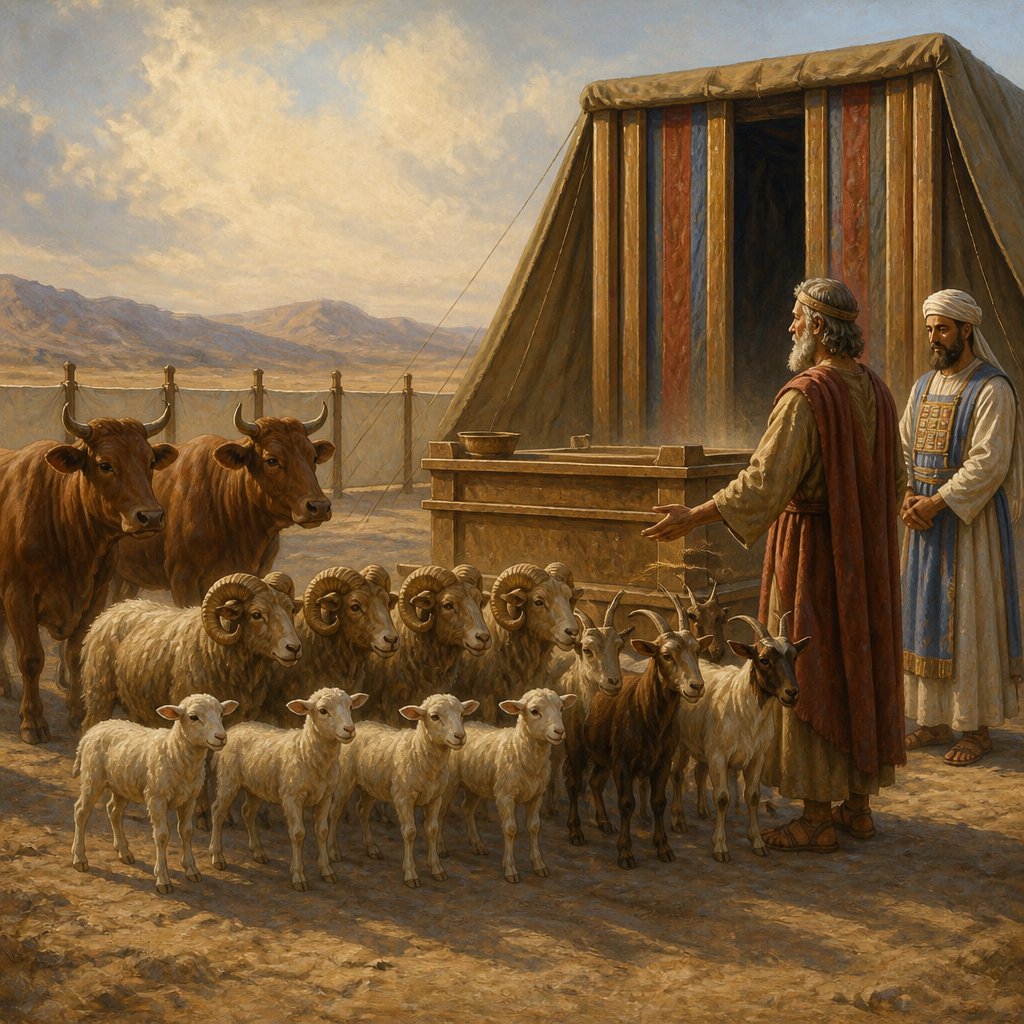
In the Old Testament, sacrifice holds profound significance. The book of Numbers, particularly chapter 7, presents a comprehensive account of the offerings made by the leaders of Israel during the dedication of the Tabernacle. Among these, Numbers 7:77 states, "And for a sacrifice of peace offerings, two oxen, five rams, five he goats, five lambs of the first year: this was the offering of Pagiel the son of Ocran." At first glance, this verse might seem like a mere record, a mundane enumeration of sacrificial animals. Yet within it lies a rich tapestry of spiritual insights worthy of our contemplation.
To understand the gravity of Pagiel's sacrifice, we must first appreciate the context of peace offerings. These offerings, known in Hebrew as "Shelamim," were unique among the myriad sacrifices outlined in the Jewish ceremonial law. Unlike sin or guilt offerings that sought atonement for transgressions, peace offerings symbolized fellowship and communion with God. They represented gratitude and acknowledgment of God’s blessings, and through them, the offerer sought to celebrate the joyful occasions of life, recognizing the harmony and wholeness bestowed by the Creator. The act of offering such a significant sacrifice indicated deep devotion—Pagiel was seeking not just forgiveness but a restoration of relationship and peace with God.
Pagiel's choice of offerings is also essential to examine. He brought two oxen, five rams, five he goats, and five lambs. Each animal represents a different dimension of sacrifice and denotes an awareness of abundance. The quantity alone reflects a generosity that spills from a grateful heart. There’s an aspect of extravagant love in this offering; it defies the minimalistic approach so often tempted by human nature. Instead of offering just enough to appease God, Pagiel's spirit encourages us to approach God with our very best. How often do we treat our offerings—be it time, talent, or treasure—as tasks to fulfill, rather than as opportunities to express our love and gratitude?
The number of animals also symbolizes completeness and wholeness, echoed throughout Scripture. Five, for example, holds significance in different areas, often representing grace—God’s unmerited favor upon humankind. There are layers to our understanding of grace that lead us to profound appreciation for Jesus Christ, whose ultimate sacrifice on the cross serves as the apex of our peace offering. In light of the New Covenant, we are reminded that it is through Christ’s sacrifice that we obtain lasting peace with God. Every offering, like Pagiel’s, steers us toward this one central narrative: the pursuit of intimacy with our Lord.
Pagiel, son of Ocran, stands in scriptural history not merely as a name but as a testament to faithful stewardship and covenant faithfulness. His offerings remind us of our call to generosity in our worship and dealings with God. We, too, are invited to be sacrifices of peace in our lives, reflecting Christ’s love in our relationships. In Romans 12:1, Paul urges us to present our bodies as living sacrifices, holy and acceptable unto God. Like Pagiel, our lives must also mirror the bountiful offerings we bring before the Lord.
In conclusion, Numbers 7:77 beckons us deeper into the heart of worship. It invites us to examine the state of our sacrifices, challenging us to give generously and recognize our inherent position in the grand design of God’s redemptive story. As we ponder Pagiel's offering, can we also consider what our peace offerings look like? Can we come before God with hearts overflowing, hands ready to serve, and lives that honor His name? Let us, therefore, enter into His presence, remembering that every act of sacrifice can be an expression of peace and an embrace of God’s endless grace. May we go forth today as facilitators of peace, living sacrifices in His hands.
Want to reflect more on Numbers 7:77?
Continue your spiritual journey with Bible Chat — an AI-powered tool for exploring God's Word through conversation. Ask questions, discover connections, and deepen your understanding.
Get Our Apps


Numbers 7:77 Artwork

Numbers 7:77 - "And for a sacrifice of peace offerings, two oxen, five rams, five he goats, five lambs of the first year: this was the offering of Pagiel the son of Ocran."
"And for a sacrifice of peace offerings, two oxen, five rams, five he goats, five lambs of the first year: this was the offering of Pagiel the son of Ocran." - Numbers 7:77

Psalms 77:7 - "Will the Lord cast off for ever? and will he be favourable no more?"

"Will the Lord cast off for ever? and will he be favourable no more?" - Psalms 77:7

Numbers 7:7 - "Two wagons and four oxen he gave unto the sons of Gershon, according to their service:"

"Two wagons and four oxen he gave unto the sons of Gershon, according to their service:" - Numbers 7:7

Numbers 29:7

Numbers 4:7

Numbers 7:1-9

Numbers 4:7-8

Numbers 1:7 - "Of Judah; Nahshon the son of Amminadab."

Numbers 7:76 - "One kid of the goats for a sin offering:"

Numbers 7:64 - "One kid of the goats for a sin offering:"

Numbers 7:34 - "One kid of the goats for a sin offering:"

Numbers 7:58 - "One kid of the goats for a sin offering:"

Numbers 7:22 - "One kid of the goats for a sin offering:"

Numbers 7:70 - "One kid of the goats for a sin offering:"

Numbers 7:82 - "One kid of the goats for a sin offering:"

Numbers 7:46 - "One kid of the goats for a sin offering:"

Numbers 7:4 - "And the LORD spake unto Moses, saying,"

Numbers 7:16 - "One kid of the goats for a sin offering:"

Numbers 7:52 - "One kid of the goats for a sin offering:"

Numbers 20:7 - "¶ And the LORD spake unto Moses, saying,"

Numbers 13:7 - "Of the tribe of Issachar, Igal the son of Joseph."

Numbers 7:28 - "One kid of the goats for a sin offering:"

Numbers 7:40 - "One kid of the goats for a sin offering:"

Numbers 7:50 - "One golden spoon of ten shekels, full of incense:"

Numbers 7:80 - "One golden spoon of ten shekels, full of incense:"

Numbers 7:26 - "One golden spoon of ten shekels, full of incense:"

Numbers 7:44 - "One golden spoon of ten shekels, full of incense:"