Setting Apart for the Divine: A Devotional Reflection on Numbers 7:1
“And it came to pass on the day that Moses had fully set up the tabernacle, and had anointed it, and sanctified it, and all the instruments thereof, both the altar and all the vessels thereof, and had anointed them, and sanctified them;” — Numbers 7:1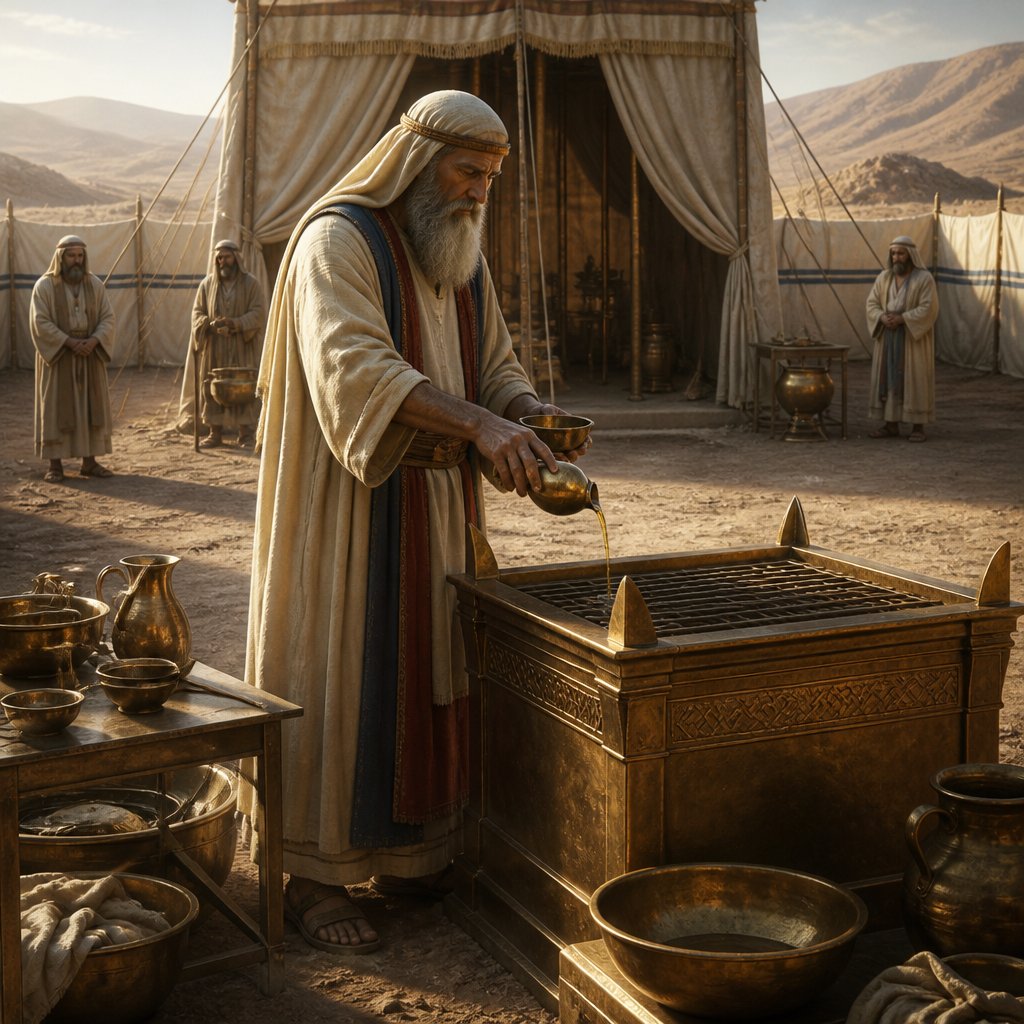
In the sweeping narrative of the Book of Numbers, the pivotal verse of Numbers 7:1 serves as a profound reminder of the sacredness of preparation and the importance of setting apart what is dedicated to God.
"And it came to pass on the day that Moses had fully set up the tabernacle, and had anointed it, and sanctified it, and all the instruments thereof, both the altar and all the vessels thereof, and had anointed them, and sanctified them."
This verse encapsulates an essential act of obedience and devotion. Moses, acting as the mediator between God and His people, takes meticulous care in setting up the tabernacle - a mobile dwelling place for God among the Israelites. It was not merely an architectural endeavor; it signified the inauguration of a divine meeting place where heaven intersected with earth.
The act of **anointing** represents the initiation of a new chapter in the spiritual life of the Israelites. Anointing, especially in the biblical context, was not a trivial task; it involved consecrating a person or object for divine purposes. In this case, Moses anointed the tabernacle and all its utensils, preparing them to be vehicles of worship. This deepens our understanding of what it means to "sanctify" something – to set it apart for God's use. We are reminded that everything we do for the Lord—our worship, our service, our offerings—should be approached with an attitude of reverence and intentionality, just as Moses undertook this sacred task.
In modern-day life, setting apart moments for God often gets overshadowed by our busy schedules and the clamor of daily obligations. We might ask ourselves, are our lives sanctified for God? Have we set apart specific times, spaces, and actions as holy before Him?
As we delve deeper into the significance of the tabernacle, we recognize it was designed as a tangible representation of God's presence among His people. Through this sacred structure, God sought to dwell with humanity—a profound act of love. In the same vein, Paul, in his writings, encourages us to consider our bodies as temples of the Holy Spirit (1 Corinthians 6:19). If the Israelites were called to bring forth a dwelling for God on Earth, how much more should we honor and sanctify our very beings as individuals who bear His Spirit today?
The focus on the **instruments** and **vessels** within the tabernacle signifies that everything associated with divine worship and service must be treated with due diligence. Every tool, every gesture, and every prayer offered within that holy space had implications for the worshippers' relationship with God. For us today, in our personal and corporate worship, each act of service, every note of praise, and every prayer uttered must come from a heart that understands the weight of holiness.
Moreover, it's essential to reflect on the timing indicated in the verse: "on the day that Moses had fully set up the tabernacle." God’s timing is always perfect, and it underscores that there is an appropriate season for every purpose under heaven. As we embark on our journeys of faith, we must recognize the importance of preparation in our spiritual lives. Whether it's nurturing our relationship with God through prayer and scripture or preparing our hearts and minds for worship, being fully established in our faith is vital.
As we meditate on this verse, consider what it means for you to be anointed and sanctified in your life. What aspects of your life do you need to set apart for God? Where can you create sacred space—spiritually, physically, or emotionally? Think of ways to sanctify your daily routine, bringing God into the mundane and reminding yourself that everything in your life is an act of worship.
In conclusion, Numbers 7:1 not only commemorates a historical moment but calls us to an ongoing reflection of holiness, preparation, and devotion. As we purpose to sanctify our lives and dedicate our work to God, we become vessels through which His glory can be revealed to the world.
Get our apps


Artwork for Numbers 7:1

Numbers 7:1-9

Numbers 7:1 - "And it came to pass on the day that Moses had fully set up the tabernacle, and had anointed it, and sanctified it, and all the instruments thereof, both the altar and all the vessels thereof, and had anointed them, and sanctified them;"
"And it came to pass on the day that Moses had fully set up the tabernacle, and had anointed it, and sanctified it, and all the instruments thereof, both the altar and all the vessels thereof, and had anointed them, and sanctified them;" - Numbers 7:1

Numbers 7:1-10 - "And it came to pass on the day that Moses had fully set up the tabernacle, and had anointed it, and sanctified it, and all the instruments thereof, both the altar and all the vessels thereof, and had anointed them, and sanctified them; That the princes of Israel, heads of the house of their fathers, who were the princes of the tribes, and were over them that were numbered, offered: And they brought their offering before the LORD, six covered wagons, and twelve oxen; a wagon for two of the princes, and for each one an ox: and they brought them before the tabernacle. And the LORD spake unto Moses, saying, Take it of them, that they may be to do the service of the tabernacle of the congregation; and thou shalt give them unto the Levites, to every man according to his service. And Moses took the wagons and the oxen, and gave them unto the Levites. Two wagons and four oxen he gave unto the sons of Gershon, according to their service: And four wagons and eight oxen he gave unto the sons of Merari, according unto their service, under the hand of Ithamar the son of Aaron the priest. But unto the sons of Kohath he gave none: because the service of the sanctuary belonging unto them was that they should bear upon their shoulders. And the princes offered for dedicating of the altar in the day that it was anointed, even the princes offered their offering before the altar. And the LORD said unto Moses, They shall offer their offering, each prince on his day, for the dedicating of the altar. Now he that offered his offering the first day was Nahshon the son of Amminadab, of the tribe of Judah."
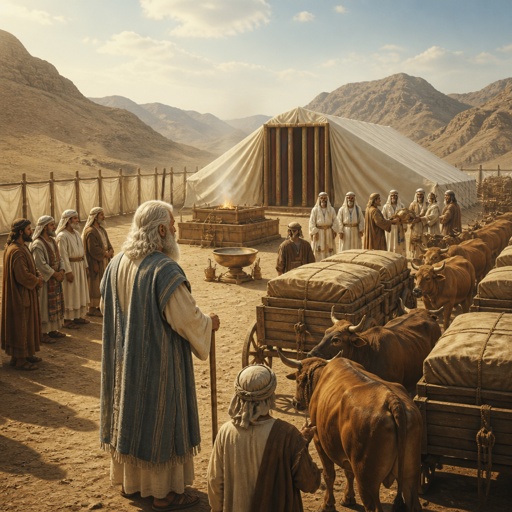
"And it came to pass on the day that Moses had fully set up the tabernacle, and had anointed it, and sanctified it, and all the instruments thereof, both the altar and all the vessels thereof, and had anointed them, and sanctified them; That the princes of Israel, heads of the house of their fathers, who were the princes of the tribes, and were over them that were numbered, offered: And they brought their offering before the LORD, six covered wagons, and twelve oxen; a wagon for two of the princes, and for each one an ox: and they brought them before the tabernacle. And the LORD spake unto Moses, saying, Take it of them, that they may be to do the service of the tabernacle of the congregation; and thou shalt give them unto the Levites, to every man according to his service. And Moses took the wagons and the oxen, and gave them unto the Levites. Two wagons and four oxen he gave unto the sons of Gershon, according to their service: And four wagons and eight oxen he gave unto the sons of Merari, according unto their service, under the hand of Ithamar the son of Aaron the priest. But unto the sons of Kohath he gave none: because the service of the sanctuary belonging unto them was that they should bear upon their shoulders. And the princes offered for dedicating of the altar in the day that it was anointed, even the princes offered their offering before the altar. And the LORD said unto Moses, They shall offer their offering, each prince on his day, for the dedicating of the altar. Now he that offered his offering the first day was Nahshon the son of Amminadab, of the tribe of Judah." - Numbers 7:1-10

Numbers 4:7-8

Numbers 1:7 - "Of Judah; Nahshon the son of Amminadab."

"Of Judah; Nahshon the son of Amminadab." - Numbers 1:7

Numbers 29:7

Numbers 4:7

Numbers 7:7 - "Two wagons and four oxen he gave unto the sons of Gershon, according to their service:"

Numbers 7:64 - "One kid of the goats for a sin offering:"

Numbers 7:76 - "One kid of the goats for a sin offering:"

Numbers 7:34 - "One kid of the goats for a sin offering:"

Numbers 7:58 - "One kid of the goats for a sin offering:"

Numbers 7:22 - "One kid of the goats for a sin offering:"

Numbers 7:70 - "One kid of the goats for a sin offering:"

Numbers 7:82 - "One kid of the goats for a sin offering:"

Numbers 7:46 - "One kid of the goats for a sin offering:"

Numbers 7:16 - "One kid of the goats for a sin offering:"

Numbers 7:4 - "And the LORD spake unto Moses, saying,"

Numbers 20:7 - "¶ And the LORD spake unto Moses, saying,"

Numbers 7:52 - "One kid of the goats for a sin offering:"

Numbers 13:7 - "Of the tribe of Issachar, Igal the son of Joseph."

Numbers 7:28 - "One kid of the goats for a sin offering:"

Numbers 7:40 - "One kid of the goats for a sin offering:"

Numbers 7:50 - "One golden spoon of ten shekels, full of incense:"

Numbers 7:80 - "One golden spoon of ten shekels, full of incense:"

Numbers 11:7 - "And the manna was as coriander seed, and the colour thereof as the colour of bdellium."

Numbers 7:44 - "One golden spoon of ten shekels, full of incense:"