The Offering of Peace: A Journey Toward Reconciliation
“And for a sacrifice of peace offerings, two oxen, five rams, five he goats, five lambs of the first year: this was the offering of Nethaneel the son of Zuar.” — Numbers 7:23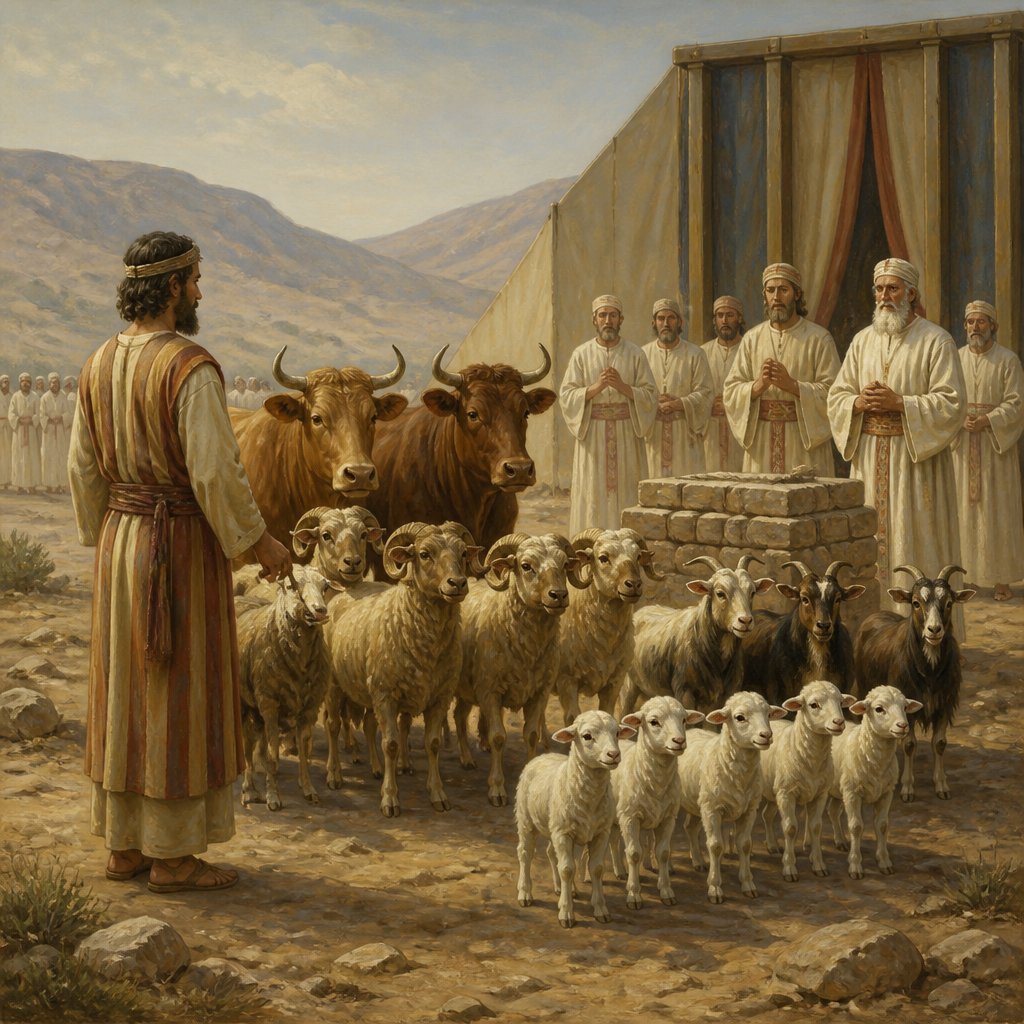
In the book of Numbers, we find a remarkable passage that reflects a moment of communal worship and dedication. Numbers 7:23 states, "And for a sacrifice of peace offerings, two oxen, five rams, five he goats, five lambs of the first year: this was the offering of Nethaneel the son of Zuar." This verse is part of the elaborate descriptions of the offerings made by the leaders of Israel's tribes during the consecration of the altar. While the specifics about the animals may seem archaic and foreign to us today, a deeper examination reveals profound truths about peace, sacrifice, and communal life.
Firstly, we need to understand the significance of peace offerings in the Old Testament context. Peace offerings, also known as fellowship offerings, were a voluntary act of worship. They symbolized reconciliation and gratitude. Unlike sin offerings, which were offered to atone for transgressions, peace offerings celebrated a harmonious relationship with God—a relational currency that expressed thankfulness and joy. Here, Nethaneel’s generous offering reflects not just an act of compliance with ritualistic requirements but a heartfelt expression of communal identity, unity, and commitment to God.
The number and types of sacrifices chosen by Nethaneel also merit consideration. Two oxen represent strength and wealth, five rams signify sacrificial purity, five he goats indicate maturity and readiness, while five lambs of the first year symbolize innocence and new beginnings. The recurring number five, both in rams, goats, and lambs, may speak to grace and God's provision, reminding us that our contributions, while diverse and unique, play a vital role in our relationship with God and each other.
As Christians today, we can draw parallels between Nethaneel's sacrifices and our offerings of peace in our lives. Jesus Christ is our peace offering, the ultimate sacrifice that brought us reconciliation with God. By His death and resurrection, He re-established a broken relationship mended through grace. Each Sunday when we gather in worship or partake in communion, we echo Nethaneel's offering, acknowledging the peace we have through Christ.
However, as we reflect on our daily lives, it becomes essential to ask ourselves: how do we pursue peace offerings in our relationships with others? Nethaneel did not offer his sacrifices for himself alone; he did so on behalf of the tribe of Judah as part of a united act of worship. In this same spirit of community, we are called to foster peace within our families, workplaces, and communities. Ephesians 4:3 encourages us to endeavor to keep the unity of the Spirit in the bond of peace. Just as Nethaneel contributed to the collective worship of Israel, we too can contribute to the peace and harmony within our circles.
Our contemporary sacrifices of peace might not consist of literal livestock, but they can take forms such as forgiveness, generosity, and love. We can intentionally offer kindness to the difficult co-worker, extend grace to someone who has wronged us, or serve in ways that unify rather than divide. Such actions reflect the heart of Christ, demonstrating His love to others and creating an atmosphere of peace in our communities.
In conclusion, the act of bringing offerings as illustrated in Numbers 7:23 is not merely about observing traditions or fulfilling obligations; it underscores the importance of sacrifice, community, and connection with God. May we carry this lesson into our lives, striving to build bridges rather than walls, seeking reconciliation in our interventions, and sacrificing our comfort for the peace of others. Let us embrace our role as agents of peace, recognizing that our offerings, whether great or small, are vital in weaving the fabric of His kingdom here on earth.
Get our apps


Artwork for Numbers 7:23

Numbers 7:23 - "And for a sacrifice of peace offerings, two oxen, five rams, five he goats, five lambs of the first year: this was the offering of Nethaneel the son of Zuar."
"And for a sacrifice of peace offerings, two oxen, five rams, five he goats, five lambs of the first year: this was the offering of Nethaneel the son of Zuar." - Numbers 7:23

Numbers 23:7 - "And he took up his parable, and said, Balak the king of Moab hath brought me from Aram, out of the mountains of the east, saying, Come, curse me Jacob, and come, defy Israel."

Numbers 23:30
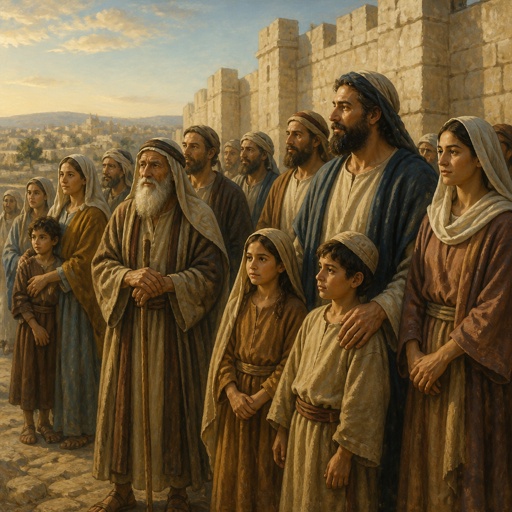
"The children of Bezai, three hundred twenty and four." - Nehemiah 7:23

Numbers 23:1-13

Numbers 8:23 - "¶ And the LORD spake unto Moses, saying,"

Numbers 16:23 - "¶ And the LORD spake unto Moses, saying,"
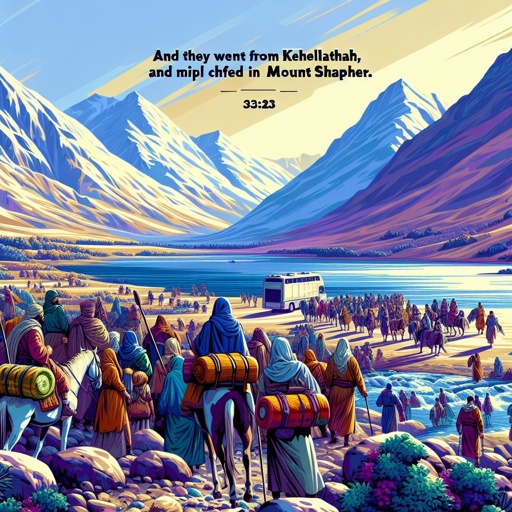
Numbers 33:23 - "And they went from Kehelathah, and pitched in mount Shapher."

Numbers 3:23 - "The families of the Gershonites shall pitch behind the tabernacle westward."

Balaam bless Israel twice in numbers 23

Numbers 29:7

Numbers 4:7

Numbers 23:23 - "Surely there is no enchantment against Jacob, neither is there any divination against Israel: according to this time it shall be said of Jacob and of Israel, What hath God wrought!"

Numbers 10:23 - "And over the host of the tribe of the children of Manasseh was Gamaliel the son of Pedahzur."

Numbers 23:28 - "And Balak brought Balaam unto the top of Peor, that looketh toward Jeshimon."

Numbers 2:23 - "And his host, and those that were numbered of them, were thirty and five thousand and four hundred."
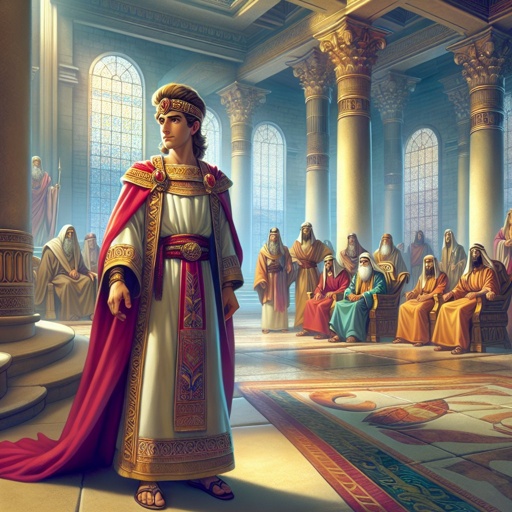
Numbers 34:23 - "The prince of the children of Joseph, for the tribe of the children of Manasseh, Hanniel the son of Ephod."

Numbers 1:23 - "Those that were numbered of them, even of the tribe of Simeon, were fifty and nine thousand and three hundred."
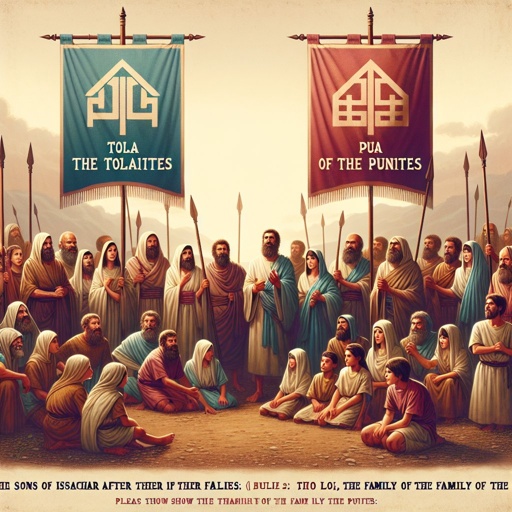
Numbers 26:23 - "¶ Of the sons of Issachar after their families: of Tola, the family of the Tolaites: of Pua, the family of the Punites:"

Numbers 23:30 - "And Balak did as Balaam had said, and offered a bullock and a ram on every altar."

Numbers 23:22 - "God brought them out of Egypt; he hath as it were the strength of an unicorn."

Numbers 7:1-9

matthew 7:23

Genesis 23-7

Numbers 7:7 - "Two wagons and four oxen he gave unto the sons of Gershon, according to their service:"

Numbers 4:7-8

Numbers 1:7 - "Of Judah; Nahshon the son of Amminadab."

Numbers 28:23 - "Ye shall offer these beside the burnt offering in the morning, which is for a continual burnt offering."

Numbers 20:23 - "And the LORD spake unto Moses and Aaron in mount Hor, by the coast of the land of Edom, saying,"