In the Wilderness: Hearing God’s Voice
“And the LORD spake unto Moses in the wilderness of Sinai, in the first month of the second year after they were come out of the land of Egypt, saying,” — Numbers 9:1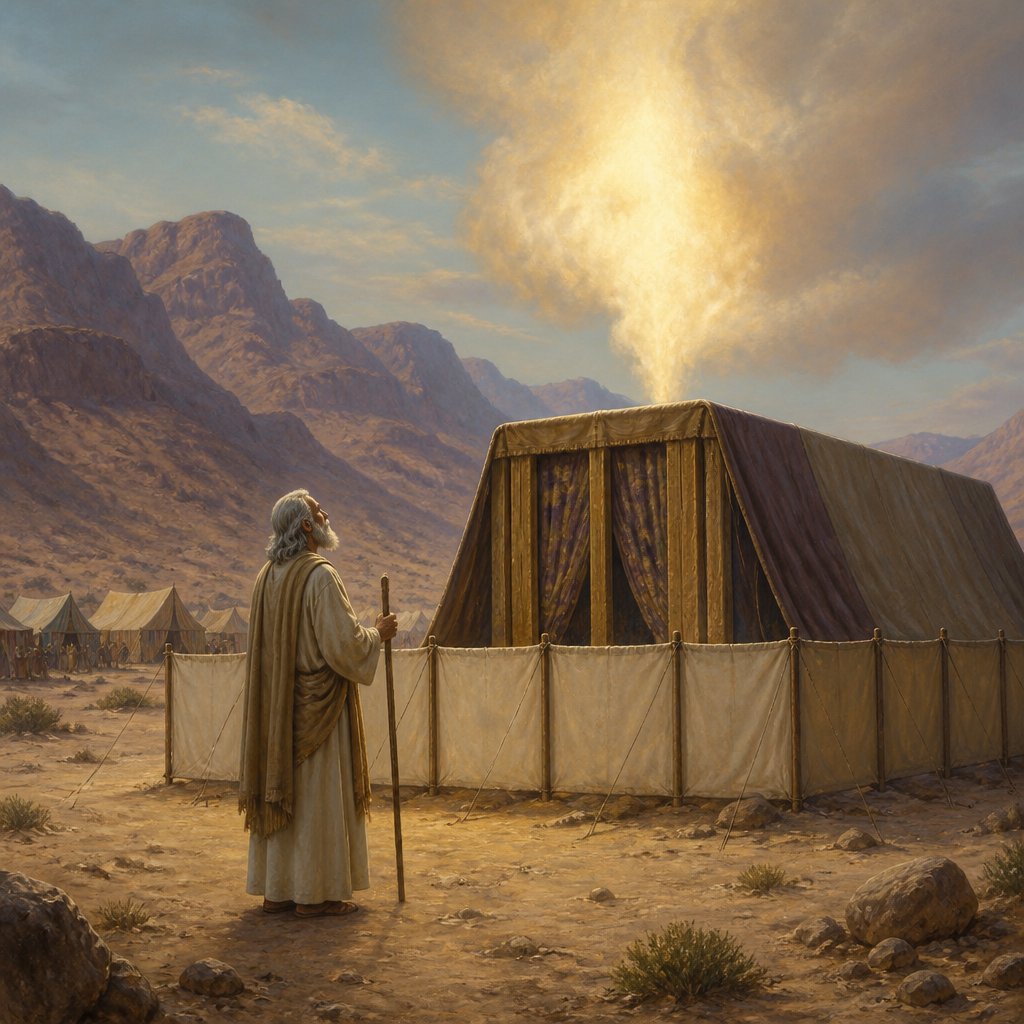
Consider for a moment the profound significance of the phrase, "And the LORD spake unto Moses in the wilderness of Sinai." This moment, occurring in Numbers 9:1, encapsulates a pivotal juncture in the narrative of the Israelites’ journey from slavery into the promise. In this verse, we find not only a geographic location but also a remarkable spiritual truth that echoes through the ages: even in the wilderness, the voice of God can be heard.
The wilderness itself is often perceived as a place of desolation, discomfort, and struggle. The Israelites had witnessed miraculous deliverance from the oppressive grasp of Egypt. They crossed the Red Sea, watched the waters part, and experienced the direct providence of God through manna from heaven and water from the rock. Yet, here they are—a year and a few months from their liberation—still navigating the rugged terrain of Sinai's wilderness. This paradox reminds us that freedom from physical bondage does not immediately translate to spiritual clarity or ease.
Wilderness experiences can manifest in our own lives, often when we least expect them. These periods can be marked by uncertainty, hardship, and doubt. However, it is in these seasons that we can learn to attune our ears to God's voice, often the quietest amid the tumult. Just as God spoke to Moses in the dense silence of the wilderness, He continues to reach out to us in our quiet moments, beckoning us to listen.
In the first month of the second year, as stated at the beginning of this verse, we see that timing in our spiritual journey is crucial. God chooses the moment to speak intentionally. "In the first month" signifies a time of new beginnings—a reminder that God is ever interested in renewing His relationship with His people. This concept of timing is vital to understand; God operates outside of our chronology. We may feel we are stuck in our wilderness, but God may see this as a preparatory ground for our next big step.
Moses stands as our mediator in this encounter at Sinai. His role invites us to understand our own relationship with God. Just as Moses received instruction from the Lord, God desires to communicate with us—through His Word, through prayer, through community—teaching us how to dwell in our current wildernesses with purpose and guidance. One might ask, how does one differentiate between the cacophony of life’s distractions and the true voice of God? Like Moses, we must posture ourselves in humility and eagerness to listen.
Furthermore, God’s directive to Moses is an assurance of His ongoing guidance. When in a situation where we feel lost or powerless, we can glean hope from the reality that our circumstances often serve as the backdrop for divine revelation. He speaks to us about our journey wherever we might find ourselves. God provided the Israelites with commandments and instructions, ultimately revealing His character—one of love, order, and eternal commitment. In our struggles, we must not lose sight of His desire to lead us and teach us about holiness and community.
As we reflect on this verse, let us ask ourselves: Are we willing to listen to God in our own wildernesses? Are we open to His instructions, even when they challenge us or call us to deeper faith? As we wrestle with our personal challenges, may we remember that the wilderness can be a place of divine encounter. There, God breaks into our reality, renewing our minds and spirits for the journey ahead. Let our hearts be open this week to the whispers of God, to the lessons He clings to teach us amidst the dusty trails of our lives.
Take a moment today to find your own wilderness, quiet your heart, and ponder these truths. Listen closely; the Lord is speaking.
Get our apps


Artwork for Numbers 9:1
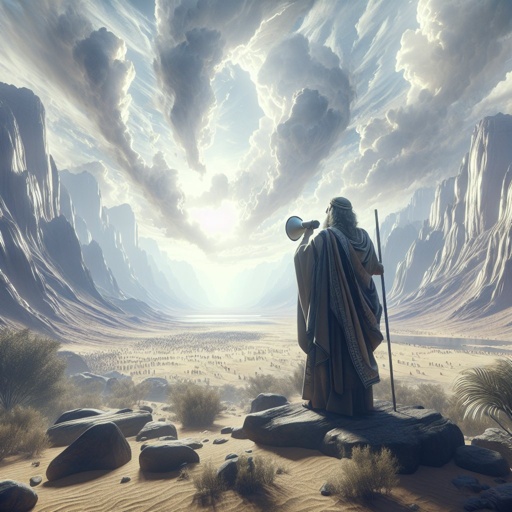
Numbers 9:1 - "And the LORD spake unto Moses in the wilderness of Sinai, in the first month of the second year after they were come out of the land of Egypt, saying,"
"And the LORD spake unto Moses in the wilderness of Sinai, in the first month of the second year after they were come out of the land of Egypt, saying," - Numbers 9:1

"Create a detailed and artistic mosaic image that depicts various scenes from the biblical book of Numbers (Bamidbar) chapters 8:1 to 12:1. The image should be divided into sections, each representing different events within these chapters, in a style that reflects traditional Jewish art and avoids Christian or Catholic imagery. Numbers 8:1-4: Show the lighting of the Menorah in the Tabernacle (Mishkan). Aaron, the High Priest, should be lighting the Menorah. Ensure that the seven-branched Menorah is prominently displayed. Numbers 8:5-26: Depict the consecration of the Levites (Leviím). Show the Levites being presented before the Tent of Meeting, having their heads shaved and being sprinkled with purifying water. Include elements such as offerings and the elders of Israel laying their hands on the Levites. Numbers 9:1-14: Illustrate the Israelites observing the Passover (Pesach) in the wilderness. Show families gathered around the Passover meal, with symbols of matzah and lamb. Also, include the people who were impure because of contact with a dead body and how they are consulting Moses about observing the Passover later. Numbers 9:15-23: Display the cloud covering the Tabernacle by day and the appearance of fire by night. Show the Israelites encamped around the Tabernacle, with their tents in the background, and the divine cloud and fire above. Numbers 10:1-10: Illustrate the making and use of the silver trumpets (chatzotzrot). Show the priests blowing the trumpets to signal the Israelites' movements and gather the assembly. Numbers 10:11-36: Depict the Israelites setting out from the wilderness of Sinai, following the cloud of the Lord. Show the ark of the covenant being carried by the Levites, leading the people. Numbers 11:1-35: Portray the incidents of the people's complaints and God's provision of quail. Include scenes of the people gathering quail and a representation of the fire that consumed some of the camp due to their complaints. Show Moses speaking to God, but ensure Moses' face is not visible. Numbers 12:1: Show the scene where Miriam and Aaron speak against Moses because of the Cushite woman he had married. Depict Miriam and Aaron in discussion, but do not show Moses' face. The entire mosaic should be harmonious and cohesive, with no individual faces of Moses visible and no words or numbers in the artwork. The style should reflect traditional Jewish artistic sensibilities and avoid any Christian or Catholic symbols."

"Create a detailed and artistic mosaic image that depicts various scenes from the biblical book of Numbers (Bamidbar) chapters 8:1 to 12:1. The image should be divided into sections, each representing different events within these chapters, in a style that reflects traditional Jewish art and avoids Christian or Catholic imagery. Numbers 8:1-4: Show the lighting of the Menorah in the Tabernacle (Mishkan). Aaron, the High Priest, should be lighting the Menorah. Ensure that the seven-branched Menorah is prominently displayed. Numbers 8:5-26: Depict the consecration of the Levites (Leviím). Show the Levites being presented before the Tent of Meeting, having their heads shaved and being sprinkled with purifying water. Include elements such as offerings and the elders of Israel laying their hands on the Levites. Numbers 9:1-14: Illustrate the Israelites observing the Passover (Pesach) in the wilderness. Show families gathered around the Passover meal, with symbols of matzah and lamb. Also, include the people who were impure because of contact with a dead body and how they are consulting Moses about observing the Passover later. Numbers 9:15-23: Display the cloud covering the Tabernacle by day and the appearance of fire by night. Show the Israelites encamped around the Tabernacle, with their tents in the background, and the divine cloud and fire above. Numbers 10:1-10: Illustrate the making and use of the silver trumpets (chatzotzrot). Show the priests blowing the trumpets to signal the Israelites' movements and gather the assembly. Numbers 10:11-36: Depict the Israelites setting out from the wilderness of Sinai, following the cloud of the Lord. Show the ark of the covenant being carried by the Levites, leading the people. Numbers 11:1-35: Portray the incidents of the people's complaints and God's provision of quail. Include scenes of the people gathering quail and a representation of the fire that consumed some of the camp due to their complaints. Show Moses speaking to God, but ensure Moses' face is not visible. Numbers 12:1: Show the scene where Miriam and Aaron speak against Moses because of the Cushite woman he had married. Depict Miriam and Aaron in discussion, but do not show Moses' face. The entire mosaic should be harmonious and cohesive, with no individual faces of Moses visible and no words or numbers in the artwork. The style should reflect traditional Jewish artistic sensibilities and avoid any Christian or Catholic symbols."

Numbers 7:1-9

Numbers 1:9 - "Of Zebulun; Eliab the son of Helon."
"Of Zebulun; Eliab the son of Helon." - Numbers 1:9

Numbers 9:9 - "¶ And the LORD spake unto Moses, saying,"

"¶ And the LORD spake unto Moses, saying," - Numbers 9:9

Numbers 35:9 - "¶ And the LORD spake unto Moses, saying,"

Numbers 13:9 - "Of the tribe of Benjamin, Palti the son of Raphu."

Numbers 12:9 - "And the anger of the LORD was kindled against them; and he departed."

Numbers 25:9 - "And those that died in the plague were twenty and four thousand."

Numbers 9:16 - "So it was alway: the cloud covered it by day, and the appearance of fire by night."

Numbers 22:9 - "And God came unto Balaam, and said, What men are these with thee?"

Numbers 9:4 - "And Moses spake unto the children of Israel, that they should keep the passover."

"The fifth to Malchijah, the sixth to Mijamin," - 1 Chronicles 24:9

Numbers 11:9 - "And when the dew fell upon the camp in the night, the manna fell upon it."

Numbers 9:2 - "Let the children of Israel also keep the passover at his appointed season."

Numbers 20:9 - "And Moses took the rod from before the LORD, as he commanded him."

"That was the true Light, which lighteth every man that cometh into the world." - John 1:9
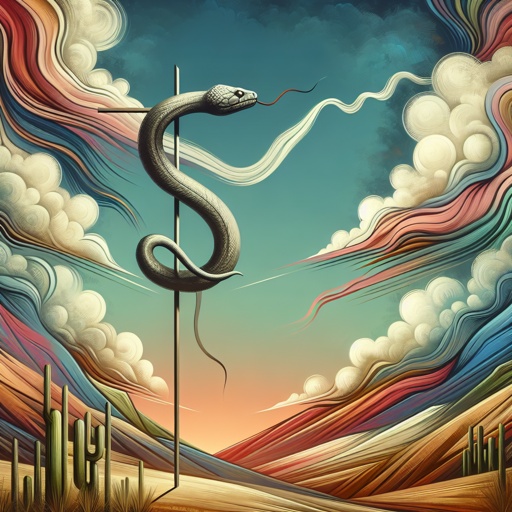
numbers 21:8-9 & John 3:14

Numbers 27:9 - "And if he have no daughter, then ye shall give his inheritance unto his brethren."
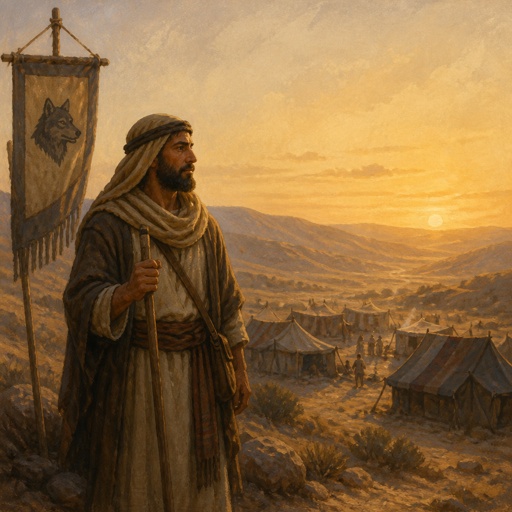
"Of the tribe of Benjamin, Palti the son of Raphu." - Numbers 13:9

"¶ And the LORD spake unto Moses, saying," - Numbers 35:9

Numbers 9:11 - "The fourteenth day of the second month at even they shall keep it, and eat it with unleavened bread and bitter herbs."

"If we confess our sins, he is faithful and just to forgive us our sins, and to cleanse us from all unrighteousness." - 1 John 1:9

Numbers 30:9 - "But every vow of a widow, and of her that is divorced, wherewith they have bound their souls, shall stand against her."

Numbers 9:8 - "And Moses said unto them, Stand still, and I will hear what the LORD will command concerning you."

Numbers 5:9 - "And every offering of all the holy things of the children of Israel, which they bring unto the priest, shall be his."