The Sacred Presence: Lessons from the Cloud and Fire
“And on the day that the tabernacle was reared up the cloud covered the tabernacle, namely, the tent of the testimony: and at even there was upon the tabernacle as it were the appearance of fire, until the morning.” — Numbers 9:15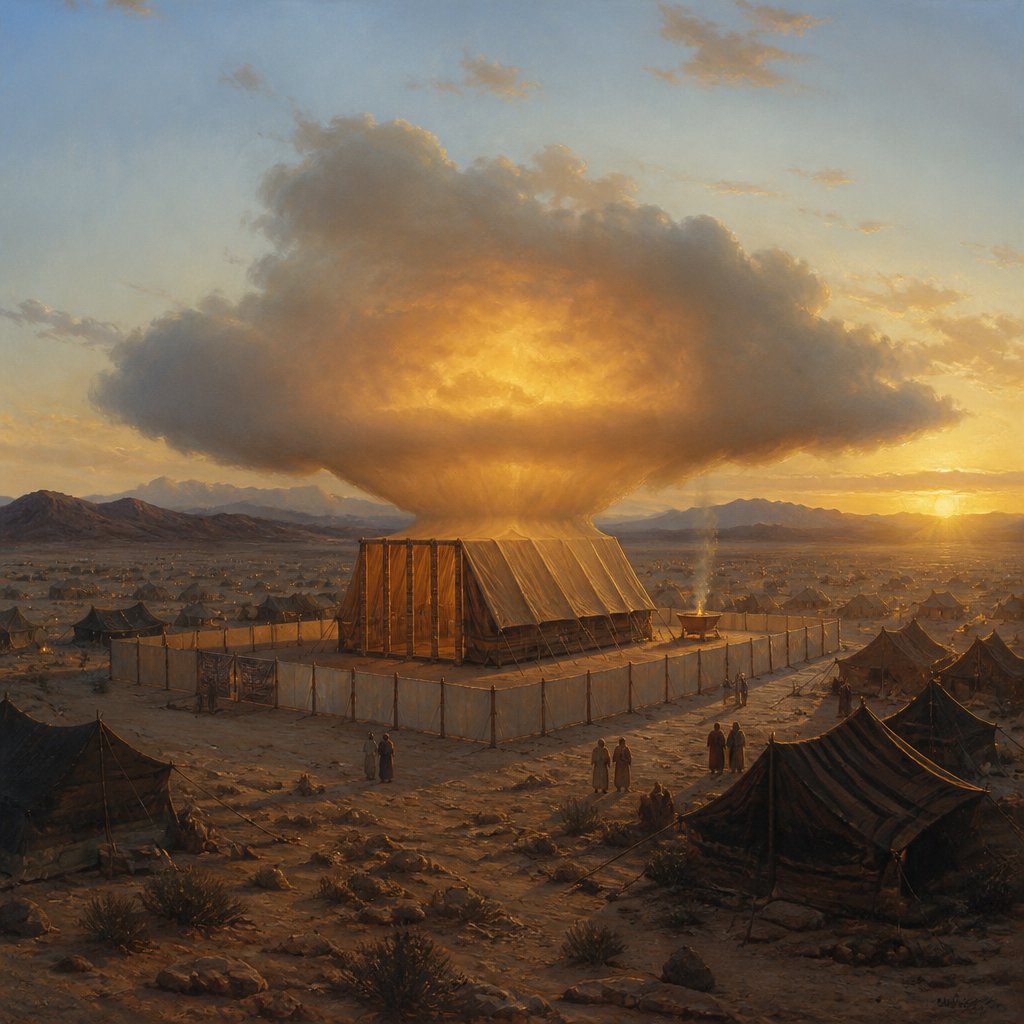
In the book of Numbers, chapter 9, verse 15, we find a powerful account that reveals profound truths about God's presence and guidance. The verse states: "And on the day that the tabernacle was reared up the cloud covered the tabernacle, namely, the tent of the testimony: and at even there was upon the tabernacle as it were the appearance of fire, until the morning." This imagery of the cloud and fire surrounding the tabernacle is rich in spiritual significance and offers us deep insights into our relationship with God.
Firstly, the tabernacle represented God's dwelling place among His people. It was not simply a structure but rather the locus of divine presence where heaven met earth. The cloud covering the tabernacle signifies God's protection and guidance. The Israelites were in a precarious journey through the wilderness, and they needed assurance that they were not alone. The manifestation of the cloud was a daily reminder that God was with them, leading them every step of the way.
The cloud wasn’t just a sign of protection; it was also an emblem of God’s glory. We see in Exodus 40:34-35 that the cloud filled the tabernacle, indicating that God’s glory was so substantial that it could not be contained. This offers us a crucial reminder that God’s presence is both powerful and transformative. In our lives, we can often feel lost or overwhelmed, wandering in the wilderness of uncertainty or trial. Yet, like the Israelites, we have the assurance that God is present – leading, protecting, and enveloping us with His glory.
Second, the appearance of fire at night signified God’s guidance in darkness. The darkness often represents confusion, fear, and uncertainty. The fire illuminated the path for the Israelites just as it symbolizes God’s light in our own times of distress. Psalm 119:105 puts it beautifully: "Thy word is a lamp unto my feet, and a light unto my path." In our moments of desperation, we can seek His light to guide us amidst the gloominess of life’s circumstances. Fire refines, purifies, and brings warmth, reminding us that even in our struggles, God is refining our character, drawing us closer to Him.
Moreover, the provision of both cloud and fire illustrates the dual nature of God’s guidance: through presence in peace and direction through trials. How often do we find ourselves yearning for clarity amid chaos? Despite the discomfort of the wilderness, we learn that God’s presence is both a source of comfort and a beacon of hope.
Additionally, this verse compels us to consider our own tabernacles. The New Testament provides the believer with a deeper understanding of God’s presence. In 1 Corinthians 6:19, we are reminded that our bodies are the temples of the Holy Spirit. Just as God filled the tabernacle with His glory, He desires to fill our lives with His presence. We can ask ourselves: Is my life a dwelling place for God’s glory? Am I allowing the Holy Spirit to inhabit my decisions, actions, and thoughts? This call to examine our inner selves is vital, for it shapes our relationship with God and with others.
As night fell and the fire illuminated the tabernacle, it became a symbol of hope and assurance that God was actively involved in the lives of His people. The morning light that followed was a testament to God’s faithfulness and the promise of a new day. In our walk with Christ, we too can rest in the promise that morning will always come after our nights of trial.
In conclusion, let the imagery of the cloud and fire remind us to seek God’s presence and guidance in our daily lives. Let us cherish the comfort of His cloud in our times of peace and the illuminating fire in our darkest hours. Each moment is an invitation to recognize and experience the beauty of His divine companionship. God invites us into a relationship where He leads, protects, and illuminates our paths. May we cultivate awareness of His presence, allowing ourselves to be vessels of His glory in a world that desperately needs His light.
Get our apps


Artwork for Numbers 9:15

Numbers 9:15 - "¶ And on the day that the tabernacle was reared up the cloud covered the tabernacle, namely, the tent of the testimony: and at even there was upon the tabernacle as it were the appearance of fire, until the morning."
"¶ And on the day that the tabernacle was reared up the cloud covered the tabernacle, namely, the tent of the testimony: and at even there was upon the tabernacle as it were the appearance of fire, until the morning." - Numbers 9:15

"Create a detailed and artistic mosaic image that depicts various scenes from the biblical book of Numbers (Bamidbar) chapters 8:1 to 12:1. The image should be divided into sections, each representing different events within these chapters, in a style that reflects traditional Jewish art and avoids Christian or Catholic imagery. Numbers 8:1-4: Show the lighting of the Menorah in the Tabernacle (Mishkan). Aaron, the High Priest, should be lighting the Menorah. Ensure that the seven-branched Menorah is prominently displayed. Numbers 8:5-26: Depict the consecration of the Levites (Leviím). Show the Levites being presented before the Tent of Meeting, having their heads shaved and being sprinkled with purifying water. Include elements such as offerings and the elders of Israel laying their hands on the Levites. Numbers 9:1-14: Illustrate the Israelites observing the Passover (Pesach) in the wilderness. Show families gathered around the Passover meal, with symbols of matzah and lamb. Also, include the people who were impure because of contact with a dead body and how they are consulting Moses about observing the Passover later. Numbers 9:15-23: Display the cloud covering the Tabernacle by day and the appearance of fire by night. Show the Israelites encamped around the Tabernacle, with their tents in the background, and the divine cloud and fire above. Numbers 10:1-10: Illustrate the making and use of the silver trumpets (chatzotzrot). Show the priests blowing the trumpets to signal the Israelites' movements and gather the assembly. Numbers 10:11-36: Depict the Israelites setting out from the wilderness of Sinai, following the cloud of the Lord. Show the ark of the covenant being carried by the Levites, leading the people. Numbers 11:1-35: Portray the incidents of the people's complaints and God's provision of quail. Include scenes of the people gathering quail and a representation of the fire that consumed some of the camp due to their complaints. Show Moses speaking to God, but ensure Moses' face is not visible. Numbers 12:1: Show the scene where Miriam and Aaron speak against Moses because of the Cushite woman he had married. Depict Miriam and Aaron in discussion, but do not show Moses' face. The entire mosaic should be harmonious and cohesive, with no individual faces of Moses visible and no words or numbers in the artwork. The style should reflect traditional Jewish artistic sensibilities and avoid any Christian or Catholic symbols."

"Create a detailed and artistic mosaic image that depicts various scenes from the biblical book of Numbers (Bamidbar) chapters 8:1 to 12:1. The image should be divided into sections, each representing different events within these chapters, in a style that reflects traditional Jewish art and avoids Christian or Catholic imagery. Numbers 8:1-4: Show the lighting of the Menorah in the Tabernacle (Mishkan). Aaron, the High Priest, should be lighting the Menorah. Ensure that the seven-branched Menorah is prominently displayed. Numbers 8:5-26: Depict the consecration of the Levites (Leviím). Show the Levites being presented before the Tent of Meeting, having their heads shaved and being sprinkled with purifying water. Include elements such as offerings and the elders of Israel laying their hands on the Levites. Numbers 9:1-14: Illustrate the Israelites observing the Passover (Pesach) in the wilderness. Show families gathered around the Passover meal, with symbols of matzah and lamb. Also, include the people who were impure because of contact with a dead body and how they are consulting Moses about observing the Passover later. Numbers 9:15-23: Display the cloud covering the Tabernacle by day and the appearance of fire by night. Show the Israelites encamped around the Tabernacle, with their tents in the background, and the divine cloud and fire above. Numbers 10:1-10: Illustrate the making and use of the silver trumpets (chatzotzrot). Show the priests blowing the trumpets to signal the Israelites' movements and gather the assembly. Numbers 10:11-36: Depict the Israelites setting out from the wilderness of Sinai, following the cloud of the Lord. Show the ark of the covenant being carried by the Levites, leading the people. Numbers 11:1-35: Portray the incidents of the people's complaints and God's provision of quail. Include scenes of the people gathering quail and a representation of the fire that consumed some of the camp due to their complaints. Show Moses speaking to God, but ensure Moses' face is not visible. Numbers 12:1: Show the scene where Miriam and Aaron speak against Moses because of the Cushite woman he had married. Depict Miriam and Aaron in discussion, but do not show Moses' face. The entire mosaic should be harmonious and cohesive, with no individual faces of Moses visible and no words or numbers in the artwork. The style should reflect traditional Jewish artistic sensibilities and avoid any Christian or Catholic symbols."

Numbers 15:9 - "Then shall he bring with a bullock a meat offering of three tenth deals of flour mingled with half an hin of oil."

Numbers 9:9 - "¶ And the LORD spake unto Moses, saying,"

Numbers 12 15

Numbers 11:15
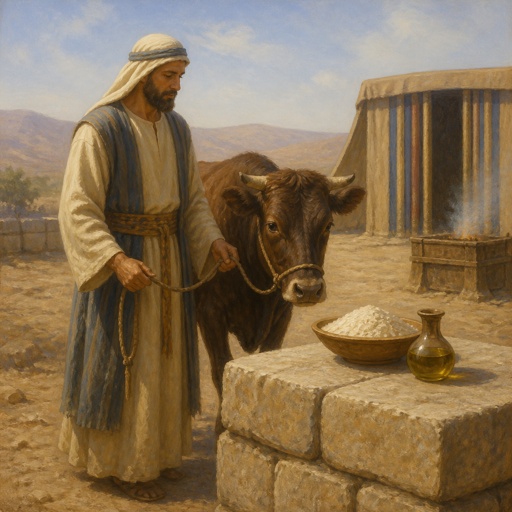
"Then shall he bring with a bullock a meat offering of three tenth deals of flour mingled with half an hin of oil." - Numbers 15:9
Numbers 1:15 - "Of Naphtali; Ahira the son of Enan."

numbers 31:14-15

Numbers 27:15 - "¶ And Moses spake unto the LORD, saying,"

Numbers 15:17 - "¶ And the LORD spake unto Moses, saying,"

Numbers 15:37 - "¶ And the LORD spake unto Moses, saying,"

Numbers 7:1-9

Numbers 15:1 - "And the LORD spake unto Moses, saying,"

Numbers 13:15 - "Of the tribe of Gad, Geuel the son of Machi."

Numbers 1:9 - "Of Zebulun; Eliab the son of Helon."

Numbers 33:15 - "And they departed from Rephidim, and pitched in the wilderness of Sinai."

"¶ And the LORD spake unto Moses, saying," - Numbers 9:9

Numbers 35:9 - "¶ And the LORD spake unto Moses, saying,"

Numbers 13:9 - "Of the tribe of Benjamin, Palti the son of Raphu."

Numbers 29:15 - "And a several tenth deal to each lamb of the fourteen lambs:"

Numbers 10:15 - "And over the host of the tribe of the children of Issachar was Nethaneel the son of Zuar."

Numbers 15:12 - "According to the number that ye shall prepare, so shall ye do to every one according to their number."

Numbers 15:11 - "Thus shall it be done for one bullock, or for one ram, or for a lamb, or a kid."

Numbers 15:16 - "One law and one manner shall be for you, and for the stranger that sojourneth with you."

Numbers 19:15 - "And every open vessel, which hath no covering bound upon it, is unclean."

Numbers 15:34 - "And they put him in ward, because it was not declared what should be done to him."

Numbers 12:9 - "And the anger of the LORD was kindled against them; and he departed."