The Power of Willingness in Godly Relationships
“But without thy mind would I do nothing; that thy benefit should not be as it were of necessity, but willingly.” — Philemon 1:14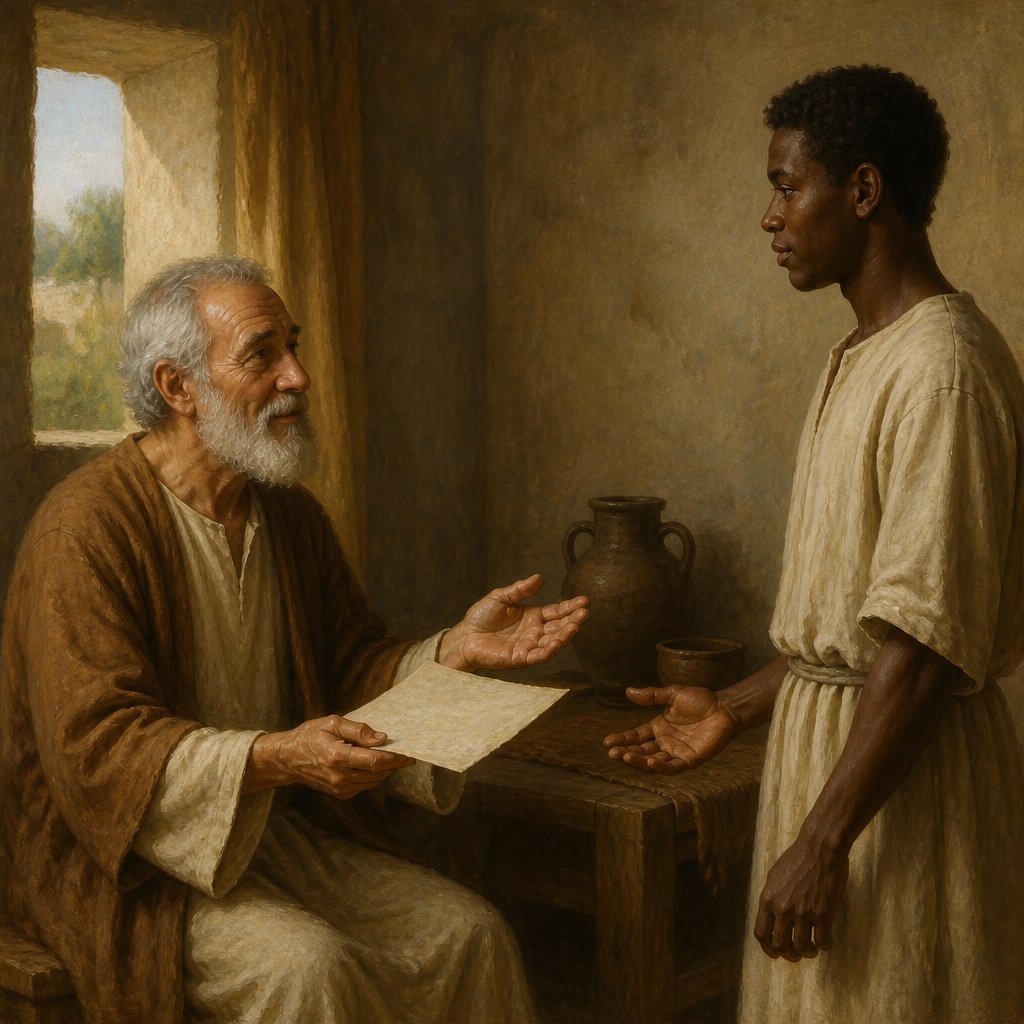
The Apostle Paul, in his letter to Philemon, succinctly shares a profound principle about relationships and the nature of giving and receiving. The verse, "But without thy mind would I do nothing; that thy benefit should not be as it were of necessity, but willingly" (Philemon 1:14 KJV), encapsulates the essence of voluntary love and the depths of Christian fellowship.
To fully appreciate the context of Paul’s message, we must recognize the situation at hand. Paul was advocating for Onesimus, a runaway slave who had come to faith through Paul’s ministry. Philemon, as the master, held certain rights over Onesimus. Paul’s appeal, however, transcends mere legalism; it speaks to the heart of Christian liberty and responsibility.
Paul declares, "Without thy mind would I do nothing..." This indicates that genuine relationships are built on mutual respect and consent. True community and Christian living cannot be forced or coerced. Paul understood that his relationship with Philemon required not only communication but a heart willing to respond in grace and love. In our current contexts—whether in family, friendships, or church communities—this principle holds true. If we seek to aid others, it must not merely be out of duty or obligation but out of a willingness to serve rooted in love. Do we give to others with a joyful heart, or do we begrudgingly fulfill our responsibilities? How often do we serve with a sense of reluctance?
Paul continues, "that thy benefit should not be as it were of necessity, but willingly." Here lies a critical insight: the difference between obligation and willingness. In our spiritual journeys, it can be easy to mistake routine or religious duty for genuine faith. We might pray, attend church, or perform good deeds, but if these actions are devoid of heartfelt willingness, they can become empty rituals. God desires a relationship marked not just by actions but by the transformation of our hearts, where our service flows from love rather than compulsion.
When we serve God and others willingly, it allows the Holy Spirit to work through us in authentic ways. This willingness often leads to deeper blessings—not just for the recipient but for the giver as well. As we share in community, lifting one another up, fostering an environment where benefits are shared willingly fosters growth and love within the body of Christ.
Furthermore, Paul’s words challenge us to examine our own motivations. Are we serving and loving in ways that reflect our surrender to God’s will, or are we still clinging to our own agendas? Can we release our expectations and allow the Spirit to cultivate a heart of generosity within us? It invites us to lean into our motivations before we engage others, aligning our hearts to God’s purpose rather than our own.
This principle also extends into our prayer lives. When we come before God, are we petitioning from a place of desperate necessity, or do we ask from a heart that longs for His will to be done willingly? God desires our hearts to connect with Him, becoming aligned with His desires. It transforms our prayer life from one of duty to one of devotion.
As we reflect on Philemon 1:14, let us pray for the willingness to engage in relationships authentically—to serve, to give, and to love freely. May our benefits to one another arise not out of necessity, but willingly, as a vibrant reflection of Christ’s love working through us. In doing so, we'll not only grow in faith but also in the richness of relationships that mirror the beauty of Christ's love.
Get our apps


Artwork for Philemon 1:14

Philemon 1:14 - "But without thy mind would I do nothing; that thy benefit should not be as it were of necessity, but willingly."
"But without thy mind would I do nothing; that thy benefit should not be as it were of necessity, but willingly." - Philemon 1:14

Philemon 1:4-7

Philemon 1:1 - "Paul, a prisoner of Jesus Christ, and Timothy our brother, unto Philemon our dearly beloved, and fellowlabourer, 2 And to our beloved Apphia, and Archippus our fellowsoldier, and to the church in thy house:"

Philemon 1:4 - "I thank my God, making mention of thee always in my prayers,"

Philemon 1:24 - "Marcus, Aristarchus, Demas, Lucas, my fellowlabourers."

Philemon 1:23 - "There salute thee Epaphras, my fellowprisoner in Christ Jesus;"

Philemon 1:17 - "If thou count me therefore a partner, receive him as myself."

Philemon 1:25 - "The grace of our Lord Jesus Christ be with your spirit. Amen."

Philemon 1:11 - "Which in time past was to thee unprofitable, but now profitable to thee and to me:"

"I thank my God, making mention of thee always in my prayers," - Philemon 1:4

Philemon 1:15 - "For perhaps he therefore departed for a season, that thou shouldest receive him for ever;"

Philemon 1:3 - "Grace to you, and peace, from God our Father and the Lord Jesus Christ."

Philemon 1:18 - "If he hath wronged thee, or oweth thee ought, put that on mine account;"

"I thank my God, making mention of thee always in my prayers," - Philemon 1:4

Philemon 1:8 - "Wherefore, though I might be much bold in Christ to enjoin thee that which is convenient,"

Philemon 1:10 - "I beseech thee for my son Onesimus, whom I have begotten in my bonds:"

Philemon 1:12 - "Whom I have sent again: thou therefore receive him, that is, mine own bowels:"

Philemon 1:20 - "Yea, brother, let me have joy of thee in the Lord: refresh my bowels in the Lord."

Philemon 1:5 - "Hearing of thy love and faith, which thou hast toward the Lord Jesus, and toward all saints;"

Philemon 1:7 - "For we have great joy and consolation in thy love, because the bowels of the saints are refreshed by thee, brother."

"Marcus, Aristarchus, Demas, Lucas, my fellowlabourers." - Philemon 1:24

Philemon 1:6 - "That the communication of thy faith may become effectual by the acknowledging of every good thing which is in you in Christ Jesus."

"Paul, a prisoner of Jesus Christ, and Timothy our brother, unto Philemon our dearly beloved, and fellowlabourer, 2 And to our beloved Apphia, and Archippus our fellowsoldier, and to the church in thy house:" - Philemon 1:1

Philemon 1:22 - "But withal prepare me also a lodging: for I trust that through your prayers I shall be given unto you."

Philemon 1:16 - "Not now as a servant, but above a servant, a brother beloved, specially to me, but how much more unto thee, both in the flesh, and in the Lord?"

"There salute thee Epaphras, my fellowprisoner in Christ Jesus;" - Philemon 1:23

Philemon 1:9 - "Yet for love's sake I rather beseech thee, being such an one as Paul the aged, and now also a prisoner of Jesus Christ."

Philemon 1:13 - "Whom I would have retained with me, that in thy stead he might have ministered unto me in the bonds of the gospel:"

Philemon 1:21 - "Having confidence in thy obedience I wrote unto thee, knowing that thou wilt also do more than I say."