The Blessing of Mercy: Understanding Proverbs 14:21
“He that despiseth his neighbour sinneth: but he that hath mercy on the poor, happy is he.” — Proverbs 14:21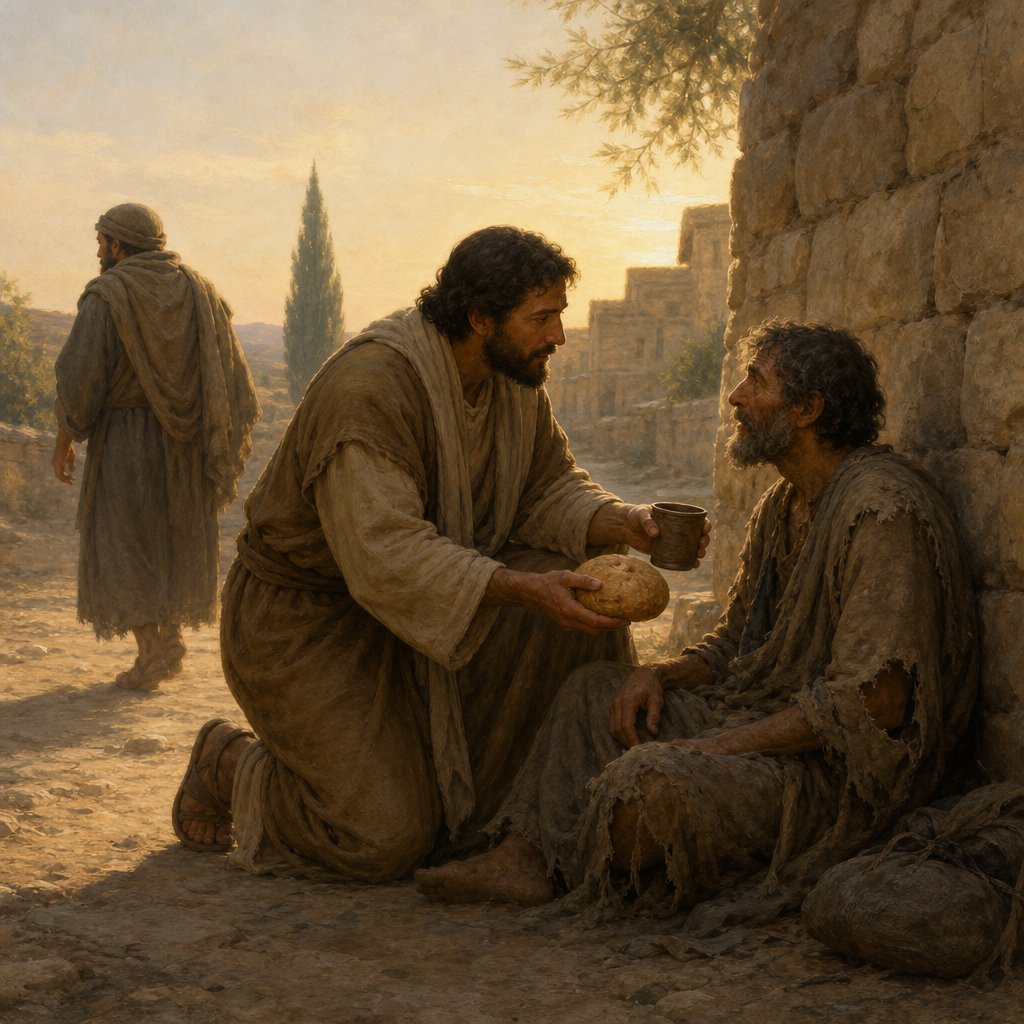
Proverbs 14:21 (KJV) states: "He that despiseth his neighbour sinneth: but he that hath mercy on the poor, happy is he." This verse captures the fundamental essence of biblical ethics regarding our relationships with others, particularly those who are vulnerable. In our exploration of this verse, we must acknowledge the gravity of how we treat our neighbors, especially the poor, and the profound implications these attitudes have on our spiritual well-being.
The first part of this proverb warns against the sin of contempt. The term "despiseth" connotes more than just a passive disregard; it indicates a strong, active disdain for one’s neighbor. This raises a critical question: Who is our neighbor? In the biblical understanding, a neighbor isn’t limited to those who live near us, but encompasses anyone in our circle of influence—friends, family, and even strangers. To despise our neighbors is to ultimately turn away from our divine calling of love and compassion.
In the Gospels, Jesus expands upon this idea through the parable of the Good Samaritan (Luke 10:25-37). He illustrates that being a neighbor is about our willingness to act with compassion, regardless of social norms or prejudices. Therefore, the act of despising someone is not merely a social sin; it signifies a disconnection from the heart of God, as He is a God of love and mercy. For many, the temptation to judge and despise the less fortunate grows out of arrogance, pride, or fear, but Scripture reminds us that our identity should be grounded in love.
Interestingly, the second part of Proverbs 14:21 contrasts the first by presenting the blessing associated with mercy: "but he that hath mercy on the poor, happy is he." Here, we find not only a commandment but also an invitation. The call to have mercy on the poor emphasizes an active engagement in their lives—a willingness to see their struggles and extend generosity, support, or simply kindness in their time of need. To be merciful is to align our hearts with God’s, as we reflect the King of Mercy in our actions.
The word "happy" in this context relates to deeper, holistic joy or fulfillment—one that surpasses momentary happiness derived from material gains or social status. It is a testament to the soul’s satisfaction that the Lord bestows upon those who practice mercy. In Matthew 5:7, we see a parallel principle when Jesus states, "Blessed are the merciful: for they shall obtain mercy." The flow of mercy is cyclical; when we extend mercy to others, we invite God’s mercy into our lives as well. This reciprocal relationship with God leads us to a life marked by joy, peace, and hope.
Understanding this proverb should prompt us to evaluate our attitudes and actions toward those in need around us. Are we dismissive of people's plights, or do we actively seek ways to alleviate their burdens? Looking beyond mere charity, it compels us to address underlying issues within our communities that lead to poverty and suffering. We are called not just to help the poor but to advocate for justice and equity.
As we engage in acts of kindness and mercy, we mirror God's love to the world—a love that transcends our weaknesses and failings. This divine love is transformative, not only for those receiving mercy but also for us as givers. It reshapes our hearts, fosters community, promotes understanding, and, most significantly, brings glorification to God.
May we earnestly strive to embody the truth of Proverbs 14:21. Let those actions be the hallmark of our everyday lives. In extending mercy to our neighbors—especially the poor—we find profound happiness, rooted deeply in our relationship with the Creator of the universe. May our hearts overflow with compassion, and may our lives be a testament to the mercy that God has extended to us.
Get our apps


Artwork for Proverbs 14:21

Proverbs 14:21 - "He that despiseth his neighbour sinneth: but he that hath mercy on the poor, happy is he."

"He that despiseth his neighbour sinneth: but he that hath mercy on the poor, happy is he." - Proverbs 14:21
"He that despiseth his neighbour sinneth: but he that hath mercy on the poor, happy is he." - Proverbs 14:21

Proverbs 21:14 - "A gift in secret pacifieth anger: and a reward in the bosom strong wrath."

"A gift in secret pacifieth anger: and a reward in the bosom strong wrath." - Proverbs 21:14

Proverbs 18:21

Proverbs 18:21

Proverbs 18:21

Proverbs 18:21

Proverbs 18:21

Proverbs 18:21

Proverbs 18:21

Proverbs 18:21

Proverbs 18:21

Proverbs 18:21

Proverbs 18:21

Proverbs 18:21

proverbs 21 7

Proverbs 31:21

Proverbs 21:21 - "He that followeth after righteousness and mercy findeth life, righteousness, and honour."

Proverbs 21:18 - "The wicked shall be a ransom for the righteous, and the transgressor for the upright."

Proverbs 21:25 - "The desire of the slothful killeth him; for his hands refuse to labour."

Proverbs 2:21 - "For the upright shall dwell in the land, and the perfect shall remain in it."

Proverbs 21:30 - "There is no wisdom nor understanding nor counsel against the LORD."

Proverbs 13:21 - "Evil pursueth sinners: but to the righteous good shall be repayed."

Proverbs 21:31 - "The horse is prepared against the day of battle: but safety is of the LORD."

Proverbs 21:19 - "It is better to dwell in the wilderness, than with a contentious and an angry woman."

Proverbs 21:4 - "An high look, and a proud heart, and the plowing of the wicked, is sin."

Proverbs 14:14 - "The backslider in heart shall be filled with his own ways: and a good man shall be satisfied from himself."

Proverbs 30:21 - "For three things the earth is disquieted, and for four which it cannot bear:"