The Roaring Lion: Reverence and Responsibility
"The fear of a king is as the roaring of a lion: whoso provoketh him to anger sinneth against his own soul." - Proverbs 20:2
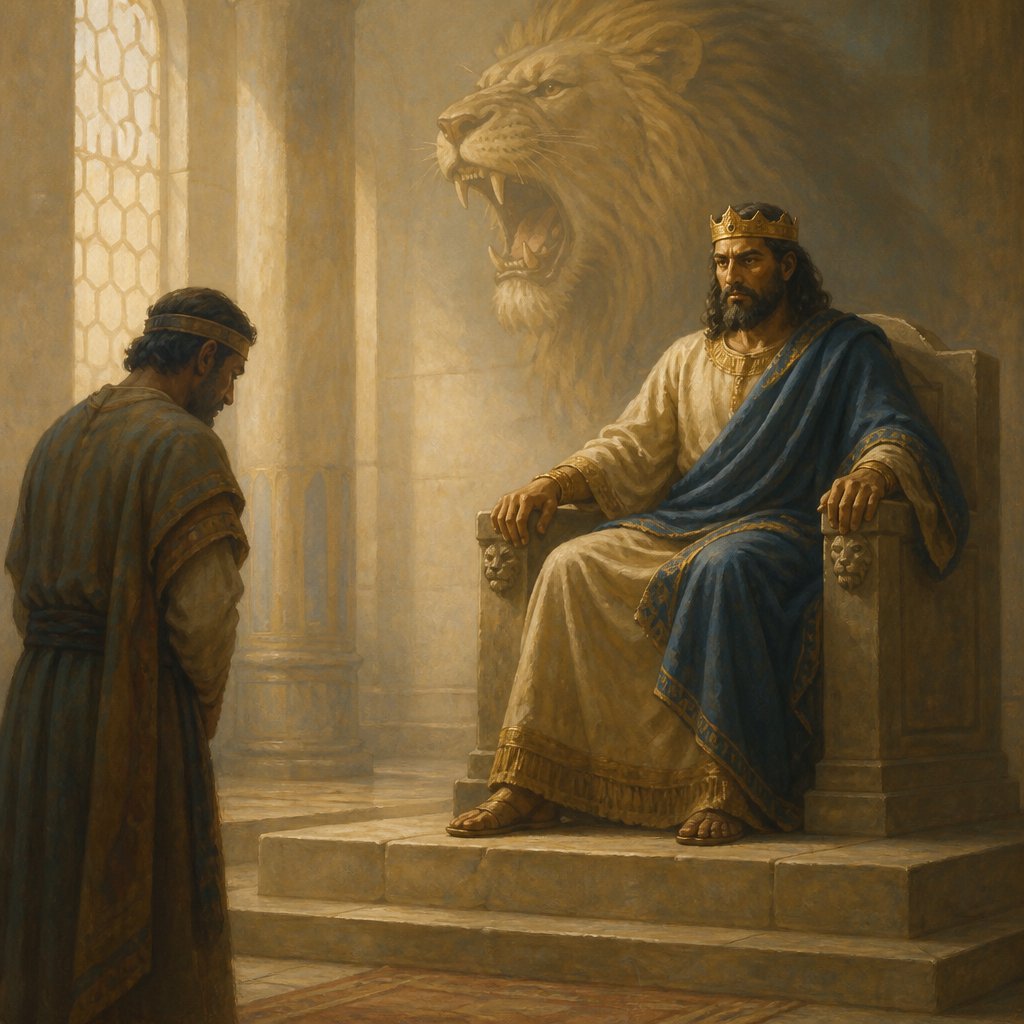
When we look at Proverbs 20:2, we encounter a poignant reminder of authority and its implications in our lives: “The fear of a king is as the roaring of a lion: whoso provoketh him to anger sinneth against his own soul.” This verse from the King James Version invokes powerful imagery and provides profound truths about respect, authority, and the consequences of our actions.
In ancient times, a king represented not just a political figure but also a personification of law and order, a divine institution tasked with maintaining both peace and justice. To provoke such a figure, especially one as potent as a lion, symbolizes a grave error that comes with dire repercussions. The lion’s roar is synonymous with absolute power and a commanding presence; therefore, when Proverbs compares a king to a lion, it encapsulates the argument that the respect given to authority figures is crucial.
The “fear” depicted in this verse is multi-faceted, containing both reverence and anxiety that arise from recognizing the authority and power an individual possesses. This is not a fear that confines or paralyzes but enables individuals to engage in a relationship with that authority rooted in respect rather than rebellion. To understand this, we must look at the nature of our relationship with God, the ultimate authority. Just as we respect God—not out of servitude but out of love—we must extend that reverence towards earthly authorities.
Yet, the proverb hints at a deeper understanding of our actions and their spiritual implications. To provoke the king, to act with defiance or to instigate anger is to sin against one’s own soul. This suggests that rebellion against authority comes with a spiritual cost. When we act foolishly or defiantly towards authority, we place ourselves in a position where we can experience damaging consequences.
Consider how this theme extends into our daily lives. Each of us operates under various authorities, be it parents, teachers, employers, or government leaders. In our current climate, where rebellion is often seen as valorous and dissent is celebrated, this verse calls us to re-evaluate our stance towards authority. Indeed, there are instances when standing up against injustice is necessary; however, the means by which we do so must always be grounded in respect and love. While it is vital to challenge wrongdoing, we must remember that God’s design hinges on order and submission, serving roles established for peace, growth, and societal ecology.
Furthermore, the verse teaches about the nature of righteousness. If we are to approach authority figures, especially in moments of disagreement or discontent, we’re called to do so with humility. Proverbs highlights the wisdom in recognizing the roaring lion and responding with care, understanding the potential consequences of our words and actions.
There is a spiritual discipline involved in yielding to authority. In Romans 13:1, Paul instructs us clearly on this matter: “Let every soul be subject unto the higher powers. For there is no power but of God: the powers that be are ordained of God.” This reinforces the declaration that every authority we encounter is ultimately under God’s sovereignty, thus worthy of respect.
As we reflect upon Proverbs 20:2, let us examine our hearts and recognize where we may have provoked anger through our words or actions. Instead of defiance, let’s seek humility and the wisdom to engage with authority in a manner that reflects our faith in God’s design. May we come to understand that respect for authority is not merely about the avoidance of wrath but ultimately about nurturing our soul and maintaining peace within our communities. The roar of the lion teaches us the weight of our choices and the beautiful harmony that comes from yielding to divine order.
Want to reflect more on Proverbs 20:2?
Continue your spiritual journey with Bible Chat — an AI-powered tool for exploring God's Word through conversation. Ask questions, discover connections, and deepen your understanding.
Get Our Apps


Proverbs 20:2 Artwork
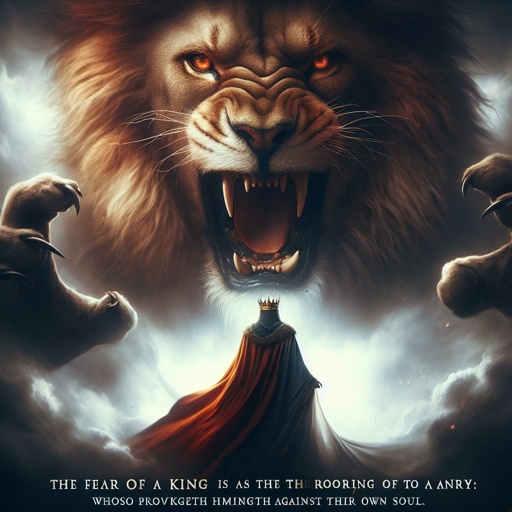
Proverbs 20:2 - "The fear of a king is as the roaring of a lion: whoso provoketh him to anger sinneth against his own soul."
"The fear of a king is as the roaring of a lion: whoso provoketh him to anger sinneth against his own soul." - Proverbs 20:2

Proverbs 2:20 - "That thou mayest walk in the way of good men, and keep the paths of the righteous."

proverbs 1:20

proverbs 1:20

proverbs 1:20

proverbs 1:20

proverbs 1:20

proverbs 1:20

proverbs 1:20

proverbs 1:20

proverbs 1:20

proverbs 1:20

proverbs 1:20

Proverbs 1:20

proverbs 1:20

proverbs 1:20

proverbs 1:20

proverbs 1:20

proverbs 1:20

proverbs 1:20

proverbs 1:20

"That thou mayest walk in the way of good men, and keep the paths of the righteous." - Proverbs 2:20

proverbs 1:20

proverbs 1:20

proverbs 1:20

proverbs 1:20

proverbs 1:20

proverbs 1:20

proverbs 1:20