Devotion in the Dust: Finding Beauty in God’s Creation
“For thy servants take pleasure in her stones, and favour the dust thereof.” — Psalms 102:14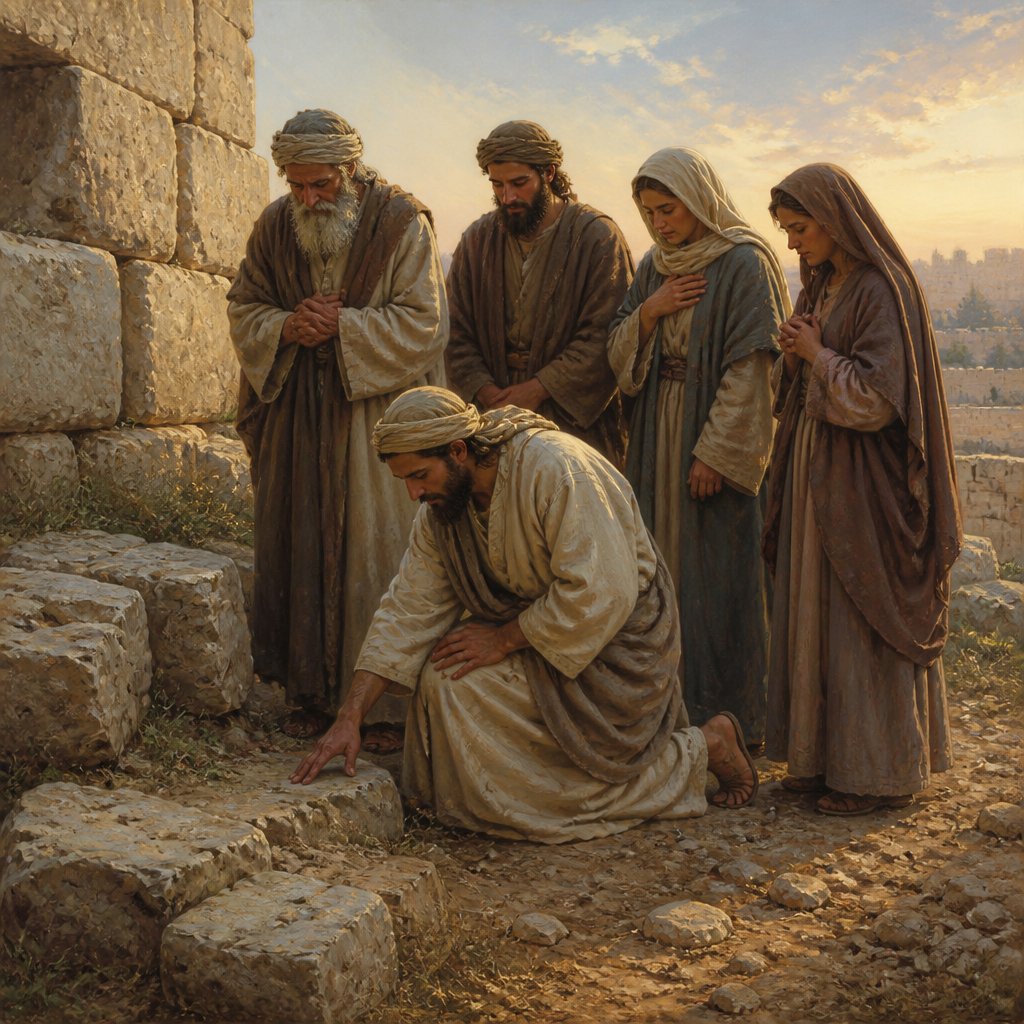
Psalm 102:14 states, "For thy servants take pleasure in her stones, and favour the dust thereof." This profound utterance reflects more than just an appreciation of physical objects; it encapsulates a deep love and reverence for God’s creation and His presence, even in the smallest and seemingly insignificant aspects of our surroundings.
As we explore this verse, we must first grapple with the context in which it is set. Psalm 102 is a lament, expressing the sorrow of a suffering soul seeking refuge in God. The psalmist speaks both of individual pain and communal desolation, often depicting a desire for restoration. Amid this heartfelt cry, we find a glimmer of hope and a commitment to honor what God has created. The foundations of Zion, the city of God, and its dust represent not only a physical location but also a spiritual sanctuary filled with divine promise.
The phrase, "thy servants take pleasure in her stones," highlights a sense of attachment and appreciation for Jerusalem. Stones are typically viewed as lifeless, cold, and unyielding; yet here, they symbolize something far greater. They are not mere bricks and mortar; they represent the enduring presence of God within a community of believers. Just as we might cherish the stones that make up a beloved family home or the landmarks of our youth, the psalmist is affirming a spiritual connection to the very ground that has been sanctified by God’s choosing. This echoes the sentiment found in Ephesians 2:19-22, where Paul explains how believers are being built together into a holy temple in the Lord.
Moreover, to say that God's servants "favour the dust" implies a devotion that sees beyond the surfaces of life. Dust is often a metaphor for insignificance or decay — something that we tend to dismiss or overlook. However, here it implies a reverence for all aspects of God’s creation. This speaks profoundly to the biblical principle that all of creation reflects God’s majesty. Jesus, too, invited His followers to reflect upon the flowers of the field and the birds of the air—things often taken for granted. If we are to take pleasure in the dust, we must learn to find joy in the ordinary and the mundane, recognizing that they are part of God's divine artistry.
In a world that often elevates the grand and the glamorous, we can easily ignore the beauty hidden in the simplicity of our daily lives. Psalm 102 invites us to consider how we might deepen our appreciation for God’s present work around us, even within the gritty and unglamorous. It could be in the laughter of children playing in the park, the sound of wind rustling through trees, or the feel of dirt between our fingers when we dig into the earth to plant new life. Each dusty corner of our existence carries the potential to unveil God’s greatness.
Furthermore, this verse shifts our focus from individual concern to community acknowledgment; the psalmist speaks in communal terms. It reminds us that our joy in God’s creation should be collective, engaging us in love and gratitude for our shared home, our world. In appreciating the stones and dust, we affirm our commitment to take care of them, to nurture the environment as faithful stewards of God’s handiwork. This extends not only to our physical surroundings but also to our relationships with one another, recognizing that we are all interconnected parts of God’s creation.
In closing, let us take time to meditate on this truth. In every moment, whether brave or broken, there exists potential to witness God's glory. May we be encouraged to find joy in our mundane tasks, to appreciate the "stones" of our lives, and to hold dear the "dust" from which we were all made. In doing so, we will not only honor God but also cultivate a heart that beats in rhythm with His creation. May our lives reflect a devotion that finds beauty in every corner of our existence, proclaiming, even amid sorrow, that we delight in the hard, at times unappreciated, work of God.
Get our apps


Artwork for Psalms 102:14

Psalms 102:14 - "For thy servants take pleasure in her stones, and favour the dust thereof."

"For thy servants take pleasure in her stones, and favour the dust thereof." - Psalms 102:14

Psalms 102:17 - "He will regard the prayer of the destitute, and not despise their prayer."

Psalms 102:22 - "When the people are gathered together, and the kingdoms, to serve the LORD."

Psalms 102:21 - "To declare the name of the LORD in Zion, and his praise in Jerusalem;"

Psalms 102:20 - "To hear the groaning of the prisoner; to loose those that are appointed to death;"

Psalms 102:7 - "I watch, and am as a sparrow alone upon the house top."

"For my days are consumed like smoke, and my bones are burned as an hearth." - Psalms 102:3

Psalms 102:27 - "But thou art the same, and thy years shall have no end."

"My days are like a shadow that declineth; and I am withered like grass." - Psalms 102:11

Psalms 102:3 - "For my days are consumed like smoke, and my bones are burned as an hearth."

Psalms 102:23 - "He weakened my strength in the way; he shortened my days."

Psalms 102:5 - "By reason of the voice of my groaning my bones cleave to my skin."

"I am like a pelican of the wilderness: I am like an owl of the desert." - Psalms 102:6

Psalms 102:25 - "Of old hast thou laid the foundation of the earth: and the heavens are the work of thy hands."

Psalms 102:11 - "My days are like a shadow that declineth; and I am withered like grass."

Psalms 119:102 - "I have not departed from thy judgments: for thou hast taught me."

Psalms 102:6 - "I am like a pelican of the wilderness: I am like an owl of the desert."

Psalms 102:9 - "For I have eaten ashes like bread, and mingled my drink with weeping,"

Psalms 102:28 - "The children of thy servants shall continue, and their seed shall be established before thee."

"I have not departed from thy judgments: for thou hast taught me." - Psalms 119:102

"Of old hast thou laid the foundation of the earth: and the heavens are the work of thy hands." - Psalms 102:25

Psalms 102:1 - "Hear my prayer, O LORD, and let my cry come unto thee."

Psalms 102:16 - "When the LORD shall build up Zion, he shall appear in his glory."

Psalms 102:15 - "So the heathen shall fear the name of the LORD, and all the kings of the earth thy glory."

Psalms 102:18 - "This shall be written for the generation to come: and the people which shall be created shall praise the LORD."

Psalms 102:12 - "But thou, O LORD, shalt endure for ever; and thy remembrance unto all generations."

Psalms 102:8 - "Mine enemies reproach me all the day; and they that are mad against me are sworn against me."

Psalms 102:4 - "My heart is smitten, and withered like grass; so that I forget to eat my bread."

Psalms 102:10 - "Because of thine indignation and thy wrath: for thou hast lifted me up, and cast me down."