The Weight of Silence: Hanging Our Harps on the Willows
“We hanged our harps upon the willows in the midst thereof.” — Psalms 137:2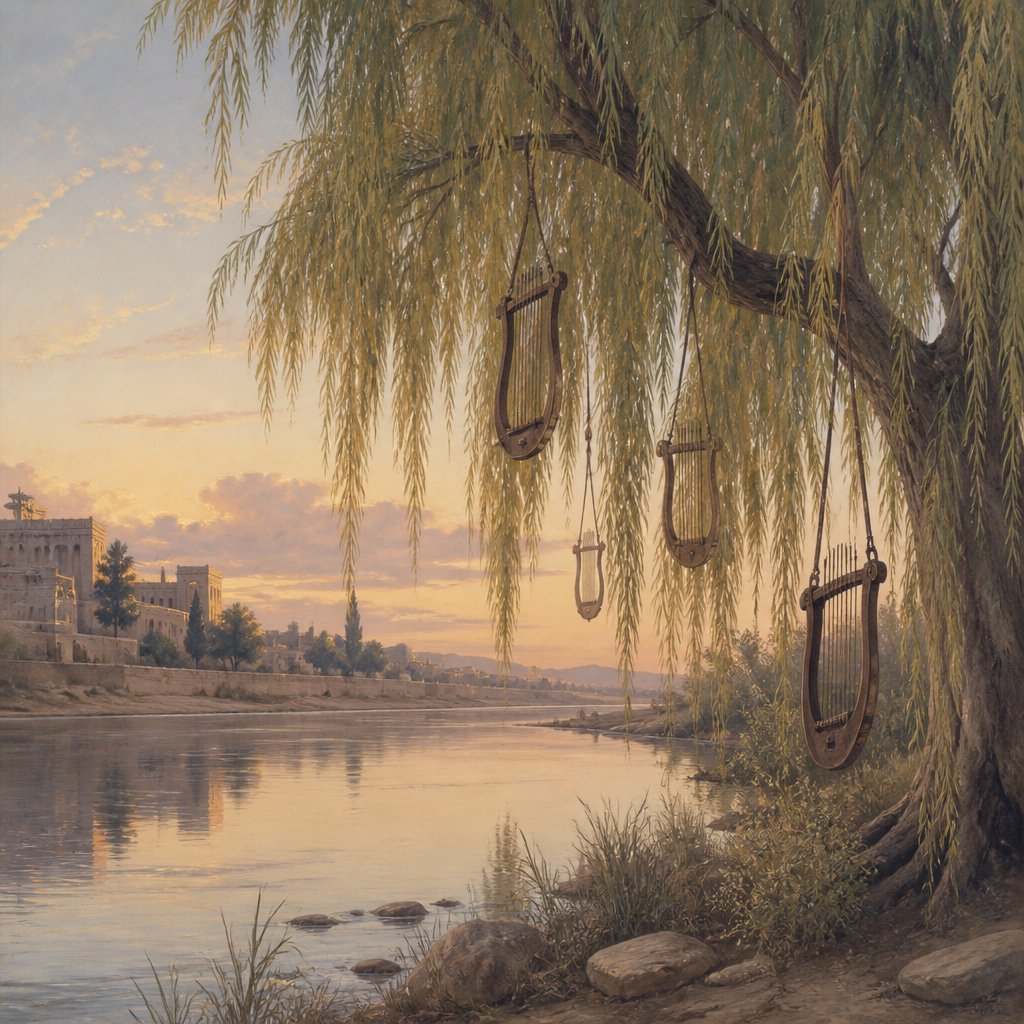
Psalms 137 is a poignant and heart-wrenching reflection on exile, mourning, and the deep emotional pain that accompanies the loss of home and identity. As we delve into verse 2, "We hanged our harps upon the willows in the midst thereof," we are drawn into a moment of despair that resonates with many believers across time and circumstances.
The context of this verse is crucial. The Israelites, transported from Jerusalem to Babylon, were not merely displaced; they were stripped of their culture, heritage, and joyful expressions of faith. Harps, symbols of music, praise, and worship, are mentioned in this verse as instruments of joy, typically used to honor God and celebrate His goodness. But in this account, the act of hanging their harps on the willows symbolizes a profound grief that leads to silence.
Why did they hang their harps? The willows, trees that grow near water, often represent a place of sorrow. The crying willows reflect the mourning hearts of the Israelites. By hanging their harps, they were categorically stating that they could not make music in a land that felt foreign and hostile. Its foliage is meant to denote life, but here, it cradles the instruments of worship that testify to their deep anguish. They had hung them in despair because their hearts were heavy with sorrow.
In moments of our own lives, we find parallels to this profound act of hanging our harps. There are seasons when life thrusts us into places we never intended to go, filled with personal loss, grief, or disappointment. Days when hope seems elusive, and joy feels like a distant memory. Perhaps your harp feels heavy with the weight of unanswered prayers, lost relationships, or failure. On those days, can we admit that we, too, have hung our harps on the willows?
Yet within this expression of sorrow lies a deeper truth. By acknowledging their despair, the psalmists invite us to experience the fullness of our emotions. Grief is not something to be ignored or minimized; it is a space we must walk through. The Israelites faced their feelings head-on, refusing to mask their pain with forced praise. This honesty is vital in our relationship with God. He desires our authentic selves, our struggles, our heartaches. God can transform our silent spaces into testimonies that proclaim His faithfulness.
There is an enrichment in the silence that follows our hanging of the harps. In moments of stillness, we are opened to new revelations. These moments push us towards introspection and closer communion with God. During our hardship, we might find the Lord guiding us into depths previously unexplored. The willow trees that held their harps also provided shade, shelter, and standing water—elements that signify life even in times of loss.
When we shift our perspective from the act of hanging to the place where our harps are hung, we can begin to see the beauty in the tragedy. The willows can serve as a place not only of grief but of potential restoration, a reminder that life continues despite our suffering. These trees can transform from simple markers of silence to pillars of strength around which new songs can rise. Through them, God meets us in our despair, inviting us towards healing.
Lastly, Psalms 137 reminds us of the hope that rises from this place of sorrow. Although the exiles felt far from home, they were not abandoned. Every tear shed becomes a seed for faith. As we walk through our valleys, our harps may remain hung, but we must not forget the rhythm of our hearts still beats in communion with God. He walks with us as we voice our cries, and in His timing, He will inspire a new song that knows no exile.
May we find courage in our sorrow and strength in the silence, knowing that our God is with us, patiently awaiting our song.
Get our apps


Artwork for Psalms 137:2

Psalms 137:2 - "We hanged our harps upon the willows in the midst thereof."

"We hanged our harps upon the willows in the midst thereof." - Psalms 137:2

"Righteous art thou, O LORD, and upright are thy judgments." - Psalms 119:137

Psalms 119:137 - "Righteous art thou, O LORD, and upright are thy judgments."

"How shall we sing the LORD'S song in a strange land?" - Psalms 137:4

Psalms 137:4 - "How shall we sing the LORD'S song in a strange land?"

Psalms 137:9 - "Happy shall he be, that taketh and dasheth thy little ones against the stones."

"Happy shall he be, that taketh and dasheth thy little ones against the stones." - Psalms 137:9

Psalms 137:1 - "By the rivers of Babylon, there we sat down, yea, we wept, when we remembered Zion."

Psalms 137:5 - "If I forget thee, O Jerusalem, let my right hand forget her cunning."

"If I forget thee, O Jerusalem, let my right hand forget her cunning." - Psalms 137:5

Psalms 137:7 - "Remember, O LORD, the children of Edom in the day of Jerusalem; who said, Rase it, rase it, even to the foundation thereof."

"By the rivers of Babylon, there we sat down, yea, we wept, when we remembered Zion." - Psalms 137:1

Psalms 137:8 - "O daughter of Babylon, who art to be destroyed; happy shall he be, that rewardeth thee as thou hast served us."

PSALMS 137;5 SHOWING THE OLD CITY OF JERUSALEM

"O daughter of Babylon, who art to be destroyed; happy shall he be, that rewardeth thee as thou hast served us." - Psalms 137:8

Psalms 137:3 - "For there they that carried us away captive required of us a song; and they that wasted us required of us mirth, saying, Sing us one of the songs of Zion."

Psalms 137:6 - "If I do not remember thee, let my tongue cleave to the roof of my mouth; if I prefer not Jerusalem above my chief joy."

"If I do not remember thee, let my tongue cleave to the roof of my mouth; if I prefer not Jerusalem above my chief joy." - Psalms 137:6

"For there they that carried us away captive required of us a song; and they that wasted us required of us mirth, saying, Sing us one of the songs of Zion." - Psalms 137:3
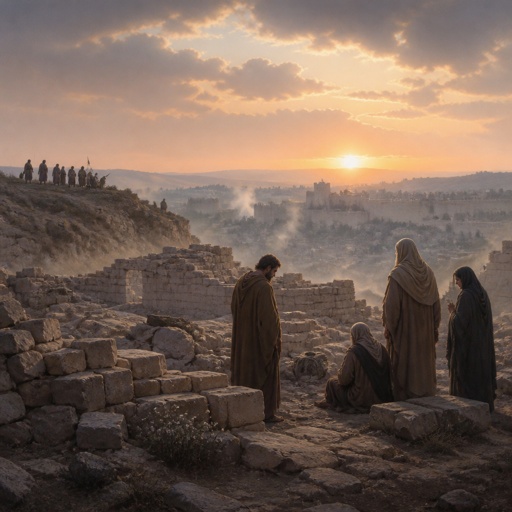
"Remember, O LORD, the children of Edom in the day of Jerusalem; who said, Rase it, rase it, even to the foundation thereof." - Psalms 137:7

Psalms 81:2 - "Take a psalm, and bring hither the timbrel, the pleasant harp with the psaltery."
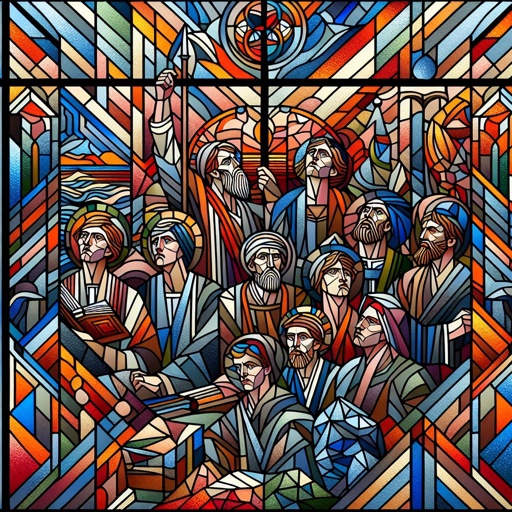
Psalms 115:2 - "Wherefore should the heathen say, Where is now their God?"
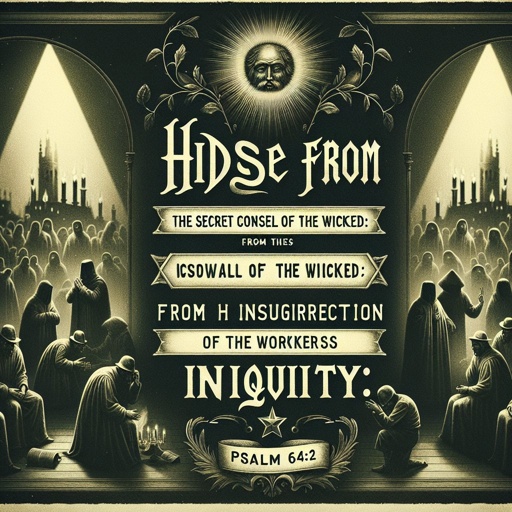
Psalms 64:2 - "Hide me from the secret counsel of the wicked; from the insurrection of the workers of iniquity:"

"Take a psalm, and bring hither the timbrel, the pleasant harp with the psaltery." - Psalms 81:2

Psalms 54:2 - "Hear my prayer, O God; give ear to the words of my mouth."

Psalms 149:2 - "Let Israel rejoice in him that made him: let the children of Zion be joyful in their King."

Psalms 5:2 - "Hearken unto the voice of my cry, my King, and my God: for unto thee will I pray."

Psalms 17:2 - "Let my sentence come forth from thy presence; let thine eyes behold the things that are equal."

Psalms 133:2 - "It is like the precious ointment upon the head, that ran down upon the beard, even Aaron's beard: that went down to the skirts of his garments;"