Unity in Diversity: Embracing Our Roles in the Body of Christ
“For as we have many members in one body, and all members have not the same office:” — Romans 12:4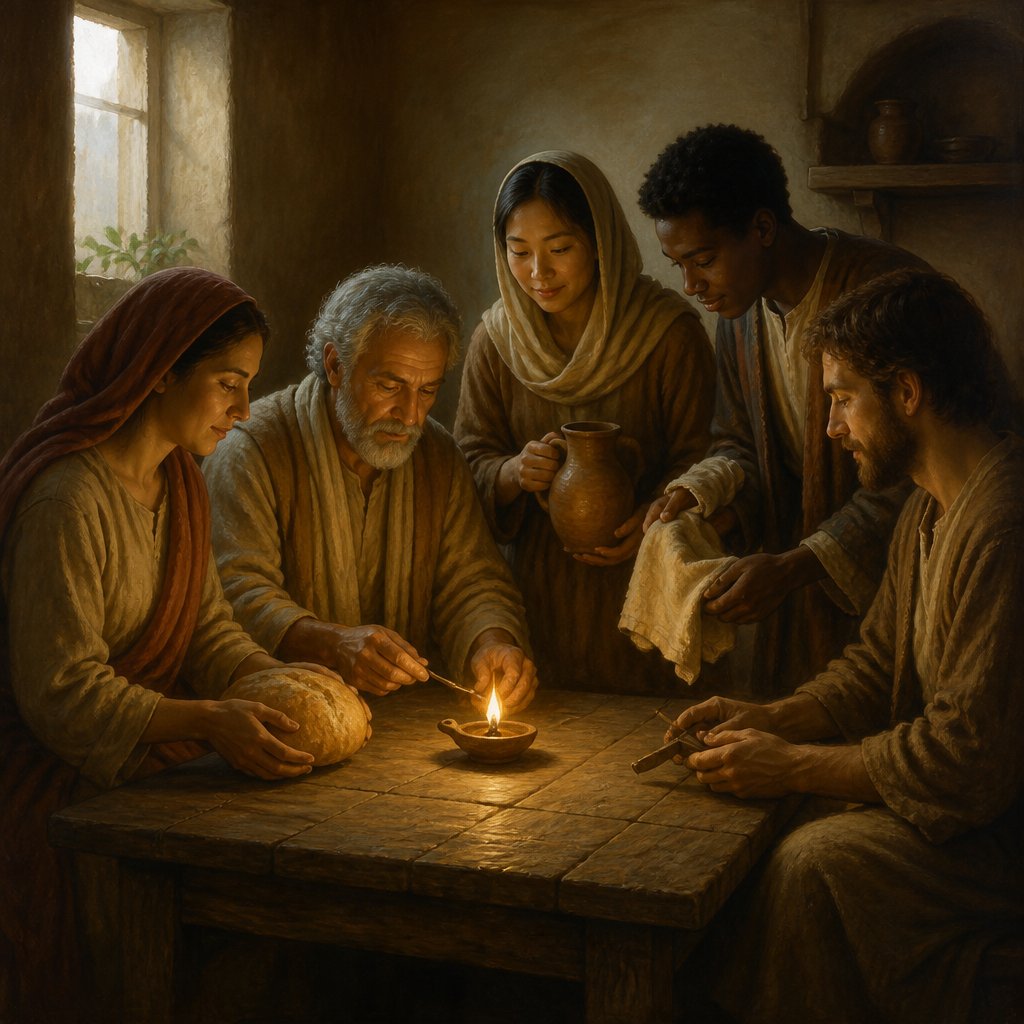
In Romans 12:4, we read, "For as we have many members in one body, and all members have not the same office." This profound statement encapsulates the essential truth of Christian unity and diversity within the Church—the body of Christ.
As we delve deeper into this verse, it is essential to recognize that Paul draws an analogy between the physical human body and the spiritual body of Christ, the Church. Just as each part of our physical body—arms, legs, heart, lungs—plays a distinct role that contributes to the overall functioning and well-being of the whole, so too does each member of the Church contribute uniquely to God’s kingdom.
Consider our own bodies. Each part, regardless of size or significance in our understanding, is indispensable. The heart pumps blood, the lungs facilitate breathing, and even the smallest toe maintains balance. If one part suffers, the whole body feels the effects. This principle of interdependence is vital for us to grasp when we think about our place within the Church.
In the body of Christ, our roles are varied and multifaceted. Some are called to be teachers, others to serve, some to lead, and others to encourage orgive hospitality. Each role is vital, and each member is important. Paul iterates this concept in his first letter to the Corinthians (1 Corinthians 12:12-27), where he further elaborates on how the body is one yet has many parts. He stresses the harmony that exists when every member understands their unique function and embraces it willingly.
In our journey of faith, we may sometimes feel insignificant or overlook the critical role we play. It can be easy to compare ourselves to others, leading to feelings of inadequacy, especially when we are surrounded by those who seem more gifted or more prominent in their roles. However, God’s design is exquisite. He has placed you in the body, and deemed your contribution necessary.
When we understand that each member has not the same office, we also learn that our diversity is intentional. God bestows unique gifts and talents tailored for each one of us (1 Corinthians 12:4-6). These gifts, whether they are teaching, serving, leading, or showing mercy, are meant to complement each other, fostering growth and unity in the Church. Thus, every member has a unique role to play; it is not the roles that distinguish us as more valuable but rather our willingness to fulfill our God-given assignments with humility and grace.
Moreover, the experience of belonging within the body encourages us to consider how we treat one another. If one part of our body is hurting, we naturally provide care to that area. Similarly, as members of the body of Christ, we are called to bear one another’s burdens (Galatians 6:2). This means enthusiastic encouragement when others thrive, also being there in moments of struggle or need, as we are intrinsically linked.
There is beauty in our differences, and it reflects God’s creativity and wisdom. When we become prideful or feel superior, we begin to disrupt the body’s harmony. Instead, it's necessary that we cherish and respect each member, recognizing that each is contributing to the kingdom's purposes.
As we meditate on Romans 12:4, let us pray for a spirit of unity and a heart willing to serve in our distinct roles while valuing others' contributions. May we seek to understand our gifts, not for our glory, but as an offering to support the body of Christ as we fulfill God’s great commission. Let us actively engage, encouraging and uplifting one another, fostering a Church that moves in harmony for the glory of God.
Get our apps


Artwork for Romans 12:4
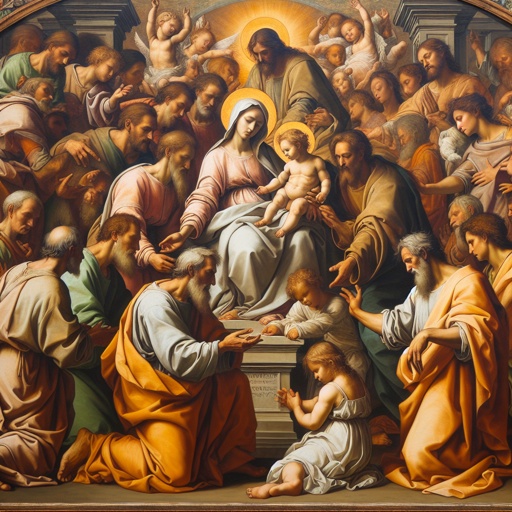
romans 12: 4-5

Romans 12:4 - "For as we have many members in one body, and all members have not the same office:"

Romans 12:4-5 - "For just as each of us has one body with many members, and these members do not all have the same function, so in Christ we, though many, form one body, and each member belongs to all the others."
"For as we have many members in one body, and all members have not the same office:" - Romans 12:4
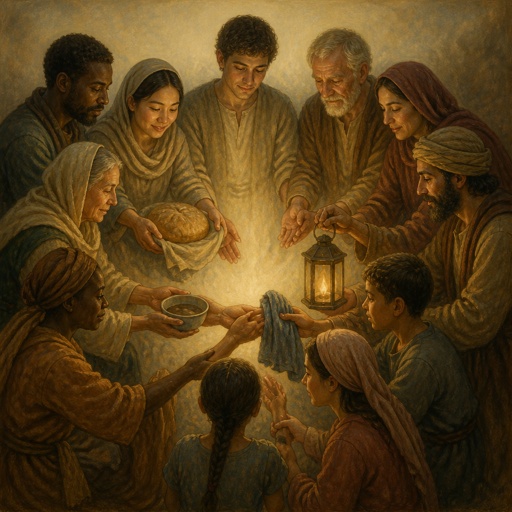
"For just as each of us has one body with many members, and these members do not all have the same function, so in Christ we, though many, form one body, and each member belongs to all the others." - Romans 12:4-5

romans 12:1-2

Romans 12:1-2

Romans 4:12 - "And the father of circumcision to them who are not of the circumcision only, but who also walk in the steps of that faith of our father Abraham, which he had being yet uncircumcised."

Romans 12:2

Romans 12:2

Romans 12:2

Romans 12:2

Romans 12:2

Romans 12:2

Romans 12:2

Romans 12:2

Romans 12:2

Romans 12:2

Romans 12:2

Romans 12:2

Romans 12:2

Romans 12:2

Romans 12:2

Romans 12:2

Romans 12:2

Romans 14:12

Romans 12:1

Romans 12:2

Romans 12:2

Romans 7:12