The Grace of Consideration: A Journey Through Romans 14:20
“For meat destroy not the work of God. All things indeed are pure; but it is evil for that man who eateth with offence.” — Romans 14:20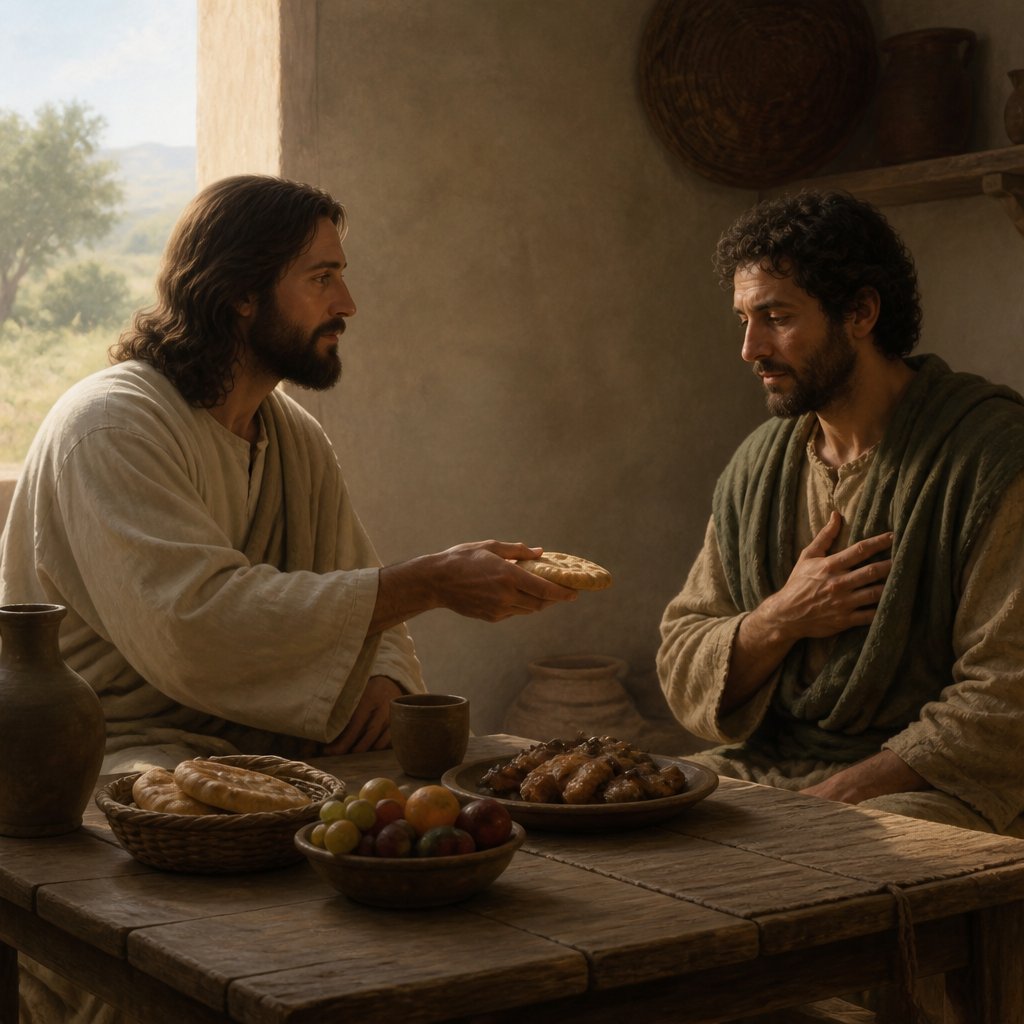
Romans 14:20 presents a profound truth that speaks volumes about the nature of our interactions with one another in the body of Christ: "For meat destroy not the work of God. All things indeed are pure; but it is evil for that man who eateth with offence." This verse invites us to reflect on how our decisions, even about seemingly trivial matters such as food, can impact our brothers and sisters in faith.
At the time of the Apostle Paul’s writing, the early Church faced a significant challenge: cultural diversity and differing convictions regarding dietary practices. Some Christians, particularly those with Jewish backgrounds, held to strict dietary laws rooted in the Law of Moses, while others, particularly Gentile converts, felt free to eat what they pleased, including meats offered to idols. This divergence not only created tension but also risked the unity that Paul so passionately advocated for in the body of Christ.
Paul begins by addressing the heart of the issue: it’s not about the food itself, as he states, "All things indeed are pure." Essentially, he underscores that the intrinsic nature of the food does not determine its holiness; rather, it's the intent and spirit with which we engage in an act of fellowship. However, he quickly transitions to the crux of the matter—"For meat destroy not the work of God." Here, Paul articulates a vital principle in our Christian walk: love for God and for one another must supersede our rights and freedoms.
This principle means that, while one may possess the liberty to partake in all foods, exercising that freedom in a manner that causes another believer to stumble is contrary to God’s heart. Consider how often we might prioritize our preferences over the well-being of others. The warning that it is "evil for that man who eateth with offence" calls out the potential consequences of our actions. It reflects a heart that is unwilling to consider how our freedom impacts those around us, jeopardizing the work of God in their lives.
This reflection extends beyond mere dietary choices. It touches on various areas of life: our speech, our actions, our social interactions, and our engagement on sensitive topics. Are we mindful of how our actions might inadvertently offend or discourage another believer? The challenge laid before us is one of selflessness, placing the needs of others above our desire to be right or to enjoy our freedoms without restraint.
When we take a moment to introspect, we can often recall instances where our liberties have led to unintentional harm. Perhaps we’ve laughed at a joke that unwittingly hurt someone’s feelings or engaged in a debate that drew lines instead of bridges. This is why the exhortation to build up one another is foundational in our Christian journey. Matthew 7:12 underscores this in the Golden Rule: "Therefore all things whatsoever ye would that men should do to you, do ye even so to them, for this is the law and the prophets."
Paul’s message is counter-cultural, urging believers of every generation to operate in a realm of grace that seeks to be considerate towards others. In a world that often amplifies individualism, we are called to appreciate our diversity in unity, building each other up rather than tearing each other down.
Ultimately, the work of God is what we are collectively laboring for—salvation, hope, unity, and transformation in Christ. When we allow our liberties to turn to stumbling blocks instead of stepping stones, we can inadvertently obstruct God’s plan and purpose, leaving our brothers and sisters with wounds borne not from sin but from our carelessness. Let us, therefore, commit to being vessels of grace and understanding. Paul offers a blueprint for living that prioritizes love and careful consideration: engage with one another in a way that promotes peace and mutual edification.
As we meditate on Romans 14:20, may we endeavor to be mindful of how our actions can either contribute to or detract from the incredible work that God is performing in those around us. Let our lives be a testament to His love, grace, and unity.
Get our apps


Artwork for Romans 14:20

Romans 14:20 - "For meat destroy not the work of God. All things indeed are pure; but it is evil for that man who eateth with offence."
"For meat destroy not the work of God. All things indeed are pure; but it is evil for that man who eateth with offence." - Romans 14:20

Romans 14:12

Romans 8:14

Romans 10:14

Romans 14:16 - "Let not then your good be evil spoken of:"

Romans 3:14 - "Whose mouth is full of cursing and bitterness:"

Romans 8:14 - "For as many as are led by the Spirit of God, they are the sons of God."

Romans 14:7 - "For none of us liveth to himself, and no man dieth to himself."

Romans 6:20 - "For when ye were the servants of sin, ye were free from righteousness."

Romans 2:20 - "An instructor of the foolish, a teacher of babes, which hast the form of knowledge and of the truth in the law."

depict the theme of Romans 13:8-14

Romans 14:1 - "Him that is weak in the faith receive ye, but not to doubtful disputations."

Romans 12:14 - "Bless them which persecute you: bless, and curse not."

Romans 9:14 - "What shall we say then? Is there unrighteousness with God? God forbid."

Romans 14:18 - "For he that in these things serveth Christ is acceptable to God, and approved of men."

Romans 14:14 - "I know, and am persuaded by the Lord Jesus, that there is nothing unclean of itself: but to him that esteemeth any thing to be unclean, to him it is unclean."

Romans 7:20 - "Now if I do that I would not, it is no more I that do it, but sin that dwelleth in me."

Romans 14:12 - "So then every one of us shall give account of himself to God."

Romans 1:14 - "I am debtor both to the Greeks, and to the Barbarians; both to the wise, and to the unwise."

Romans 3:20 - "Therefore by the deeds of the law there shall no flesh be justified in his sight: for by the law is the knowledge of sin."

Romans 11:20 - "Well; because of unbelief they were broken off, and thou standest by faith. Be not highminded, but fear:"

Romans 4:20 - "He staggered not at the promise of God through unbelief; but was strong in faith, giving glory to God;"

Romans 16:14 - "Salute Asyncritus, Phlegon, Hermas, Patrobas, Hermes, and the brethren which are with them."

Romans 14:17 - "For the kingdom of God is not meat and drink; but righteousness, and peace, and joy in the Holy Ghost."

Romans 7:14 - "For we know that the law is spiritual: but I am carnal, sold under sin."

Romans 4:14 - "For if they which are of the law be heirs, faith is made void, and the promise made of none effect:"

Romans 8:20 - "For the creature was made subject to vanity, not willingly, but by reason of him who hath subjected the same in hope,"

Romans 6:14 - "For sin shall not have dominion over you: for ye are not under the law, but under grace."

Romans 1:20 – "For since the creation of the world God's invisible qualities have been clearly seen."