Love's True Measure: The Weight of Our Actions
"It is good neither to eat flesh, nor to drink wine, nor any thing whereby thy brother stumbleth, or is offended, or is made weak." - Romans 14:21
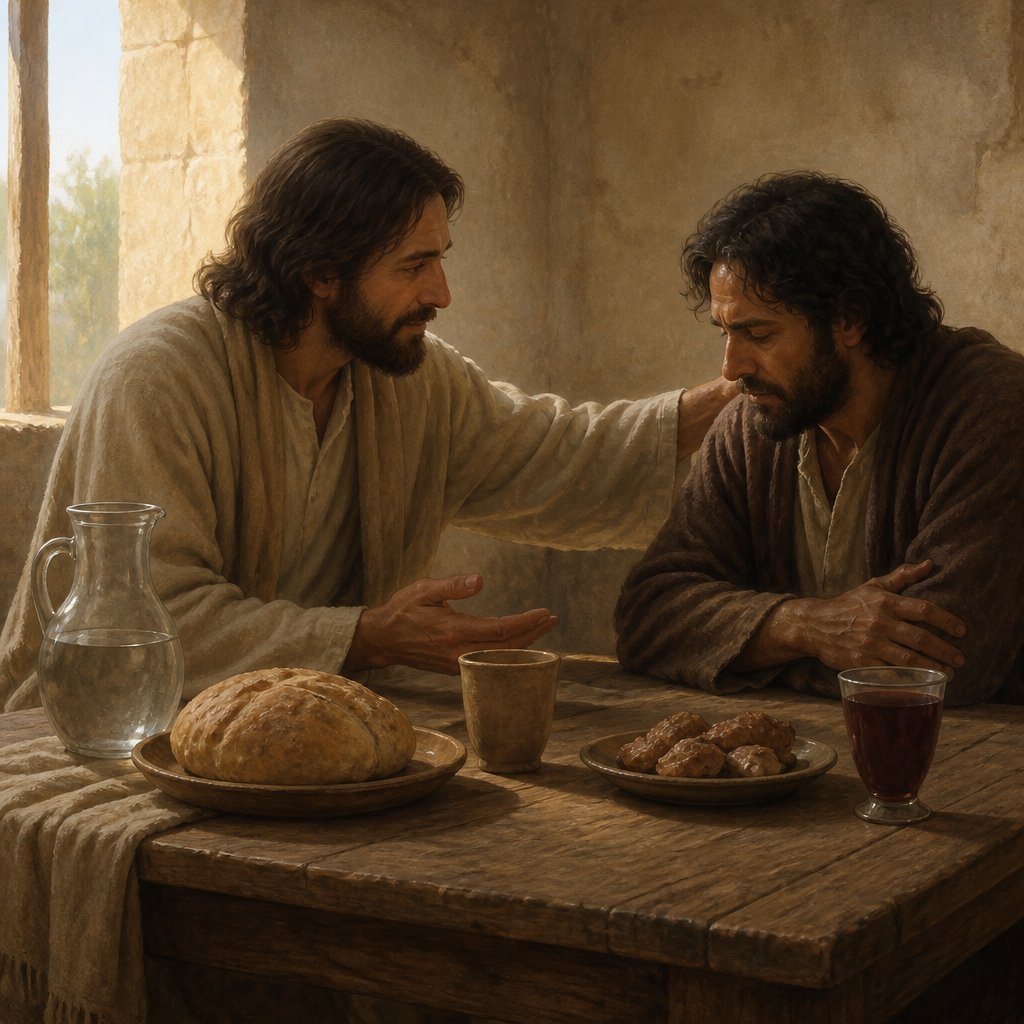
As we reflect on the wisdom found in Romans 14:21, we are drawn into a profound exploration of what it means to love our neighbor as ourselves. The verse states: "It is good neither to eat flesh, nor to drink wine, nor any thing whereby thy brother stumbleth, or is offended, or is made weak." In this single verse, the Apostle Paul captures the essence of Christian liberty—the grace we have received in Christ—and our responsibility to one another.
In the context of this passage, Paul addresses a community struggling with differing opinions on dietary laws and the consumption of wine. Some believers, having grown up in a culture steeped in the traditions of Judaism, viewed certain foods and drinks as defilement, while their Gentile counterparts enjoyed the freedom to partake in them. Instead of demanding their rights, Paul urges the stronger believers to exercise restraint, emphasizing that love must take precedence over freedom.
Paul's advice, steeped in wisdom, leads us to examine how our liberties can affect the faith journey of others. Our choices are not merely personal; they wield the power to either strengthen or weaken the faith of those around us. This concept challenges us to renounce self-centeredness in the pursuit of love and unity within the body of Christ. It isn’t enough to simply follow our convictions without considering their impact on others.
In modern society, we find ourselves navigating similar dilemmas where our actions—whether perceived as innocuous or indifferent—can inadvertently lead others into moral stumble or confusion. This verse beckons us to ask ourselves critical questions regarding our conduct. Are we aware of those who may be affected by our choices? Are we willing to abstain from certain liberties for the sake of others? In a world that glorifies individualism, this call towards sacrificial love is both radical and necessary.
We reflect on the broader principle of love that should govern our actions. Philippians 2:3-4 reinforces this thought: "Let nothing be done through strife or vainglory; but in lowliness of mind let each esteem other better than themselves. Look not every man on his own things, but every man also on the things of others". From these passages, we can draw a clear understanding—that love is demonstrated through selflessness and consideration for our brethren.
Also, consider how our decisions concerning food and drink could affect those battling addiction, those who struggle with legalistic tendencies, or those who are new in their faith. The sensitivity we show in these matters can serve as a unique testimony to the grace and love of Christ. It may be perfectly acceptable for you to enjoy a glass of wine or eat meat, but if it becomes a source of contention or discomfort for someone else, is it truly worth it?
Let us remember that this type of love is not about being shackled by others’ opinions or living in fear of causing offense. Rather, it is about embodying the heart of Jesus, who often put aside His own will in favor of our salvation. It is about nurturing an environment of faith where every believer feels strengthened and not diminished.
Finally, verse 21 wraps itself in a challenge and a promise. The challenge lies in our willingness to sacrifice our freedoms for the sake of love. The promise is found in the essence of true community, where believers thrive in faith and unity. As we embrace this higher calling, let our lives reflect the beauty of Christ’s love, where the measure of our actions is not found in our personal freedoms, but in the love and support we extend towards one another.
May we continue to grow in grace as we learn to cherish and protect the faith of our brothers and sisters by considering how our choices impact them. In all things, let us strive to “do all to the glory of God” (1 Corinthians 10:31), holding each other up as we journey together in faith.
Want to reflect more on Romans 14:21?
Continue your spiritual journey with Bible Chat — an AI-powered tool for exploring God's Word through conversation. Ask questions, discover connections, and deepen your understanding.
Get Our Apps


Romans 14:21 Artwork

Romans 14:21 - "It is good neither to eat flesh, nor to drink wine, nor any thing whereby thy brother stumbleth, or is offended, or is made weak."
"It is good neither to eat flesh, nor to drink wine, nor any thing whereby thy brother stumbleth, or is offended, or is made weak." - Romans 14:21

Romans 14:12

Romans 8:14

Romans 10:14

Romans 12:21 - "Be not overcome of evil, but overcome evil with good."

Romans 14:16 - "Let not then your good be evil spoken of:"

Romans 3:14 - "Whose mouth is full of cursing and bitterness:"

Romans 8:14 - "For as many as are led by the Spirit of God, they are the sons of God."

Romans 14:7 - "For none of us liveth to himself, and no man dieth to himself."

depict the theme of Romans 13:8-14

Romans 16:21 - "Timotheus my workfellow, and Lucius, and Jason, and Sosipater, my kinsmen, salute you."

Romans 3:21 - "But now the righteousness of God without the law is manifested, being witnessed by the law and the prophets;"

Romans 15:21 - "But as it is written, To whom he was not spoken of, they shall see: and they that have not heard shall understand."

Acts 16:21 - "And teach customs, which are not lawful for us to receive, neither to observe, being Romans."

Romans 14:1 - "Him that is weak in the faith receive ye, but not to doubtful disputations."

Romans 12:14 - "Bless them which persecute you: bless, and curse not."

Romans 9:14 - "What shall we say then? Is there unrighteousness with God? God forbid."

Romans 14:18 - "For he that in these things serveth Christ is acceptable to God, and approved of men."

Romans 14:14 - "I know, and am persuaded by the Lord Jesus, that there is nothing unclean of itself: but to him that esteemeth any thing to be unclean, to him it is unclean."

Romans 4:21 - "And being fully persuaded that, what he had promised, he was able also to perform."

Romans 11:21 - "For if God spared not the natural branches, take heed lest he also spare not thee."

Romans 7:21 - "I find then a law, that, when I would do good, evil is present with me."

"Be not overcome of evil, but overcome evil with good." - Romans 12:21

"Be not overcome of evil, but overcome evil with good." - Romans 12:21

Romans 14:12 - "So then every one of us shall give account of himself to God."

Romans 1:14 - "I am debtor both to the Greeks, and to the Barbarians; both to the wise, and to the unwise."

Romans 16:14 - "Salute Asyncritus, Phlegon, Hermas, Patrobas, Hermes, and the brethren which are with them."

Romans 14:17 - "For the kingdom of God is not meat and drink; but righteousness, and peace, and joy in the Holy Ghost."

Romans 7:14 - "For we know that the law is spiritual: but I am carnal, sold under sin."