Teaching Ourselves: The Silent Call of Integrity
"Thou therefore which teachest another, teachest thou not thyself? thou that preachest a man should not steal, dost thou steal?" - Romans 2:21

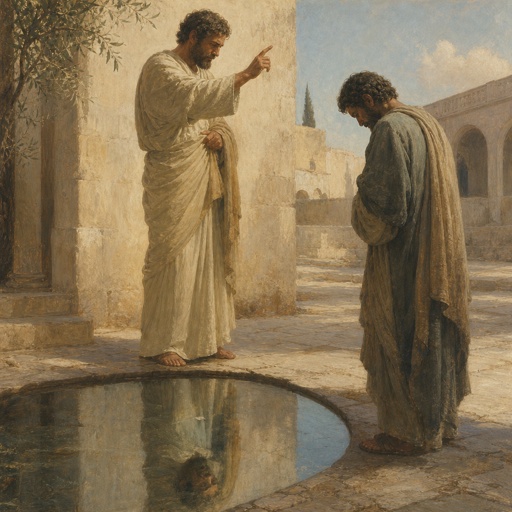
In the complex dance of faith and morality, we often find ourselves faced with the weighty responsibility of teaching others about the truths of the Gospel. Romans 2:21 reveals a powerful challenge to all who take on this mantle of instruction: "Thou therefore which teachest another, teachest thou not thyself? thou that preachest a man should not steal, dost thou steal?" This verse serves as a mirror reflecting not just the duties of a teacher but the heart of integrity in our Christian walk.
The Apostle Paul throws down a gauntlet for those who have taken upon themselves the role of educator in the faith. He poignantly asks whether the very ones who teach others are also adhering to the principles they proclaim. It is a rhetorical question with profound implications. In essence, it asks us to evaluate our own lives against the truths we teach. It is easy to preach morals; it is another matter entirely to embody them.
When we dissect this scripture, we can see the underlying premise: hypocrisy is both damning and unfruitful. This caution is not limited to public preaching alone but extends to all spheres of influence—whether we mentor, counsel, or guide. The call to personal integrity becomes clearer when we consider our actions in relation to God's commands. Are we merely conveying information, or are we embodying the very truths we espouse?
Integrity is the alignment between our beliefs and our behaviors. In today's world, where integrity is sometimes overshadowed by self-interest and ambition, the voice of the Apostle Paul is alarmingly relevant. He speaks directly to an inherent human fault—our tendency to set a double standard for ourselves while holding others to lofty ideals. As we navigate our spiritual journeys, we must constantly ask ourselves: Are we guilty of the same shortcomings we preach against? When we speak against greed, do we seek only our own interests? When we advise against dishonesty, do we harbor secrets or tell half-truths?
Paul's challenge is further amplified by the gravity of influence we wield. To teach others is a privilege and a responsibility; it invites scrutiny not just of our words but of our lives. Our teaching, if not rooted in genuine practice, can lead to disillusionment for those who look to us as examples. The authenticity of our faith lies in the synergy of our deeds and declarations. A life that exemplifies humility, love, and righteousness brings glory to God and embodies the teachings of Christ.
Moreover, Romans 2:21 compels us to engage in personal reflection and self-examination. How many of us pause long enough to honestly assess our adherence to those very teachings? The humility involved in recognizing our missteps can pave the path to deeper communion with God. In acknowledging our imperfections, we open ourselves to His transformative power. We realize that our teaching must begin with ourselves—a continual journey of aligning our lives with God's Word, allowing the Spirit to refine us day by day.
It is also important to remember that teaching is not merely academic but relational; it invites others into a journey of faith that requires a living example. When we live out our faith authentically, we not only strengthen our character but inspire others towards that same integrity. The world watches believers closely, and it is in our actions that we pave the way to Christ's love.
In conclusion, let us take the words of Romans 2:21 to heart. Let us not only be teachers who instruct but also students who learn and grow. Let us embody the messages we share, ensuring that our lives reflect the righteousness of Christ. With every word we preach, may we also practice, and in doing so, illuminate the path to integrity, drawing others towards the true essence of faith.
Want to reflect more on Romans 2:21?
Continue your spiritual journey with Bible Chat — an AI-powered tool for exploring God's Word through conversation. Ask questions, discover connections, and deepen your understanding.
Get Our Apps


Romans 2:21 Artwork

Romans 2:21 - "Thou therefore which teachest another, teachest thou not thyself? thou that preachest a man should not steal, dost thou steal?"

"Thou therefore which teachest another, teachest thou not thyself? thou that preachest a man should not steal, dost thou steal?" - Romans 2:21

Romans 2:1 - "Therefore thou art inexcusable, O man, whosoever thou art that judgest: for wherein thou judgest another, thou condemnest thyself; for thou that judgest doest the same things."

Romans 12:21 - "Be not overcome of evil, but overcome evil with good."

Romans 16:21 - "Timotheus my workfellow, and Lucius, and Jason, and Sosipater, my kinsmen, salute you."

Romans 3:21 - "But now the righteousness of God without the law is manifested, being witnessed by the law and the prophets;"

Romans 15:21 - "But as it is written, To whom he was not spoken of, they shall see: and they that have not heard shall understand."

Acts 16:21 - "And teach customs, which are not lawful for us to receive, neither to observe, being Romans."

Romans 4:21 - "And being fully persuaded that, what he had promised, he was able also to perform."

Romans 11:21 - "For if God spared not the natural branches, take heed lest he also spare not thee."

Romans 7:21 - "I find then a law, that, when I would do good, evil is present with me."

"Be not overcome of evil, but overcome evil with good." - Romans 12:21

"Be not overcome of evil, but overcome evil with good." - Romans 12:21

Romans 12:2

Romans 12:2

Romans 12:2

Romans 12:2

Romans 12:2

Romans 12:2

Romans 12:2

Romans 12:2

Romans 12:2

Romans 12:2

Romans 12:2

Romans 12:2

Romans 12:2

Romans 12:2

Romans 12:2

Romans 8:21 - "Because the creature itself also shall be delivered from the bondage of corruption into the glorious liberty of the children of God."
"Therefore thou art inexcusable, O man, whosoever thou art that judgest: for wherein thou judgest another, thou condemnest thyself; for thou that judgest doest the same things." - Romans 2:1