The Garden of the Beloved: Awaken the Winds of Spiritual Desire
“Awake, O north wind; and come, thou south; blow upon my garden, that the spices thereof may flow out. Let my beloved come into his garden, and eat his pleasant fruits.” — Song of Solomon 4:16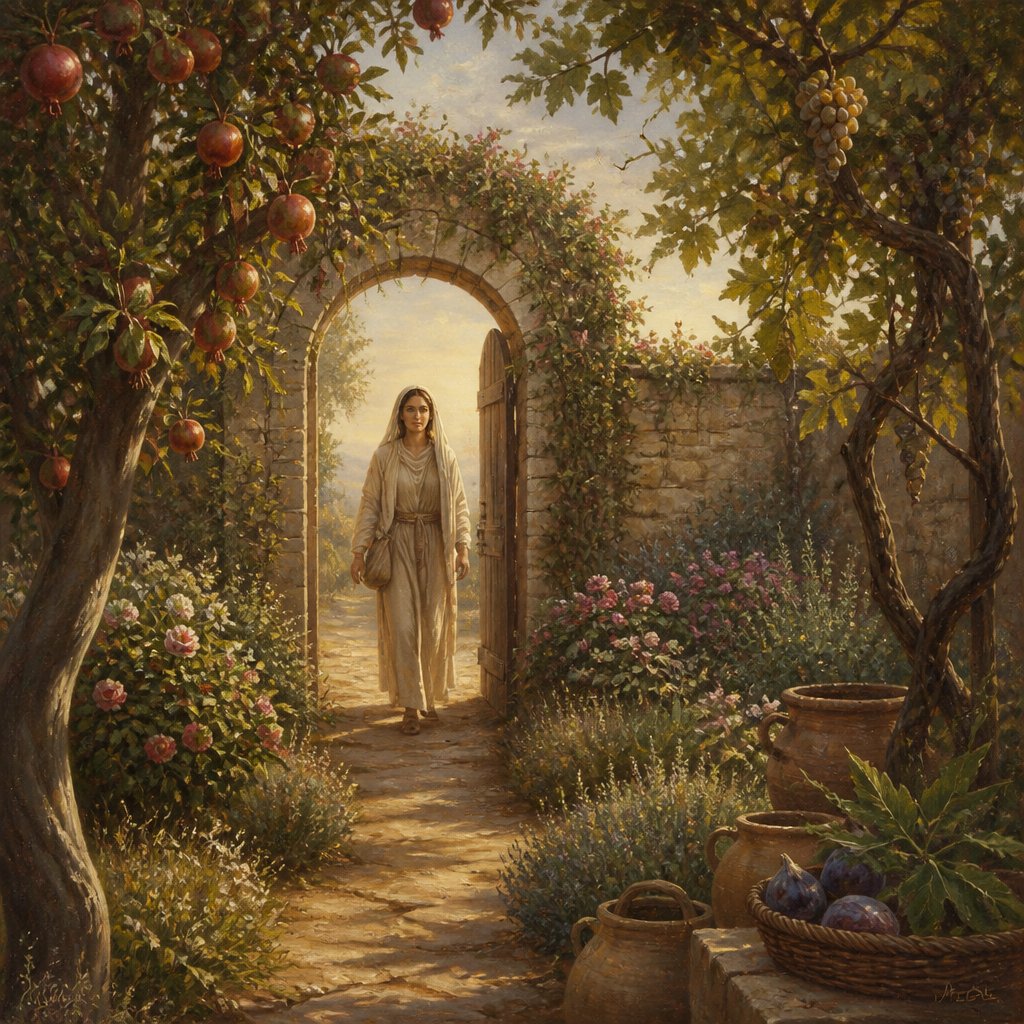
In the poetic depths of the Song of Solomon 4:16, we encounter a beautiful metaphor that transcends time and speaks to the depths of human longing and divine desire. The verse reads:
"Awake, O north wind; and come, thou south; blow upon my garden, that the spices thereof may flow out. Let my beloved come into his garden, and eat his pleasant fruits."
This verse elegantly captures the essence of yearning, intimacy, and divine communion. It paints a vivid picture of a garden – a symbol of beauty, fertility, and life – which serves as a representation of our hearts and souls. The garden mentioned here is not just any garden; it is a sacred space where the beloved’s presence is invited and where love can flourish.
### The Winds of Change
To understand the full impact of this imagery, we must first consider the symbolism of the north and south winds. The north wind often represents coldness, barrenness, and rigidity, while the south wind signifies warmth, tenderness, and abundance. By calling on both winds, the speaker is acknowledging that spiritual growth can come through varied experiences and influences.
In our lives, we experience seasons of both north and south winds. There are times when we feel spiritually frozen, struggling against the chill of doubt and sin, while at other moments, we are enveloped in warmth, joy, and divine love.
This dichotomy reminds us that God can use both the harsh winters and the lush summers in our lives for our spiritual cultivation. It’s essential to be open to these experiences, understanding that even the chilling north winds can lead to a blossoming of the garden if we allow them to draw us closer to God. Let us not despise the winter seasons, for they often prepare us for the spring blooms of faith and fruitfulness.
### The Invitation to Divine Intimacy
The phrase "blow upon my garden" is a poignant plea for divine intervention and inspiration. It invites the presence of the Holy Spirit, who is often depicted in the Bible as wind. Just as a gentle breeze can awaken the dormant flowers of a garden, so too can the Spirit stir the passions of our hearts. We must be willing to surrender our gardens to the nurturing winds of God’s love.
When we invite the Lord to come into our hearts, we are opening the door for a deeper level of intimacy with Him. The speaker desires for the beloved to enter the garden and partake in the fruits of the labor. This can be seen as an invitation for Jesus to fill us with joy, hope, and a deeper relationship. What are the fruits of our gardens? They are the tangible expressions of our love, joy, peace, patience, and kindness—qualities that grow when we spend time in communion with God.
### The Joy of Abundance
Further, the longing in this verse culminates in a celebration of abundance. The speaker desires the beloved to partake in the pleasant fruits of her garden. This speaks to God's desire for us not only to experience His love but also to share it with others. The garden is rich, not just for personal enjoyment, but also to bring joy and nourishment to those around us.
In our personal gardens—a metaphor for our lives—we should cultivate the fruits of the Spirit each day, watering them with prayer, scripture reading, and acts of service. As we yield our gardens to God and allow the winds of His Spirit to blow through, we will find that what we have cultivated is not just for ourselves but is meant to be shared, reflecting God’s love and grace to the world.
### Conclusion
The imagery in Song of Solomon 4:16 challenges us to awaken our hearts and invite the Lord into the garden of our lives. May we call on the winds—whether they be gentle or challenging—to come and awaken our spiritual senses. As we do, let us rejoice in the knowledge that our beloved, the Lord Himself, wishes to partake of the good fruits we produce through His grace. Each prayer, act of mercy, and moment of worship contributes to a rich harvest, glorifying God and nourishing our souls and those of others.
In this season, let us open our gardens wide and invite the winds to flow freely, bringing a renewed intimacy with the beloved and an abundance of spiritual fruit.
Get our apps


Artwork for Song of Solomon 4:16

Song of Solomon 4:16 - "¶ Awake, O north wind; and come, thou south; blow upon my garden, that the spices thereof may flow out. Let my beloved come into his garden, and eat his pleasant fruits."
"¶ Awake, O north wind; and come, thou south; blow upon my garden, that the spices thereof may flow out. Let my beloved come into his garden, and eat his pleasant fruits." - Song of Solomon 4:16

Song of Solomon 1:4

Song of Solomon 3:4

Song of Solomon 1:4

Song of Solomon 4:13 - "Thy plants are an orchard of pomegranates, with pleasant fruits; camphire, with spikenard,"

Song of Solomon 4:7 - "Thou art all fair, my love; there is no spot in thee."

Song of Solomon 4:15 - "A fountain of gardens, a well of living waters, and streams from Lebanon."

Song of Solomon 4:12 - "A garden inclosed is my sister, my spouse; a spring shut up, a fountain sealed."

Song of Solomon 4:5 - "Thy two breasts are like two young roes that are twins, which feed among the lilies."

Song of Solomon 4:14 - "Spikenard and saffron; calamus and cinnamon, with all trees of frankincense; myrrh and aloes, with all the chief spices:"

"Thou art all fair, my love; there is no spot in thee." - Song of Solomon 4:7

Song of Solomon 2:16 - "¶ My beloved is mine, and I am his: he feedeth among the lilies."
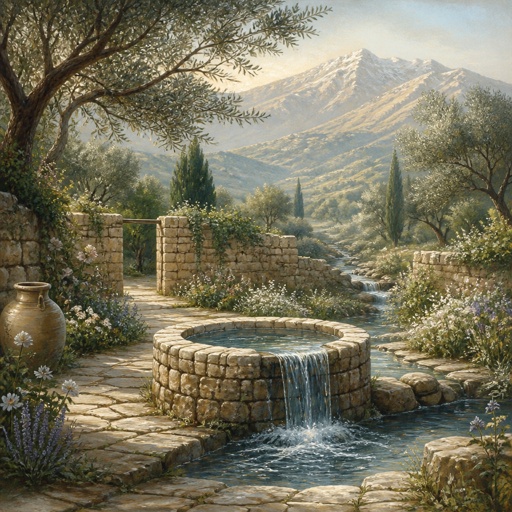
"A fountain of gardens, a well of living waters, and streams from Lebanon." - Song of Solomon 4:15

Song of Solomon 1:16 - "Behold, thou art fair, my beloved, yea, pleasant: also our bed is green."

Song of Solomon 4:6 - "Until the day break, and the shadows flee away, I will get me to the mountain of myrrh, and to the hill of frankincense."

Song of Solomon 4:3 - "Thy lips are like a thread of scarlet, and thy speech is comely: thy temples are like a piece of a pomegranate within thy locks."
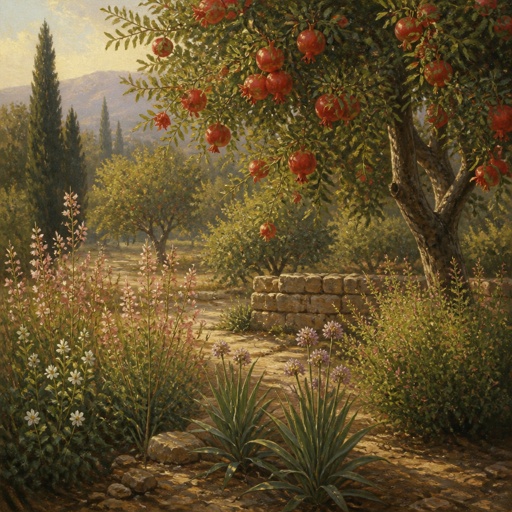
"Thy plants are an orchard of pomegranates, with pleasant fruits; camphire, with spikenard," - Song of Solomon 4:13

"A fountain of gardens, a well of living waters, and streams from Lebanon." - Song of Solomon 4:15

Song of Solomon 4:4 - "Thy neck is like the tower of David builded for an armoury, whereon there hang a thousand bucklers, all shields of mighty men."

Song of Solomon 4:9 - "Thou hast ravished my heart, my sister, my spouse; thou hast ravished my heart with one of thine eyes, with one chain of thy neck."

Song of Solomon 2:4 - "He brought me to the banqueting house, and his banner over me was love."

Song of Solomon 1:1 - "The song of songs, which is Solomon's."

Song of Solomon 5:4 - "My beloved put in his hand by the hole of the door, and my bowels were moved for him."

Song of Solomon 6:4 - "¶ Thou art beautiful, O my love, as Tirzah, comely as Jerusalem, terrible as an army with banners."

Song of Solomon 4:2 - "Thy teeth are like a flock of sheep that are even shorn, which came up from the washing; whereof every one bear twins, and none is barren among them."
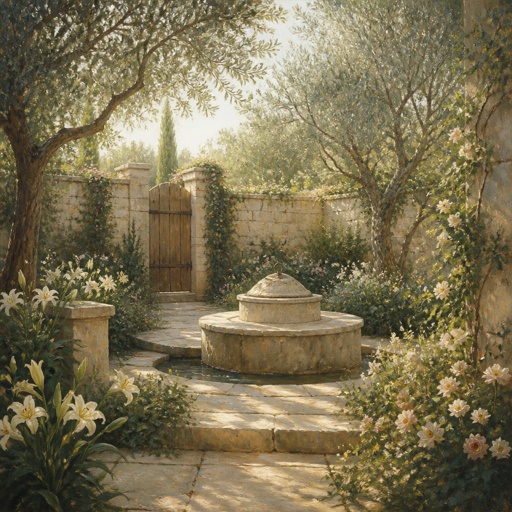
"A garden inclosed is my sister, my spouse; a spring shut up, a fountain sealed." - Song of Solomon 4:12

Song of Solomon 5:16 - "His mouth is most sweet: yea, he is altogether lovely. This is my beloved, and this is my friend, O daughters of Jerusalem."

Song of Solomon 4:10 - "How fair is thy love, my sister, my spouse! how much better is thy love than wine! and the smell of thine ointments than all spices!"

Song of Solomon 4:11 - "Thy lips, O my spouse, drop as the honeycomb: honey and milk are under thy tongue; and the smell of thy garments is like the smell of Lebanon."