In the Garden of His Presence
“My beloved is gone down into his garden, to the beds of spices, to feed in the gardens, and to gather lilies.” — Song of Solomon 6:2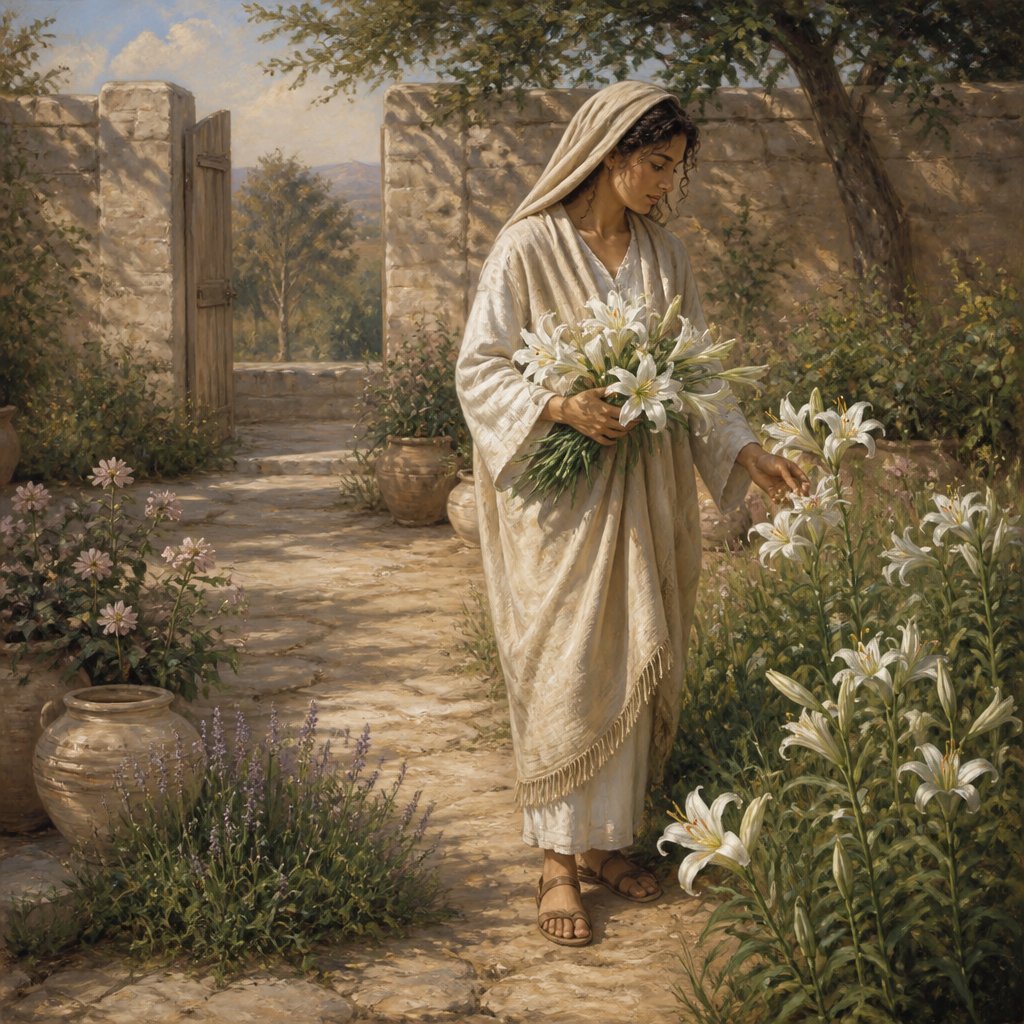
**In the Garden of His Presence**
**Scripture Reference:**
"My beloved is gone down into his garden, to the beds of spices, to feed in the gardens, and to gather lilies" (Song of Solomon 6:2, KJV).
The Song of Solomon is often regarded as a profound meditation on love, romance, and the deep, intimate relationship between the beloved and the lover. In this particular verse, we are painted an enchanting picture of the beloved—often interpreted as Christ—who has ventured into His garden, a symbol of His creation, His people, and the intimate communion He desires to maintain with them. This imagery beckons us to explore the significance of the garden and the implications for our spiritual lives as Christians.
**The Garden as a Place of Growth**
As we contemplate the phrase "gone down into his garden," we must first recognize that gardens are places of activity and productivity. They are realms where things grow and flourish. Spiritually speaking, the garden serves as a metaphor for our hearts and lives. When Christ goes to His garden, He is engaging with us at the core of our being. Just as He tends to His garden, so too does He seek to cultivate growth within us.
Reflecting on this, we must ask ourselves: Are we allowing Him access to our personal gardens? Are we cultivating an environment that promotes spiritual growth? What distractions or weeds are choking out our relationship with Him? The fact that Christ "feeds in the gardens" suggests that nourishment is vital for growth. He desires to feed us with His word, love, and presence.
**The Beds of Spices—A Fragrant Offering**
The phrase "beds of spices" paints an aromatic scene. Spices are not merely for scent but represent richness, flavor, and beauty. When Christ is gathering the spices, it symbolizes His desire to collect the offerings of our lives—the sweet fragrance of our worship, our prayers, our acts of service, and our devotion.
In Philippians 4:18, Paul speaks of the gifts from the Philippian church as a "sweet-smelling savor, a sacrifice acceptable, well-pleasing to God" (KJV). When we align our lives with Christ's will, we become fragrant offerings that please Him. Are we producing spices for the garden? Are our lives reflecting the beauty and diversity of Christ's love? Are we actively engaged in love to spread His fragrance to those around us?
**Gathering Lilies—Finding Beauty in His Creation**
The verse concludes with the imagery of gathering lilies. Lilies in the Bible often symbolize purity, beauty, and resurrection. Jesus Himself used lilies as an analogy of divine provision and beauty in Matthew 6:28-29, highlighting that God beautifully clothes them, indicating His care and concern for His creation.
When we think of Christ gathering lilies in His garden, we can see it as an invitation to appreciate and recognize the beauty He has created within us. Our identities are adorned with the characteristics of Christ. As we walk with Him, we are reminded that we are His creations and that He takes pleasure in gathering and celebrating the beauty He has instilled in us.
**Conclusion**
This verse invites us into a deeper relationship with Christ. It encourages us to engage boldly in His garden, where growth, beauty, and nourishment abound. As we reflect on the garden of our lives, let's ask ourselves if we are feeding on His word, cultivating our gifts, and producing spices that honor Him. The call to gather lilies also beckons us to appreciate the divine artistry within ourselves and others.
In a world filled with distractions, we are reminded of the sweetness of being in His presence. Let us draw nearer to the One who tends His garden with utmost love and care, for in Him, we find sustenance, purpose, and the beauty of a life lived fully in Him.
Get our apps


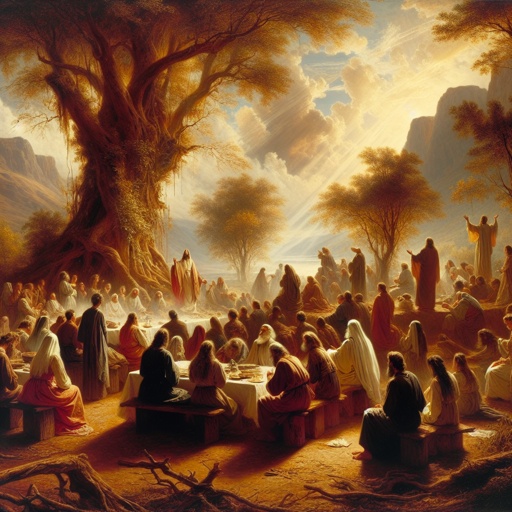
Artwork for Song of Solomon 6:2

Song of Solomon 6:2 - "My beloved is gone down into his garden, to the beds of spices, to feed in the gardens, and to gather lilies."
"My beloved is gone down into his garden, to the beds of spices, to feed in the gardens, and to gather lilies." - Song of Solomon 6:2

Song of Solomon 6:8 - "There are threescore queens, and fourscore concubines, and virgins without number."

Song of Solomon 2:6 - "His left hand is under my head, and his right hand doth embrace me."

Song of Solomon 6:7 - "As a piece of a pomegranate are thy temples within thy locks."

Song of Solomon 6:12 - "Or ever I was aware, my soul made me like the chariots of Amminadib."

Song of Solomon 6:3 - "I am my beloved's, and my beloved is mine: he feedeth among the lilies."
!["Who [is] she [that] looketh forth as the morning, fair as the moon, clear as the sun, [and] terrible as [an army] with banners?" - Song of Solomon 6:10](https://media.bible.art/6b2ee690-5202-4c13-a4ad-2500f2f9b28c-thumbnail.jpg)
"Who [is] she [that] looketh forth as the morning, fair as the moon, clear as the sun, [and] terrible as [an army] with banners?" - Song of Solomon 6:10
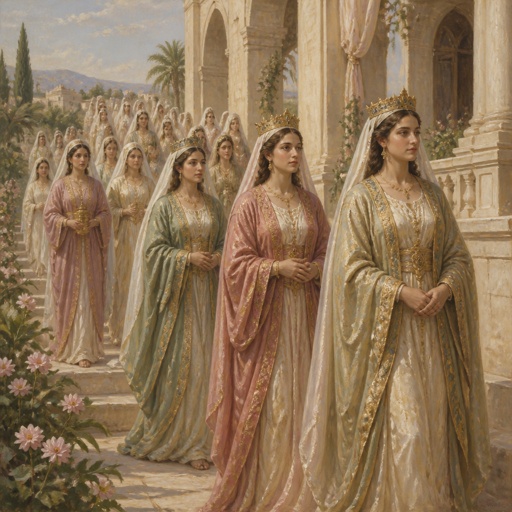
"There are threescore queens, and fourscore concubines, and virgins without number." - Song of Solomon 6:8

Song of Solomon 2:3

Song of Solomon 2:15

Song of Solomon 6:4 - "¶ Thou art beautiful, O my love, as Tirzah, comely as Jerusalem, terrible as an army with banners."

Song of Solomon 2:15
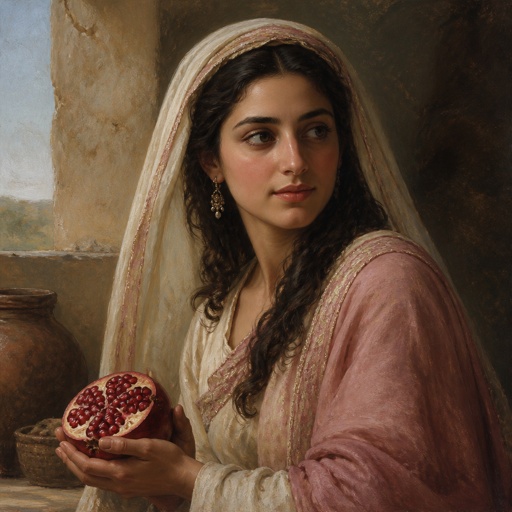
"As a piece of a pomegranate are thy temples within thy locks." - Song of Solomon 6:7

Song of Solomon 6:5 - "Turn away thine eyes from me, for they have overcome me: thy hair is as a flock of goats that appear from Gilead."

Song of Solomon 7:6 - "How fair and how pleasant art thou, O love, for delights!"

Song of Solomon 6:10 - "¶ Who is she that looketh forth as the morning, fair as the moon, clear as the sun, and terrible as an army with banners?"

Song of Solomon 2:2 - "As the lily among thorns, so is my love among the daughters."

Songs of Solomon 1:2
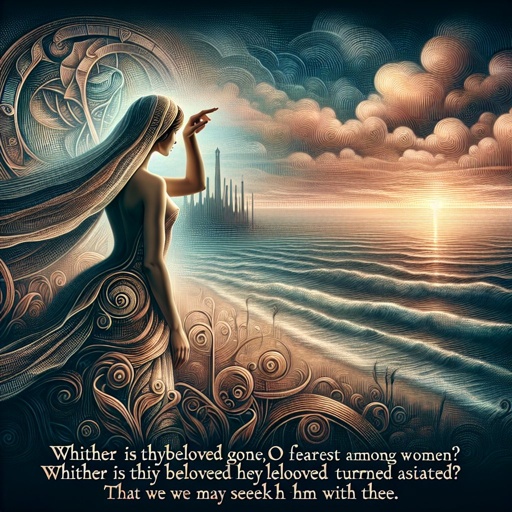
Song of Solomon 6:1 - "Whither is thy beloved gone, O thou fairest among women? whither is thy beloved turned aside? that we may seek him with thee."

Song of Solomon 2:11 - "For, lo, the winter is past, the rain is over and gone;"

Song of Solomon 2:1 - "I am the rose of Sharon, and the lily of the valleys."

Song of Solomon 6:11 - "I went down into the garden of nuts to see the fruits of the valley, and to see whether the vine flourished, and the pomegranates budded."
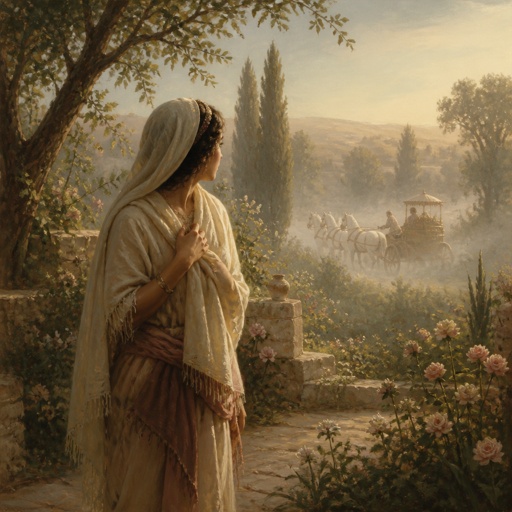
"Or ever I was aware, my soul made me like the chariots of Amminadib." - Song of Solomon 6:12

Song of Solomon 6:6 - "Thy teeth are as a flock of sheep which go up from the washing, whereof every one beareth twins, and there is not one barren among them."
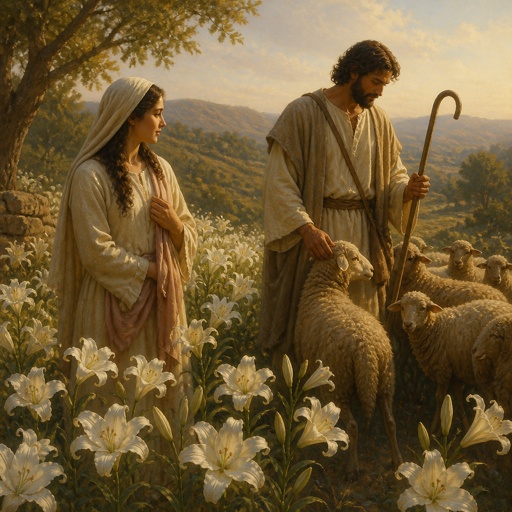
"I am my beloved's, and my beloved is mine: he feedeth among the lilies." - Song of Solomon 6:3

Song of Solomon 1:1 - "The song of songs, which is Solomon's."
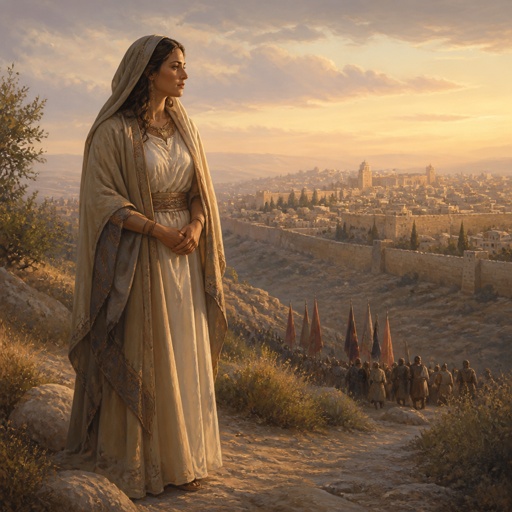
"¶ Thou art beautiful, O my love, as Tirzah, comely as Jerusalem, terrible as an army with banners." - Song of Solomon 6:4
1 songs of Solomon 1:2
!["Who [is] she [that] looketh forth as the morning, fair as the moon, clear as the sun, [and] terrible as [an army] with banners?" - Song of Solomon 6:10](https://media.bible.art/296e9601-26dc-4dc4-802a-4369580aa0ce-thumbnail.jpg)
"Who [is] she [that] looketh forth as the morning, fair as the moon, clear as the sun, [and] terrible as [an army] with banners?" - Song of Solomon 6:10