Beauty in the Wilderness: A Journey Towards the Divine
“Who is this that cometh out of the wilderness like pillars of smoke, perfumed with myrrh and frankincense, with all powders of the merchant?” — Song of Solomon 3:6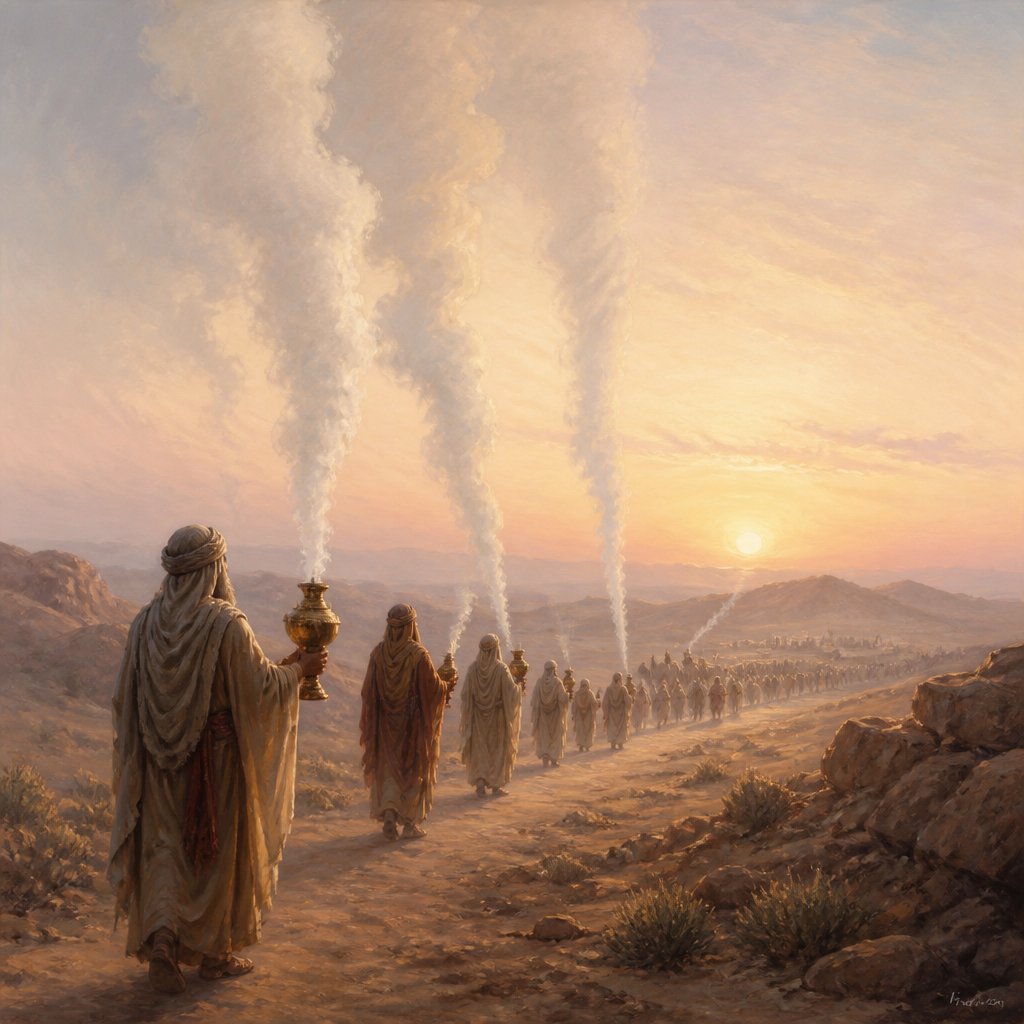
The Song of Solomon, often regarded as one of the most poetic and profound books in the Bible, immerses us in the themes of love, beauty, and divine longing. Within this book, Song of Solomon 3:6 captures a striking image of a figure emerging from the wilderness, stirring a sense of intrigue and admiration. The verse states, "Who is this that cometh out of the wilderness like pillars of smoke, perfumed with myrrh and frankincense, with all powders of the merchant?" (KJV). This question beckons us to explore the deeper spiritual meanings and applications contained within.
To first understand this verse, we must consider the symbolism of the wilderness. In biblical contexts, the wilderness often represents a place of testing, solitude, and preparation. It is where the children of Israel wandered for forty years, and it is where many prophets encountered God. This barren land, devoid of earthly comforts, serves as a purifying ground where one can cultivate a deeper relationship with the Divine. Just as Jesus withdrew to the wilderness to pray and prepare for His ministry, this passage evokes the narrative that growth often emerges from trials and tribulation.
The figure coming out of the wilderness can be interpreted as a representation of Christ—majestic and powerful, adorned with the fragrant oils of myrrh and frankincense. These substances are significant in understanding this imagery. Myrrh was often used for embalming, symbolizing suffering and sacrifice. Frankincense, on the other hand, was used in worship, representing deity and reverence. Thus, the combination of these fragrances signifies the integration of suffering and holiness, encapsulating the experience of Christ as He journeyed through life, embodying both sacrifice and divinity.
Additionally, the mention of "powders of the merchant" presents a notion of wealth, wisdom, and the treasures found within a relationship with God. Here we witness that the wilderness experience, laden with challenges, aims not merely to lead one through trials but to enrich one spiritually. Each moment of struggle can be likened to a precious powder, forged into a substance that contributes to our growth and understanding of the Holy.
In our own lives, we may find ourselves in seasons that mirror wilderness moments. It could be during times of grief, loss, uncertainty, or even personal failure. However, as we draw closer to the One who beckons us, the wilderness transforms into a path of divine revelation. The discomfort of solitude can lead to an enriched understanding of self and a clearer recognition of God’s presence surrounding us.
Moreover, the imagery of "pillars of smoke" suggests both beauty and mystery. Smoke is often associated with the presence of God—think of the smoke that filled the temple or the cloud that led the Israelites. Here, it symbolizes both the transcendence and immanence of the Lord. While He may seem distant in our wilderness, He is often present in ways that defy our understanding, manifesting His glory amidst our struggles.
What does it mean for us to be "perfumed with myrrh and frankincense"? It invites us to reflect on how our encounters in the wilderness can lead to the development of our own fragrant testimony. In our trials, we are called to remember and embody the teachings of Christ, allowing our spirit to be filled with resilience and grace. This fragrance of faith not only becomes a personal marker of our journey but also can influence and inspire those around us.
Lastly, let us return to the question posed in the verse: "Who is this that cometh out of the wilderness?" As followers of Christ, each of us embodies this figure through our own journeys. May we be mindful that each obstacle we encounter and overcome allows us to emerge more profoundly marked by His Spirit, filling the world around us with the sacred scents of resilience, hope, and love. Let us embrace our wilderness moments, trusting the One who transforms our trials into testimonies of glory.
Get our apps


Artwork for Song of Solomon 3:6

Song of Solomon 3:6 - "¶ Who is this that cometh out of the wilderness like pillars of smoke, perfumed with myrrh and frankincense, with all powders of the merchant?"
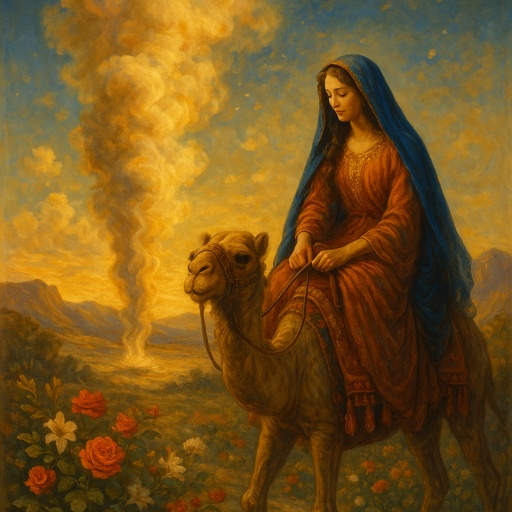
"Who is this that cometh out of the wilderness like pillars of smoke, perfumed with myrrh and frankincense, with all powders of the merchant?" - Song of Solomon 3:6
"¶ Who is this that cometh out of the wilderness like pillars of smoke, perfumed with myrrh and frankincense, with all powders of the merchant?" - Song of Solomon 3:6

Song of Solomon 3:4

Song of Solomon 6:3 - "I am my beloved's, and my beloved is mine: he feedeth among the lilies."

Song of Solomon 3:9 - "King Solomon made himself a chariot of the wood of Lebanon."

Song of Solomon 2:3

Song of Solomon 3:7 - "Behold his bed, which is Solomon's; threescore valiant men are about it, of the valiant of Israel."
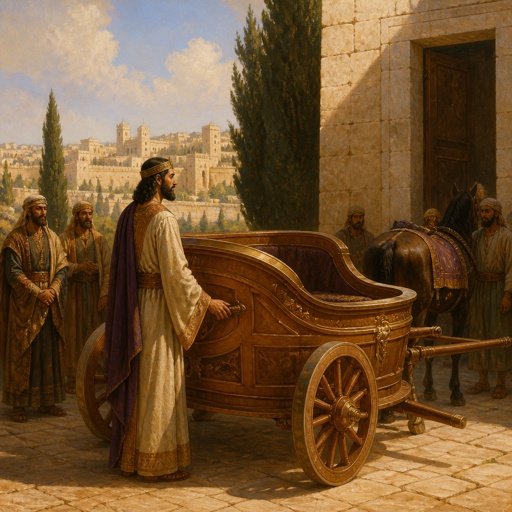
"King Solomon made himself a chariot of the wood of Lebanon." - Song of Solomon 3:9

Song of Solomon 3:3 - "The watchmen that go about the city found me: to whom I said, Saw ye him whom my soul loveth?"

Song of Solomon 3:1 - "By night on my bed I sought him whom my soul loveth: I sought him, but I found him not."

Song of Solomon 6:8 - "There are threescore queens, and fourscore concubines, and virgins without number."

Song of Solomon 6:7 - "As a piece of a pomegranate are thy temples within thy locks."
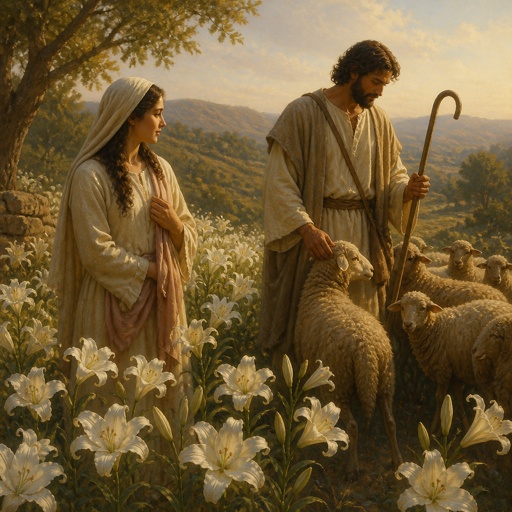
"I am my beloved's, and my beloved is mine: he feedeth among the lilies." - Song of Solomon 6:3

Song of Solomon 7:6 - "How fair and how pleasant art thou, O love, for delights!"

Song of Solomon 7:3 - "Thy two breasts are like two young roes that are twins."

Song of Solomon 3:8 - "They all hold swords, being expert in war: every man hath his sword upon his thigh because of fear in the night."

Song of Solomon 6:12 - "Or ever I was aware, my soul made me like the chariots of Amminadib."
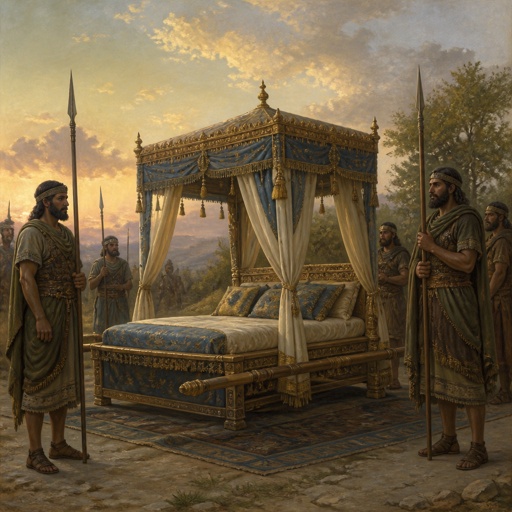
"Behold his bed, which is Solomon's; threescore valiant men are about it, of the valiant of Israel." - Song of Solomon 3:7
!["Who [is] she [that] looketh forth as the morning, fair as the moon, clear as the sun, [and] terrible as [an army] with banners?" - Song of Solomon 6:10](https://media.bible.art/6b2ee690-5202-4c13-a4ad-2500f2f9b28c-thumbnail.jpg)
"Who [is] she [that] looketh forth as the morning, fair as the moon, clear as the sun, [and] terrible as [an army] with banners?" - Song of Solomon 6:10

Song of Solomon 1:1 - "The song of songs, which is Solomon's."

Song of Solomon 2:6 - "His left hand is under my head, and his right hand doth embrace me."

Song of Solomon 6:10 - "¶ Who is she that looketh forth as the morning, fair as the moon, clear as the sun, and terrible as an army with banners?"

Song of Solomon 6:2 - "My beloved is gone down into his garden, to the beds of spices, to feed in the gardens, and to gather lilies."

Song of Solomon 6:4 - "¶ Thou art beautiful, O my love, as Tirzah, comely as Jerusalem, terrible as an army with banners."

Song of Solomon 6:6 - "Thy teeth are as a flock of sheep which go up from the washing, whereof every one beareth twins, and there is not one barren among them."

Song of Solomon 4:6 - "Until the day break, and the shadows flee away, I will get me to the mountain of myrrh, and to the hill of frankincense."

Song of Solomon 3:11 - "Go forth, O ye daughters of Zion, and behold king Solomon with the crown wherewith his mother crowned him in the day of his espousals, and in the day of the gladness of his heart."

Song of Solomon 8:3 - "His left hand should be under my head, and his right hand should embrace me."

Song of Solomon 6:11 - "I went down into the garden of nuts to see the fruits of the valley, and to see whether the vine flourished, and the pomegranates budded."