What does 1 Chronicles 11:19 mean?
“And said, My God forbid it me, that I should do this thing: shall I drink the blood of these men that have put their lives in jeopardy? for with the jeopardy of their lives they brought it. Therefore he would not drink it. These things did these three mightiest.” — 1 Chronicles 11:19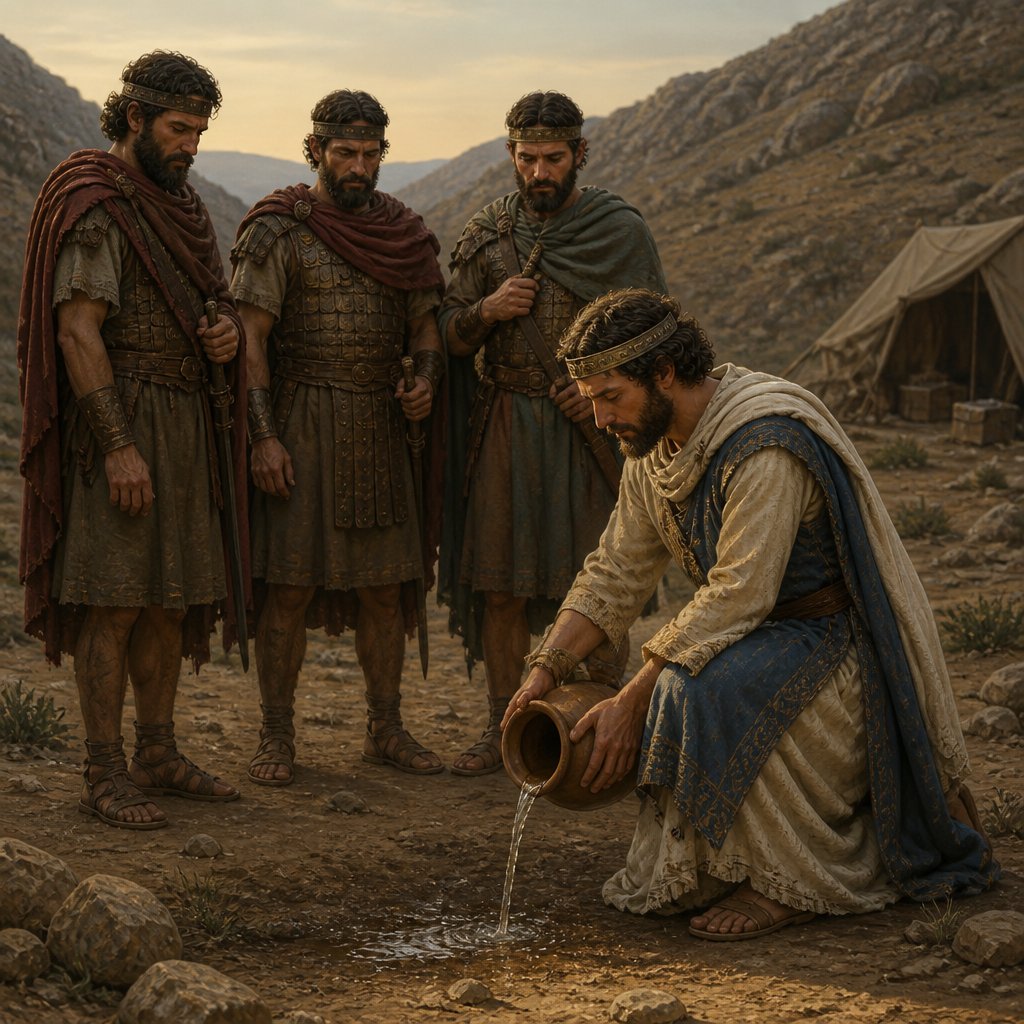
The Bible verse 1 Chronicles 11:19 from the King James Version (KJV) says, "And said, My God forbid it me, that I should do this thing: shall I drink the blood of these men that have put their lives in jeopardy? for with the jeopardy of their lives they brought it. Therefore he would not drink it. These things did these three mightiest."
This verse comes from the book of 1 Chronicles, which is a part of the Hebrew Bible and the Christian Old Testament. It is a historical book that chronicles the history of the Jewish people from the time of Adam to the return from the Babylonian exile.
In this specific verse, the speaker is acknowledging the sacrifice and bravery of three mighty warriors who risked their lives to bring him water from the well of Bethlehem. Instead of drinking the water, the speaker pours it out as a drink offering to the Lord, expressing his gratitude and reverence for the courageous acts of the three men.
This verse is rich in themes that are central to the Christian faith, including sacrifice, honor, and obedience to God. It also offers insights into the character of the speaker, who demonstrates humility and gratitude in the face of the risk taken by the warriors.
One of the central themes of this verse is the idea of sacrifice. The three warriors risked their lives to bring the speaker water from the well of Bethlehem, demonstrating their loyalty and dedication. In pouring out the water as a drink offering to the Lord, the speaker acknowledges and honors their sacrifice, showing that he values their lives and the risks they took on his behalf. This theme of sacrifice is central to the Christian faith, as it reflects the ultimate sacrifice of Jesus Christ on the cross for the redemption of humanity.
Another important theme in this verse is the concept of honor and respect for the bravery of others. The speaker's refusal to drink the water is not just a rejection of a physical offering, but a symbolic gesture of honor and respect for the three warriors. This act of pouring out the water as a drink offering is a way of acknowledging their bravery and sacrifice, and it demonstrates the speaker's humility and gratitude for their actions. This theme of honor and respect is an important aspect of biblical teachings, reflecting the value of recognizing and honoring the sacrifices of others.
Additionally, this verse highlights the idea of obedience to God. The speaker's words, "My God forbid it me, that I should do this thing," demonstrate his commitment to following God's will and his desire to act in a way that is pleasing to the Lord. By refusing to drink the water and instead offering it to God, the speaker is demonstrating his obedience and reverence for God's commandments. This theme underscores the importance of aligning one's actions with God's will and living a life that is in accordance with biblical teachings.
Symbolically, the act of pouring out the water as a drink offering carries important significance. In the Old Testament, drink offerings were often used as expressions of devotion and gratitude to God. By offering the water to the Lord, the speaker is symbolically expressing his gratitude and reverence for the bravery of the three warriors. This act serves as a demonstration of the speaker's faith and devotion to God, as well as his recognition of the sacrifices made by others.
In conclusion, 1 Chronicles 11:19 is a powerful and meaningful verse that is rich in themes of sacrifice, honor, obedience to God, and symbolic devotion. It offers valuable insights into biblical teachings and the values of the Christian faith, and it serves as a reminder of the importance of recognizing and honoring the sacrifices of others. This verse is a profound example of the significance of gratitude, humility, and reverence for God and the courageous acts of others.
Get our apps


Artwork for 1 Chronicles 11:19
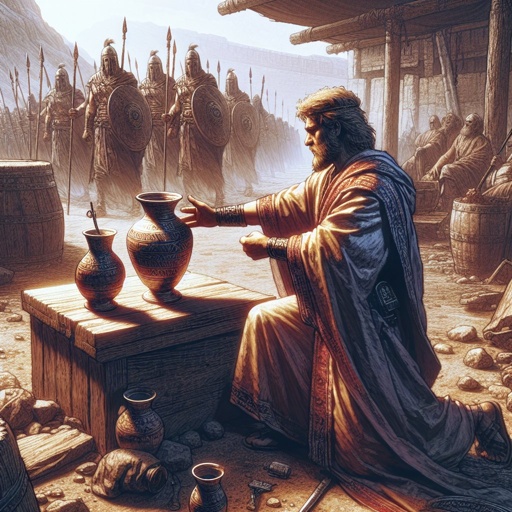
1 Chronicles 11:19 - "And said, My God forbid it me, that I should do this thing: shall I drink the blood of these men that have put their lives in jeopardy? for with the jeopardy of their lives they brought it. Therefore he would not drink it. These things did these three mightiest."
"And said, My God forbid it me, that I should do this thing: shall I drink the blood of these men that have put their lives in jeopardy? for with the jeopardy of their lives they brought it. Therefore he would not drink it. These things did these three mightiest." - 1 Chronicles 11:19

1 Chronicles 19:11 - "And the rest of the people he delivered unto the hand of Abishai his brother, and they set themselves in array against the children of Ammon."

2 Chronicles 11:19 - "Which bare him children; Jeush, and Shamariah, and Zaham."

1 Chronicles 8:19 - "And Jakim, and Zichri, and Zabdi,"

Nehemiah 11:1-19

1 Chronicles 1:11 - "And Mizraim begat Ludim, and Anamim, and Lehabim, and Naphtuhim,"

1 Chronicles 5:19 - "And they made war with the Hagarites, with Jetur, and Nephish, and Nodab."

1 Chronicles 11:29 - "Sibbecai the Hushathite, Ilai the Ahohite,"

1 Chronicles 12:11 - "Attai the sixth, Eliel the seventh,"

1 Chronicles 24:11 - "The ninth to Jeshua, the tenth to Shecaniah,"

1 Chronicles 11:40 - "Ira the Ithrite, Gareb the Ithrite,"

1 Chronicles 11:27 - "Shammoth the Harorite, Helez the Pelonite,"

1 Chronicles 11:36 - "Hepher the Mecherathite, Ahijah the Pelonite,"

1 Chronicles 16:19 - "When ye were but few, even a few, and strangers in it."

1 Chronicles 7:19 - "And the sons of Shemidah were, Ahian, and Shechem, and Likhi, and Aniam."

1 Chronicles 11:47 - "Eliel, and Obed, and Jasiel the Mesobaite."

1 Chronicles 11:33 - "Azmaveth the Baharumite, Eliahba the Shaalbonite,"
"Which bare him children; Jeush, and Shamariah, and Zaham." - 2 Chronicles 11:19

1 Chronicles 8:11 - "And of Hushim he begat Abitub, and Elpaal."

1 Chronicles 11:43 - "Hanan the son of Maachah, and Joshaphat the Mithnite,"

1 Chronicles 26:19 - "These are the divisions of the porters among the sons of Kore, and among the sons of Merari."

1 Chronicles 6:19 - "The sons of Merari; Mahli, and Mushi. And these are the families of the Levites according to their fathers."

1 Chronicles 27:19 - "Of Zebulun, Ishmaiah the son of Obadiah: of Naphtali, Jerimoth the son of Azriel:"

2 Chronicles 19:1 - "And Jehoshaphat the king of Judah returned to his house in peace to Jerusalem."

1 Chronicles 11:32 - "Hurai of the brooks of Gaash, Abiel the Arbathite,"

1 Chronicles 11:41 - "Uriah the Hittite, Zabad the son of Ahlai,"

1 Chronicles 11:37 - "Hezro the Carmelite, Naarai the son of Ezbai,"
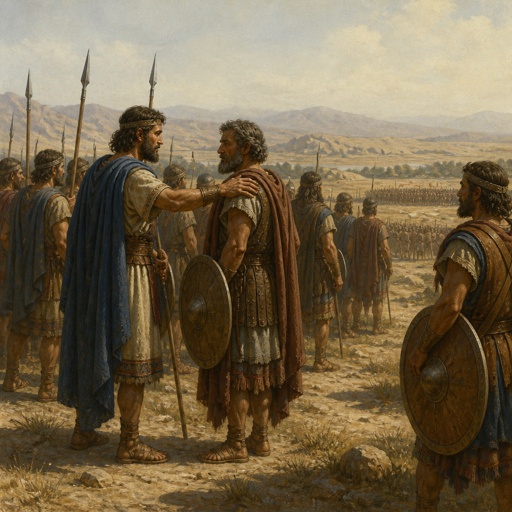
"And the rest of the people he delivered unto the hand of Abishai his brother, and they set themselves in array against the children of Ammon." - 1 Chronicles 19:11

Apocalipsis 11, 19; 12, 1-6. 10