What does 1 Chronicles 11:4 mean?
“And David and all Israel went to Jerusalem, which is Jebus; where the Jebusites were, the inhabitants of the land.” — 1 Chronicles 11:4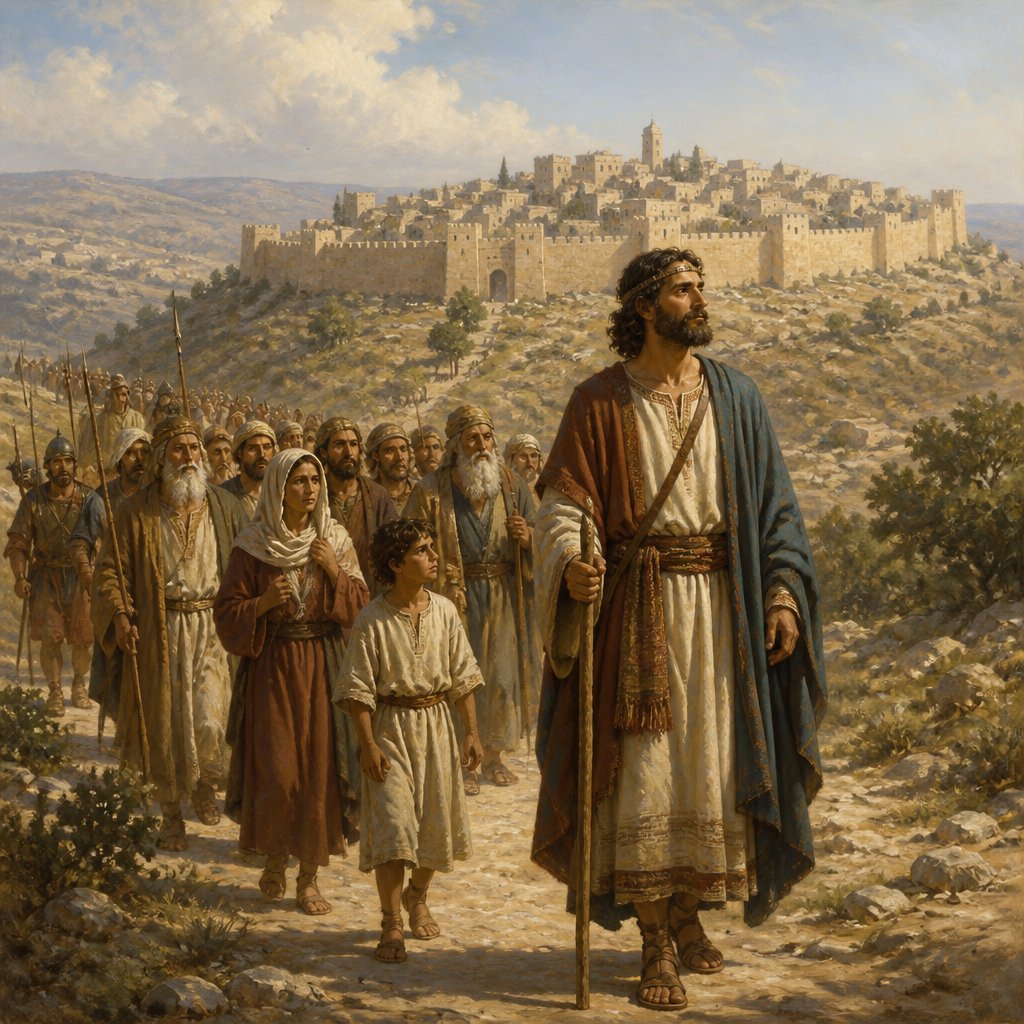
1 Chronicles 11:4 (KJV) "And David and all Israel went to Jerusalem, which is Jebus; where the Jebusites were, the inhabitants of the land."
The book of 1 Chronicles is part of the Hebrew Bible and the Christian Old Testament. It is a historical account of the nation of Israel, focusing on the reign of King David and his descendants. In this particular verse, the text describes the moment when David and the nation of Israel went to Jerusalem, which at the time was known as Jebus. The city was inhabited by the Jebusites, who were the indigenous people of the land.
This verse is significant on several levels, providing insight into the historical context, the themes of conquest and possession, and the symbolism of Jerusalem as a spiritual and political center.
Historical Context:
During the time of King David, Jerusalem was not yet under Israelite control. It was a strategic city due to its location and natural defenses, which made it a coveted prize for surrounding nations. The Jebusites had long been in possession of this city, and they were a formidable force that had resisted previous attempts at conquest. The fact that David and the people of Israel were able to take control of Jerusalem demonstrates the power and authority that God had given to David as the king of Israel.
Conquest and Possession:
The capture of Jerusalem by David carries with it the themes of conquest and possession. Throughout the Bible, there are numerous accounts of God's chosen people conquering and taking possession of the land that God had promised to them. This concept is often used symbolically to represent the spiritual battle of claiming and holding onto the promises and blessings of God. In this instance, the capture of Jerusalem symbolizes the fulfillment of God's promise to give the land of Canaan to the descendants of Abraham.
Symbolism of Jerusalem:
Jerusalem has deep spiritual significance in the Bible. It is often referred to as the holy city and is associated with the presence of God. In the Old Testament, it was the location of the temple, the center of worship, and the seat of power for the nation of Israel. In the New Testament, Jerusalem is the place where Jesus was crucified and resurrected, and it is prophesied to be the site of his future return. For Christians, Jerusalem represents the ultimate fulfillment of God's covenant and the hope of a new heaven and a new earth. In this verse, the capture of Jerusalem by David foreshadows its future role as the spiritual and political capital of Israel and the world.
In conclusion, 1 Chronicles 11:4 is a pivotal moment in the history of Israel, signifying its conquest of Jerusalem and the fulfillment of God's promises. It also carries deep symbolic significance, representing the themes of conquest, possession, and the spiritual importance of Jerusalem. This verse serves as a reminder of God's faithfulness and his sovereignty over the affairs of nations, as well as a foreshadowing of the ultimate fulfillment of his redemptive plan for humanity.
Get our apps


Artwork for 1 Chronicles 11:4

1 Chronicles 11:4 - "¶ And David and all Israel went to Jerusalem, which is Jebus; where the Jebusites were, the inhabitants of the land."
"¶ And David and all Israel went to Jerusalem, which is Jebus; where the Jebusites were, the inhabitants of the land." - 1 Chronicles 11:4

1 Chronicles 4:11 - "¶ And Chelub the brother of Shuah begat Mehir, which was the father of Eshton."

"¶ And Chelub the brother of Shuah begat Mehir, which was the father of Eshton." - 1 Chronicles 4:11

1 Chronicles 1:11 - "And Mizraim begat Ludim, and Anamim, and Lehabim, and Naphtuhim,"

1 Chronicles 1:4 - "Noah, Shem, Ham, and Japheth."

1 Chronicles 11:29 - "Sibbecai the Hushathite, Ilai the Ahohite,"

1 Chronicles 12:11 - "Attai the sixth, Eliel the seventh,"

1 Chronicles 24:11 - "The ninth to Jeshua, the tenth to Shecaniah,"

1 Chronicles 11:40 - "Ira the Ithrite, Gareb the Ithrite,"

1 Chronicles 11:27 - "Shammoth the Harorite, Helez the Pelonite,"

1 Chronicles 11:36 - "Hepher the Mecherathite, Ahijah the Pelonite,"

1 Chronicles 11:47 - "Eliel, and Obed, and Jasiel the Mesobaite."

1 Chronicles 11:33 - "Azmaveth the Baharumite, Eliahba the Shaalbonite,"

2 Chronicles 4:22

1 Chronicles 8:11 - "And of Hushim he begat Abitub, and Elpaal."

1 Chronicles 11:43 - "Hanan the son of Maachah, and Joshaphat the Mithnite,"

1 Chronicles 11:32 - "Hurai of the brooks of Gaash, Abiel the Arbathite,"

1 Chronicles 11:41 - "Uriah the Hittite, Zabad the son of Ahlai,"

1 Chronicles 11:37 - "Hezro the Carmelite, Naarai the son of Ezbai,"

1 Chronicles 4 : 10

1 Chronicles 4:29 - "And at Bilhah, and at Ezem, and at Tolad,"

1 Chronicles 4:30 - "And at Bethuel, and at Hormah, and at Ziklag,"

1 Chronicles 8:4 - "And Abishua, and Naaman, and Ahoah,"

1 Chronicles 6:11 - "And Azariah begat Amariah, and Amariah begat Ahitub,"

1 Chronicles 11:30 - "Maharai the Netophathite, Heled the son of Baanah the Netophathite,"

1 Chronicles 2:11 - "And Nahshon begat Salma, and Salma begat Boaz,"

1 Chronicles 4:1 - "The sons of Judah; Pharez, Hezron, and Carmi, and Hur, and Shobal."

1 Chronicles 11:38 - "Joel the brother of Nathan, Mibhar the son of Haggeri,"

1 Chronicles 11:28 - "Ira the son of Ikkesh the Tekoite, Abiezer the Antothite,"