What does 1 Chronicles 13:5 mean?
“So David gathered all Israel together, from Shihor of Egypt even unto the entering of Hemath, to bring the ark of God from Kirjath-jearim.” — 1 Chronicles 13:5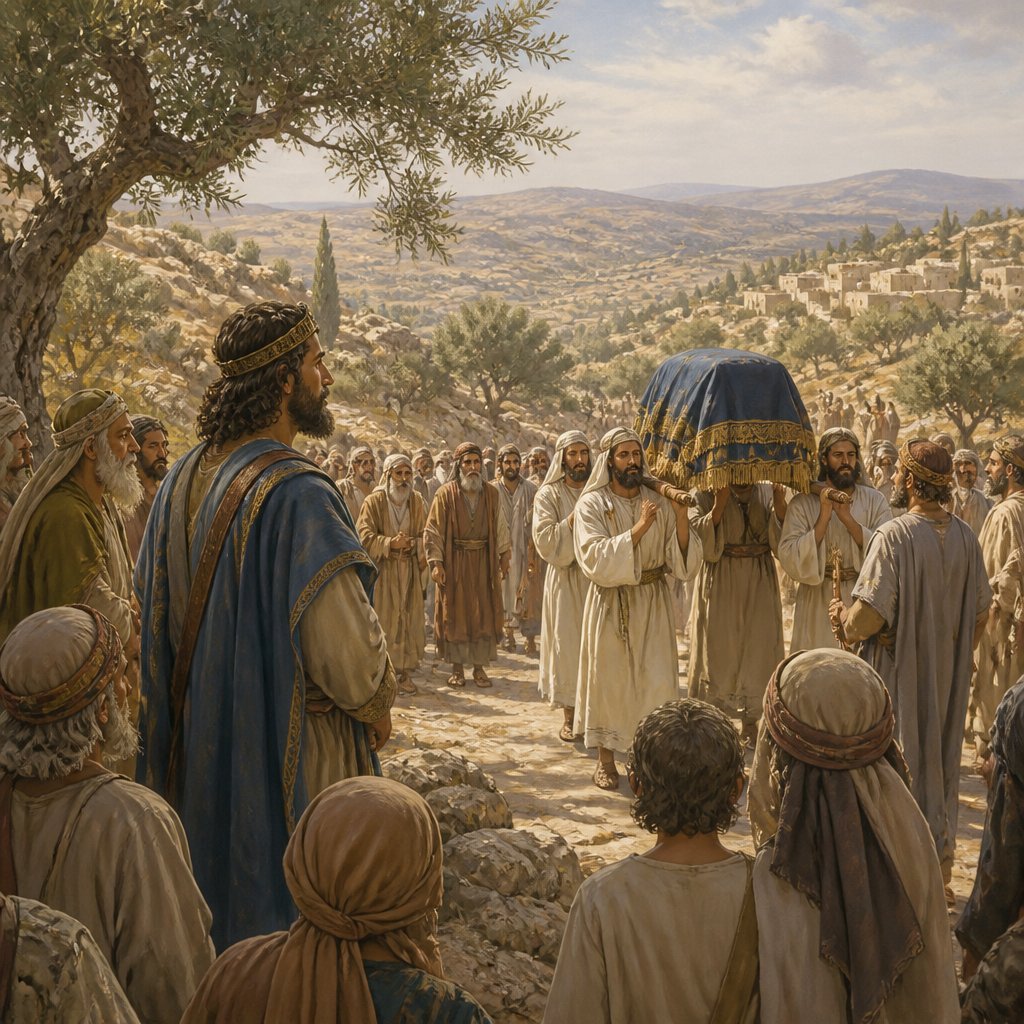
1 Chronicles 13:5 (KJV) - "So David gathered all Israel together, from Shihor of Egypt even unto the entering of Hemath, to bring the ark of God from Kirjathjearim."
This verse from 1 Chronicles provides insight into the narrative of the Israelites during the reign of King David. The verse describes David's effort to unite the people of Israel in order to retrieve the Ark of God from Kirjathjearim. This event holds significant meaning in the context of the Old Testament and the overall themes of the Bible.
The Ark of God held great significance for the Israelites as it symbolized the presence of God among them. According to the Old Testament, the Ark contained the tablets of the Ten Commandments, a jar of manna, and Aaron's rod. It was considered to be a tangible representation of God's covenant with the Israelites. Therefore, David's desire to bring the Ark to a central location demonstrates his commitment to upholding the divine presence and reinforcing the spiritual unity of the nation.
The gathering of Israel from Shihor of Egypt to Hemath signifies the inclusivity of David's action. His intention was to involve all the people of Israel in this sacred endeavor, emphasizing the importance of communal worship and devotion. This act of unity also foreshadows the future establishment of Jerusalem as the religious and political center of Israel under David's reign.
The geographical locations mentioned in the verse hold symbolic significance as well. Shihor of Egypt represents the southern border of Israel, while the entering of Hemath denotes the northern boundary. By encompassing the entirety of the land, David emphasizes the universal scope of his mission and the unity of the nation under their shared faith in God. This foreshadows the idea of a united kingdom of Israel under David’s rule, which would later come to fruition.
The imagery of bringing the Ark from Kirjathjearim also carries symbolic weight. Kirjathjearim was the place where the Ark had been kept after it was returned by the Philistines. Its retrieval from this location signifies the reclaiming of their spiritual heritage and the restoration of their relationship with God. It also represents a reaffirmation of their faith and commitment to the divine covenant, marking a pivotal moment in the spiritual journey of the Israelites.
In a broader theological context, this verse can be interpreted as a metaphor for the Christian journey. Just as David sought to bring the Ark of God to a central location, Christians are called to bring the presence of God into every aspect of their lives. The gathering of Israel also symbolizes the idea of spiritual unity and communal worship, emphasizing the importance of coming together as a community of faith. Additionally, the geographical span from Shihor to Hemath can be seen as a representation of the universal reach of the gospel, transcending geographical and cultural boundaries to encompass all people.
In conclusion, 1 Chronicles 13:5 provides a rich tapestry of symbolism and themes within the broader narrative of the Bible. It portrays a pivotal moment in the spiritual journey of the Israelites under David's reign, emphasizing themes of unity, faith, and the restoration of divine presence. The verse also carries timeless significance, offering insights into the principles of communal worship and spiritual devotion that resonate with believers to this day. As a result, this verse holds a meaningful place within the larger theological framework of the Bible, offering valuable lessons and insights for those who seek to understand and apply its teachings.
Get our apps


Artwork for 1 Chronicles 13:5

1 Chronicles 13:5 - "So David gathered all Israel together, from Shihor of Egypt even unto the entering of Hemath, to bring the ark of God from Kirjath-jearim."
"So David gathered all Israel together, from Shihor of Egypt even unto the entering of Hemath, to bring the ark of God from Kirjath-jearim." - 1 Chronicles 13:5

1 Chronicles 5:13 - "And their brethren of the house of their fathers were, Michael, and Meshullam, and Sheba, and Jorai, and Jachan, and Zia, and Heber, seven."

1 Chronicles 1:13 - "And Canaan begat Zidon his firstborn, and Heth,"

1 Chronicles 13:1 - "And David consulted with the captains of thousands and hundreds, and with every leader."

"And their brethren of the house of their fathers were, Michael, and Meshullam, and Sheba, and Jorai, and Jachan, and Zia, and Heber, seven." - 1 Chronicles 5:13

1 Chronicles 24:13 - "The thirteenth to Huppah, the fourteenth to Jeshebeab,"

1 Chronicles 12:13 - "Jeremiah the tenth, Machbanai the eleventh."

1 Chronicles 5:5 - "Micah his son, Reaia his son, Baal his son,"

1 Chronicles 8:5 - "And Gera, and Shephuphan, and Huram."

1 Chronicles 14:5 - "And Ibhar, and Elishua, and Elpalet,"

1 Chronicles 2:5 - "The sons of Pharez; Hezron, and Hamul."

1 Chronicles 6:13 - "And Shallum begat Hilkiah, and Hilkiah begat Azariah,"

1 Chronicles 13:13 - "So David brought not the ark home to himself to the city of David, but carried it aside into the house of Obed-edom the Gittite."

1 Chronicles 1:5 - "¶ The sons of Japheth; Gomer, and Magog, and Madai, and Javan, and Tubal, and Meshech, and Tiras."

1 Chronicles 9:5 - "And of the Shilonites; Asaiah the firstborn, and his sons."

1 Chronicles 4:13 - "And the sons of Kenaz; Othniel, and Seraiah: and the sons of Othniel; Hathath."

1 Chronicles 14:13 - "And the Philistines yet again spread themselves abroad in the valley."

1 Chronicles 12:5 - "Eluzai, and Jerimoth, and Bealiah, and Shemariah, and Shephatiah the Haruphite,"

1 Chronicles 5:19 - "And they made war with the Hagarites, with Jetur, and Nephish, and Nodab."

2 Chronicles 13:5 - "Ought ye not to know that the LORD God of Israel gave the kingdom over Israel to David for ever, even to him and to his sons by a covenant of salt?"

1 Chronicles 6:5 - "And Abishua begat Bukki, and Bukki begat Uzzi,"

1 Chronicles 7:13 - "¶ The sons of Naphtali; Jahziel, and Guni, and Jezer, and Shallum, the sons of Bilhah."

1 Chronicles 5:12 - "Joel the chief, and Shapham the next, and Jaanai, and Shaphat in Bashan."

1 Chronicles 25:13 - "The sixth to Bukkiah, he, his sons, and his brethren, were twelve:"

1 Chronicles 3:13 - "Ahaz his son, Hezekiah his son, Manasseh his son,"

1 Chronicles 2:13 - "¶ And Jesse begat his firstborn Eliab, and Abinadab the second, and Shimma the third,"

1 Chronicles 5:15 - "Ahi the son of Abdiel, the son of Guni, chief of the house of their fathers."

1 Chronicles 15:5 - "Of the sons of Kohath; Uriel the chief, and his brethren an hundred and twenty:"

1 Chronicles 4:5 - "¶ And Ashur the father of Tekoa had two wives, Helah and Naarah."