What does 1 Chronicles 14:16 mean?
“David therefore did as God commanded him: and they smote the host of the Philistines from Gibeon even to Gazer.” — 1 Chronicles 14:16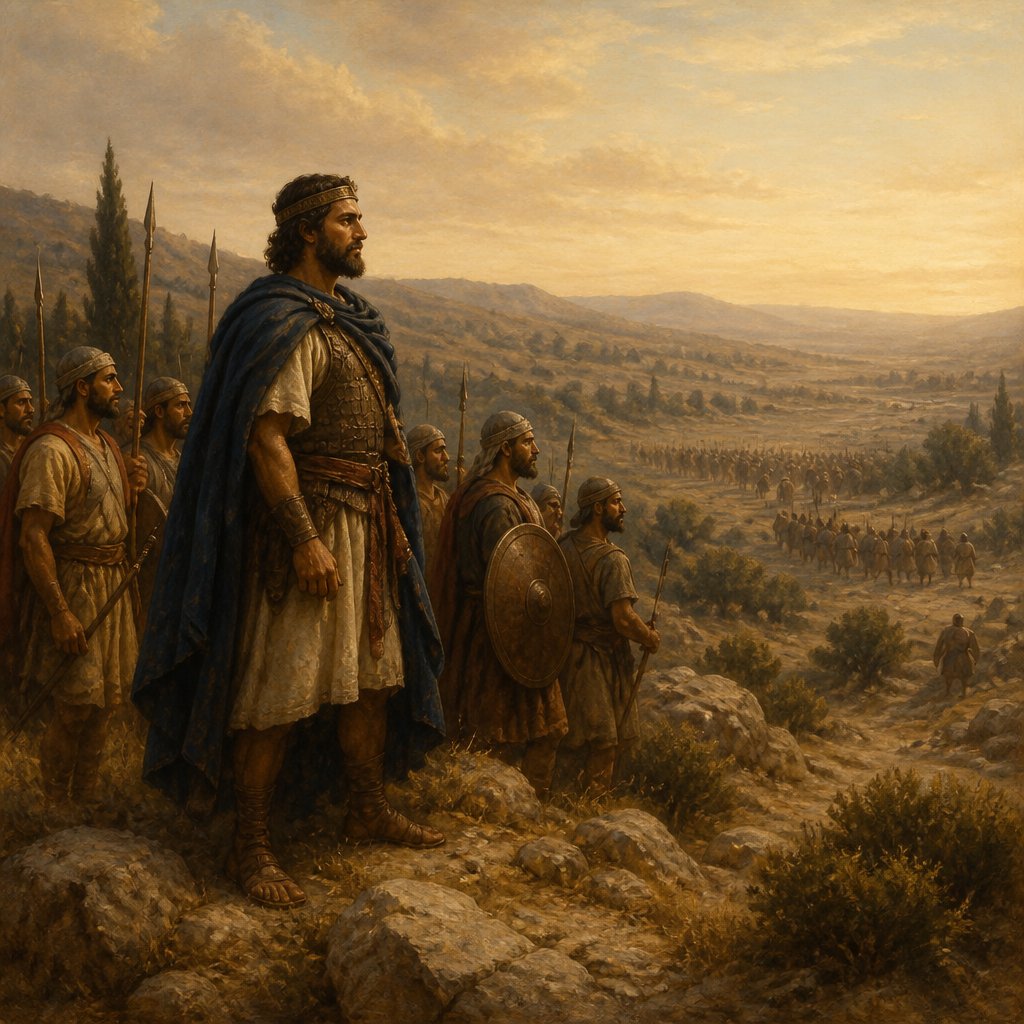
1 Chronicles 14:16 (KJV) - "David therefore did as God commanded him: and they smote the host of the Philistines from Gibeon even to Gazer."
This verse comes from the Old Testament of the Bible and is part of the larger narrative describing King David's reign and his victories over the enemies of Israel. In this particular verse, we see King David obediently following God's command and leading his army to defeat the Philistine army.
The book of 1 Chronicles is a historical record of the genealogies of the tribes of Israel and the reign of King David. It emphasizes the importance of David as a central figure in the establishment and consolidation of the nation of Israel. In this verse, David's obedience to God's command is highlighted as the key to the victory over the Philistines.
The theme of obedience to God's commands is central to this verse. David's willingness to follow God's instructions without hesitation or doubt demonstrates his faith and devotion to God. This theme is a recurring motif throughout the Bible, with numerous stories highlighting the importance of obedience to God's will. In the case of David, his obedience leads to a great military triumph, reinforcing the idea that following God's commands leads to blessings and success.
Additionally, this verse speaks to the theme of divine intervention in human affairs. The victory over the Philistines is not attributed solely to David's military prowess, but also to God's guidance and assistance. This theme is consistent with the broader theological perspective of the Bible, which presents God as actively involved in the lives of his people and capable of delivering them from their enemies.
The context of this verse is important for understanding its significance. The Philistines were a recurring adversary of the Israelites throughout their history, and their defeat at the hands of David is a significant achievement. By defeating the Philistines, David not only secures the safety and security of his kingdom but also establishes his reputation as a formidable and righteous leader.
Symbolism in this verse can be found in the geographical locations mentioned. Gibeon and Gazer were both strategic cities in ancient Israel, and their mention in the verse adds a layer of symbolic meaning. Gibeon was known for its association with the tabernacle and the altar of sacrifice, representing the spiritual foundation of the nation. Gazer, on the other hand, was a key fortress that controlled access to the central hill country of Israel. The victory from Gibeon to Gazer therefore symbolizes the comprehensive triumph of God's people over their adversaries, both spiritually and militarily.
In conclusion, 1 Chronicles 14:16 is a verse that underscores the themes of obedience to God's commands, divine intervention in human affairs, and the symbolic significance of geographical locations. It serves to highlight the faith and leadership of King David and the central role of God in the history of Israel. As with many other passages in the Bible, this verse offers valuable insights into the nature of God and the principles of faithful living.
Get our apps


Artwork for 1 Chronicles 14:16
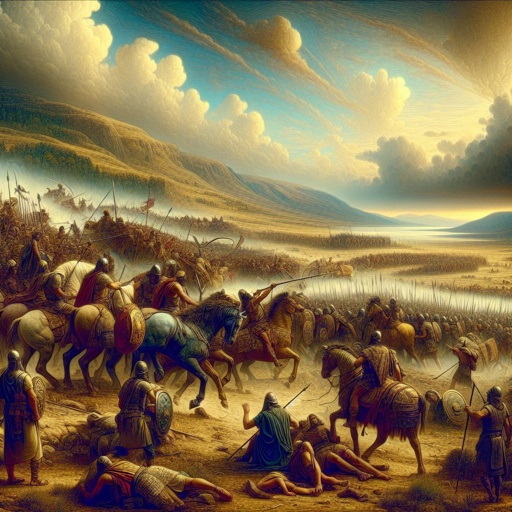
1 Chronicles 14:16 - "David therefore did as God commanded him: and they smote the host of the Philistines from Gibeon even to Gazer."
"David therefore did as God commanded him: and they smote the host of the Philistines from Gibeon even to Gazer." - 1 Chronicles 14:16

1 Chronicles 16:14 - "He is the LORD our God; his judgments are in all the earth."

1 Kings 16:14 - "Now the rest of the acts of Elah, and all that he did, are they not written in the book of the chronicles of the kings of Israel?"

"He is the LORD our God; his judgments are in all the earth." - 1 Chronicles 16:14

1 Chronicles 1:16 - "And the Arvadite, and the Zemarite, and the Hamathite."

1 Chronicles 14:7 - "And Elishama, and Beeliada, and Eliphalet."

1 Chronicles 14:6 - "And Nogah, and Nepheg, and Japhia,"

1 Chronicles 1:14 - "The Jebusite also, and the Amorite, and the Girgashite,"

1 Chronicles 14:5 - "And Ibhar, and Elishua, and Elpalet,"

"Now the rest of the acts of Elah, and all that he did, are they not written in the book of the chronicles of the kings of Israel?" - 1 Kings 16:14

John 14:16

1 Chronicles 16:16 - "Even of the covenant which he made with Abraham, and of his oath unto Isaac;"

1 Chronicles 8:14 - "And Ahio, Shashak, and Jeremoth,"

"And Elishama, and Beeliada, and Eliphalet." - 1 Chronicles 14:7

"And Nogah, and Nepheg, and Japhia," - 1 Chronicles 14:6

1 Chronicles 24:16 - "The nineteenth to Pethahiah, the twentieth to Jehezekel,"

1 Chronicles 23:16 - "Of the sons of Gershom, Shebuel was the chief."

1 Chronicles 14:13 - "And the Philistines yet again spread themselves abroad in the valley."

1 Chronicles 24:14 - "The fifteenth to Bilgah, the sixteenth to Immer,"

1 Chronicles 2:14 - "Nethaneel the fourth, Raddai the fifth,"

1 Chronicles 6:16 - "¶ The sons of Levi; Gershom, Kohath, and Merari."

1 Chronicles 8:16 - "And Michael, and Ispah, and Joha, the sons of Beriah;"

"And Ibhar, and Elishua, and Elpalet," - 1 Chronicles 14:5

"And the Arvadite, and the Zemarite, and the Hamathite." - 1 Chronicles 1:16

1 Chronicles 11:16 - "And David was then in the hold, and the Philistines' garrison was then at Beth-lehem."

1 Chronicles 4:16 - "And the sons of Jehaleleel; Ziph, and Ziphah, Tiria, and Asareel."

1 Chronicles 6:14 - "And Azariah begat Seraiah, and Seraiah begat Jehozadak,"

1 Chronicles 14:9 - "And the Philistines came and spread themselves in the valley of Rephaim."

1 Chronicles 16:19 - "When ye were but few, even a few, and strangers in it."