What does 1 Chronicles 14:4 mean?
“Now these are the names of his children which he had in Jerusalem; Shammua, and Shobab, Nathan, and Solomon,” — 1 Chronicles 14:4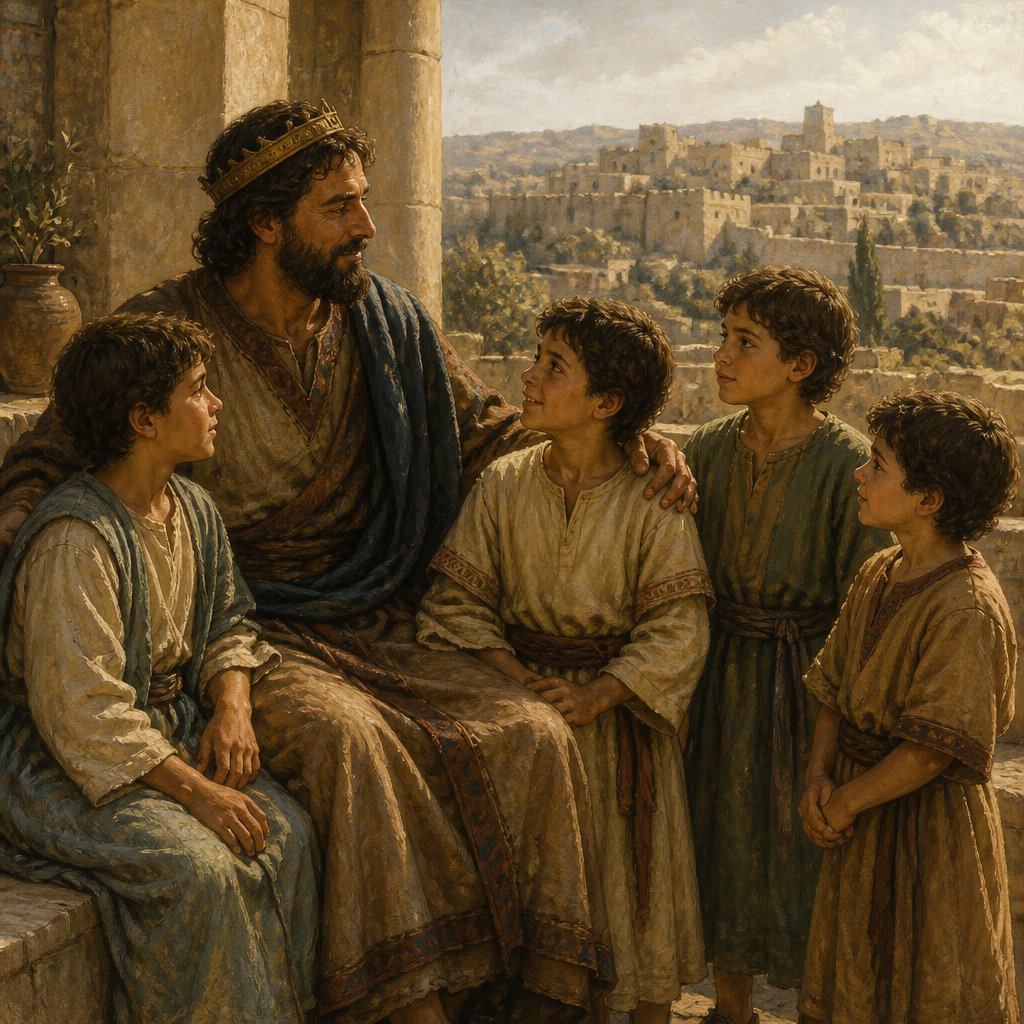
1 Chronicles 14:4 (KJV) - "Now these are the names of his children which he had in Jerusalem; Shammua, and Shobab, Nathan, and Solomon,"
The book of 1 Chronicles is a historical and genealogical account of the lineage of the Israelites, specifically focusing on the reign of King David and the establishment of the Davidic dynasty. In this verse, we see a record of the children that David had in Jerusalem, namely Shammua, Shobab, Nathan, and Solomon.
The name "Shammua" means "renowned" or "renowned by God," which reflects the idea of being well-known or highly regarded. "Shobab" means "returning," possibly signifying a sense of restoration or coming back to something. "Nathan" means "he gave," suggesting a sense of gift or generosity. And "Solomon" means "peaceful" or "peaceable," indicating a state of harmony and tranquility.
In a broader context, the mention of these names serves to establish the lineage of David, a crucial aspect of the Israelite monarchy. It highlights the succession of David's descendants, particularly through the inclusion of Solomon, who would eventually succeed David as king. The genealogy presented in this verse is important for tracing the line of kings and understanding the fulfillment of God's promises to David regarding the continuation of his dynasty.
One of the key themes present in this verse is the faithfulness of God in fulfilling his promises. Throughout the Bible, we see numerous instances where God makes covenantal promises to individuals, families, and nations. In the case of David, God made a covenant with him, promising to establish his throne forever (2 Samuel 7:16). The inclusion of Solomon's name in this verse is significant as it represents the fulfillment of that promise. This underscores the overarching theme of God's faithfulness and the fulfillment of his word, which is a consistent theme throughout the biblical narrative.
Another important theme in this verse is the idea of legacy and inheritance. The naming of David's children not only serves as a historical record but also emphasizes the continuation of his lineage. In ancient Israelite society, lineage and inheritance were of utmost importance, as they determined one's position within the community and the fulfillment of God's promises to the patriarchs. By recording the names of David's descendants, the verse highlights the importance of legacy and the continued fulfillment of God's plan through successive generations.
Furthermore, the symbolism of the names of David's children also carries significance. Each name holds a specific meaning, reflecting aspects of God's character and his redemptive plan for his people. This reflects the broader theme of God's providential care and his involvement in the lives of individuals, guiding them according to his purposes.
Overall, 1 Chronicles 14:4 serves as a significant piece of the historical and genealogical narrative of the Israelite monarchy. It highlights the faithfulness of God in fulfilling his promises, the importance of legacy and inheritance, and the symbolism of names as a reflection of God's character and plan. It also sets the stage for the subsequent events in the reign of David and the establishment of the Davidic dynasty, ultimately pointing towards the fulfillment of God's redemptive purposes through the line of David and, ultimately, culminating in the coming of Jesus Christ.
Get our apps


Artwork for 1 Chronicles 14:4

1 Chronicles 14:4 - "Now these are the names of his children which he had in Jerusalem; Shammua, and Shobab, Nathan, and Solomon,"
"Now these are the names of his children which he had in Jerusalem; Shammua, and Shobab, Nathan, and Solomon," - 1 Chronicles 14:4

1 Chronicles 4:14 - "And Meonothai begat Ophrah: and Seraiah begat Joab, the father of the valley of Charashim; for they were craftsmen."

1 Chronicles 14:7 - "And Elishama, and Beeliada, and Eliphalet."

1 Chronicles 14:6 - "And Nogah, and Nepheg, and Japhia,"

2 Chronicles 14:4 - "And commanded Judah to seek the LORD God of their fathers, and to do the law and the commandment."

1 Chronicles 1:14 - "The Jebusite also, and the Amorite, and the Girgashite,"

1 Chronicles 14:5 - "And Ibhar, and Elishua, and Elpalet,"

2 Chronicles 4:14 - "He made also bases, and lavers made he upon the bases;"

1 Chronicles 8:14 - "And Ahio, Shashak, and Jeremoth,"

"And Elishama, and Beeliada, and Eliphalet." - 1 Chronicles 14:7

"And Nogah, and Nepheg, and Japhia," - 1 Chronicles 14:6

"And Meonothai begat Ophrah: and Seraiah begat Joab, the father of the valley of Charashim; for they were craftsmen." - 1 Chronicles 4:14

1 Chronicles 14:13 - "And the Philistines yet again spread themselves abroad in the valley."

1 Chronicles 1:4 - "Noah, Shem, Ham, and Japheth."

1 Chronicles 24:14 - "The fifteenth to Bilgah, the sixteenth to Immer,"

1 Chronicles 2:14 - "Nethaneel the fourth, Raddai the fifth,"

"And Ibhar, and Elishua, and Elpalet," - 1 Chronicles 14:5

2 Chronicles 4:22

1 Chronicles 6:14 - "And Azariah begat Seraiah, and Seraiah begat Jehozadak,"

1 Chronicles 14:9 - "And the Philistines came and spread themselves in the valley of Rephaim."

1 Chronicles 4 : 10

1 Chronicles 3:14 - "Amon his son, Josiah his son."

1 Chronicles 4:29 - "And at Bilhah, and at Ezem, and at Tolad,"

1 Chronicles 4:30 - "And at Bethuel, and at Hormah, and at Ziklag,"

1 Chronicles 8:4 - "And Abishua, and Naaman, and Ahoah,"

1 Chronicles 4:1 - "The sons of Judah; Pharez, Hezron, and Carmi, and Hur, and Shobal."

"The Jebusite also, and the Amorite, and the Girgashite," - 1 Chronicles 1:14

1 Chronicles 14:3 - "¶ And David took more wives at Jerusalem: and David begat more sons and daughters."

1 Chronicles 16:14 - "He is the LORD our God; his judgments are in all the earth."