What does 1 Chronicles 16:15 mean?
“Be ye mindful always of his covenant; the word which he commanded to a thousand generations;” — 1 Chronicles 16:15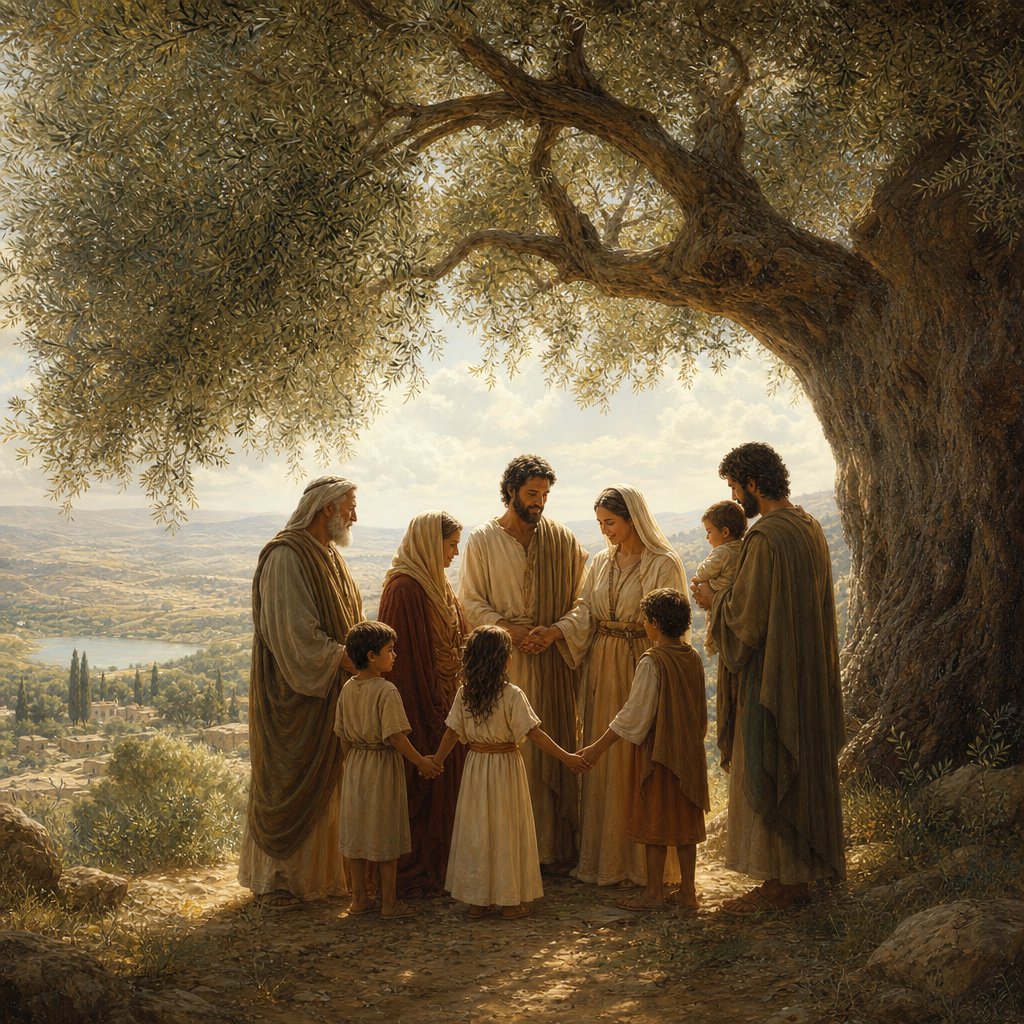
“Be ye mindful always of his covenant; the word which he commanded to a thousand generations;” (1 Chronicles 16:15, KJV) stands as a summons to God’s people to live with a steady, continual memory of what God has bound himself to do. In the chapter where this verse appears, David has brought the ark of God into Jerusalem with rejoicing, sacrifices, and ordered worship. The ark, which represented the presence and throne of the LORD among his people, is set “in the midst of the tent” that David had prepared, and David appoints Levites to “record, and to thank and praise the LORD God of Israel” (1 Chronicles 16:4, KJV). In that public act of worship, David delivers a psalm of thanksgiving, and 1 Chronicles 16:15 is part of that sacred song. The verse is therefore not a private meditation but a liturgical command spoken over the congregation: worship is meant to be shaped by remembering.
The chief theme is covenant remembrance. The verse does not merely say to remember God in general, but to be “mindful always of his covenant.” In Scripture, God’s covenant is his pledged relationship, established by promise and confirmed by his own authority. To be mindful is more than to recall facts; it is to hold God’s promise before the heart and the community, to let it govern expectation, obedience, prayer, and praise. This is why the command is “always.” David’s worship is not designed as a momentary emotional high surrounding the ark’s arrival; it is meant to form a durable covenant consciousness that extends beyond one ceremony into daily life and into the future of the nation.
The next phrase explains what covenant memory rests upon: “the word which he commanded.” God’s covenant is carried by God’s word. In the KJV wording here, the covenant is not presented as a human contract negotiated between equal parties; it is a word God “commanded,” an authoritative utterance that establishes reality for his people. The “word” is not a vague encouragement but a divine decree that binds history to God’s purpose. Within the immediate context of the psalm, that “word” is the promise made to the fathers. The surrounding verses explicitly connect covenant to Abraham, Isaac, and Israel: “Even of the covenant which he made with Abraham, and of his oath unto Isaac; And hath confirmed the same to Jacob for a law, and to Israel for an everlasting covenant” (1 Chronicles 16:16–17, KJV). So 1 Chronicles 16:15 functions like a hinge: it calls God’s people to keep in view the ancient promise that stands behind their present worship and national identity.
“A thousand generations” brings the theme of divine faithfulness to its highest scale. The expression reaches beyond a literal count and conveys vast duration: God’s covenant word is not fragile, local, or temporary. It stretches farther than one lifetime, one dynasty, or one season of obedience. In the same psalm, the LORD is praised as judge and ruler over all the earth, not merely a tribal deity: “He is the LORD our God; his judgments are in all the earth” (1 Chronicles 16:14, KJV). When verse 15 says his commanded word is “to a thousand generations,” it matches that universal scope and insists that time itself does not wear out God’s promise. For Israel hearing this, it anchors their hope beyond immediate political conditions. For worshippers who face change, loss, exile, or uncertainty, the covenant is depicted as something with a horizon wider than their own experience.
The symbolism of remembering in the presence of the ark deepens the verse’s meaning. The ark’s arrival in Jerusalem marks a turning point: the center of national worship is being established, and David’s kingdom is being ordered under the LORD. Yet David’s psalm repeatedly shifts attention away from human achievement to divine initiative. The people are not told to be mindful of David’s success, but of “his covenant.” The visible symbol of God’s presence does not replace God’s word; it serves it. In that way, the verse quietly teaches that true worship is not sustained by sacred objects, festive occasions, or national pride, but by a living relationship grounded in what God has spoken and pledged. The ark in the tent is a sign that God is near; the covenant word “to a thousand generations” is the assurance that God will remain faithful.
The verse also carries a moral and spiritual implication. To remember the covenant is to remember who God is, who the people are, and what their life is for. In the same psalm, the call to remembrance is tied to seeking and obedience: “Seek the LORD and his strength, seek his face continually” (1 Chronicles 16:11, KJV), and “Remember his marvellous works that he hath done, his wonders, and the judgments of his mouth” (1 Chronicles 16:12, KJV). Covenant mindfulness therefore includes gratitude for past deliverance, reverence for God’s judgments, and perseverance in seeking him. It implies that forgetfulness is spiritually dangerous: if the people forget the covenant, worship can become empty ritual, and identity can dissolve into the patterns of surrounding nations. David’s song counters that danger by placing remembrance at the center of communal praise.
Finally, the significance of 1 Chronicles 16:15 is that it sets the life of God’s people inside a long story of promise. In a moment of celebration, the verse stretches the congregation’s vision from the present ceremony back to Abraham and forward through “a thousand generations.” It declares that the LORD’s relationship with his people is not accidental or temporary, but willed, spoken, and sustained by God himself. In that light, the command “Be ye mindful always” is not burdensome; it is an invitation to stability. The covenant word is the ground of worship, the source of identity, and the reason hope can endure when circumstances change, because it rests on what God “commanded” and on a faithfulness that reaches farther than any single generation can see.
Get our apps


Artwork for 1 Chronicles 16:15

1 Chronicles 16:15 - "Be ye mindful always of his covenant; the word which he commanded to a thousand generations;"

"Be ye mindful always of his covenant; the word which he commanded to a thousand generations;" - 1 Chronicles 16:15

"Be ye mindful always of his covenant; the word which he commanded to a thousand generations;" - 1 Chronicles 16:15
"Be ye mindful always of his covenant; the word which he commanded to a thousand generations;" - 1 Chronicles 16:15

1 Chronicles 15:16 - "And David spake to the chief of the Levites to appoint their brethren to be the singers with instruments of musick, psalteries and harps and cymbals, sounding, by lifting up the voice with joy."

1 Chronicles 1:15

1 Chronicles 1:15

1 Chronicles 1:16 - "And the Arvadite, and the Zemarite, and the Hamathite."

1 Chronicles 1:15 - "And the Hivite, and the Arkite, and the Sinite,"

1 Chronicles 16:16 - "Even of the covenant which he made with Abraham, and of his oath unto Isaac;"

1 Chronicles 8:15 - "And Zebadiah, and Arad, and Ader,"

1 Chronicles 24:15 - "The seventeenth to Hezir, the eighteenth to Aphses,"

1 Chronicles 24:16 - "The nineteenth to Pethahiah, the twentieth to Jehezekel,"

1 Chronicles 23:16 - "Of the sons of Gershom, Shebuel was the chief."

1 Chronicles 2:15 - "Ozem the sixth, David the seventh:"

1 Chronicles 15:4 - "And David assembled the children of Aaron, and the Levites:"

1 Chronicles 6:16 - "¶ The sons of Levi; Gershom, Kohath, and Merari."

1 Chronicles 8:16 - "And Michael, and Ispah, and Joha, the sons of Beriah;"

1 Chronicles 23:15 - "The sons of Moses were, Gershom, and Eliezer."

1 Chronicles 15:23 - "And Berechiah and Elkanah were doorkeepers for the ark."

"And the Hivite, and the Arkite, and the Sinite," - 1 Chronicles 1:15

"And the Arvadite, and the Zemarite, and the Hamathite." - 1 Chronicles 1:16

1 Corinthians 15:16 - "For if the dead rise not, then is not Christ raised:"

1 Chronicles 11:16 - "And David was then in the hold, and the Philistines' garrison was then at Beth-lehem."

1 Chronicles 4:16 - "And the sons of Jehaleleel; Ziph, and Ziphah, Tiria, and Asareel."

1 Chronicles 16:19 - "When ye were but few, even a few, and strangers in it."

1 Chronicles 15:15 - "And the children of the Levites bare the ark of God upon their shoulders with the staves thereon, as Moses commanded according to the word of the LORD."

1 Chronicles 12:16 - "And there came of the children of Benjamin and Judah to the hold unto David."

1 Chronicles 16:26 - "For all the gods of the people are idols: but the LORD made the heavens."

1 Chronicles 15:9 - "Of the sons of Hebron; Eliel the chief, and his brethren fourscore:"