What does 1 Chronicles 16:39 mean?
“And Zadok the priest, and his brethren the priests, before the tabernacle of the LORD in the high place that was at Gibeon,” — 1 Chronicles 16:39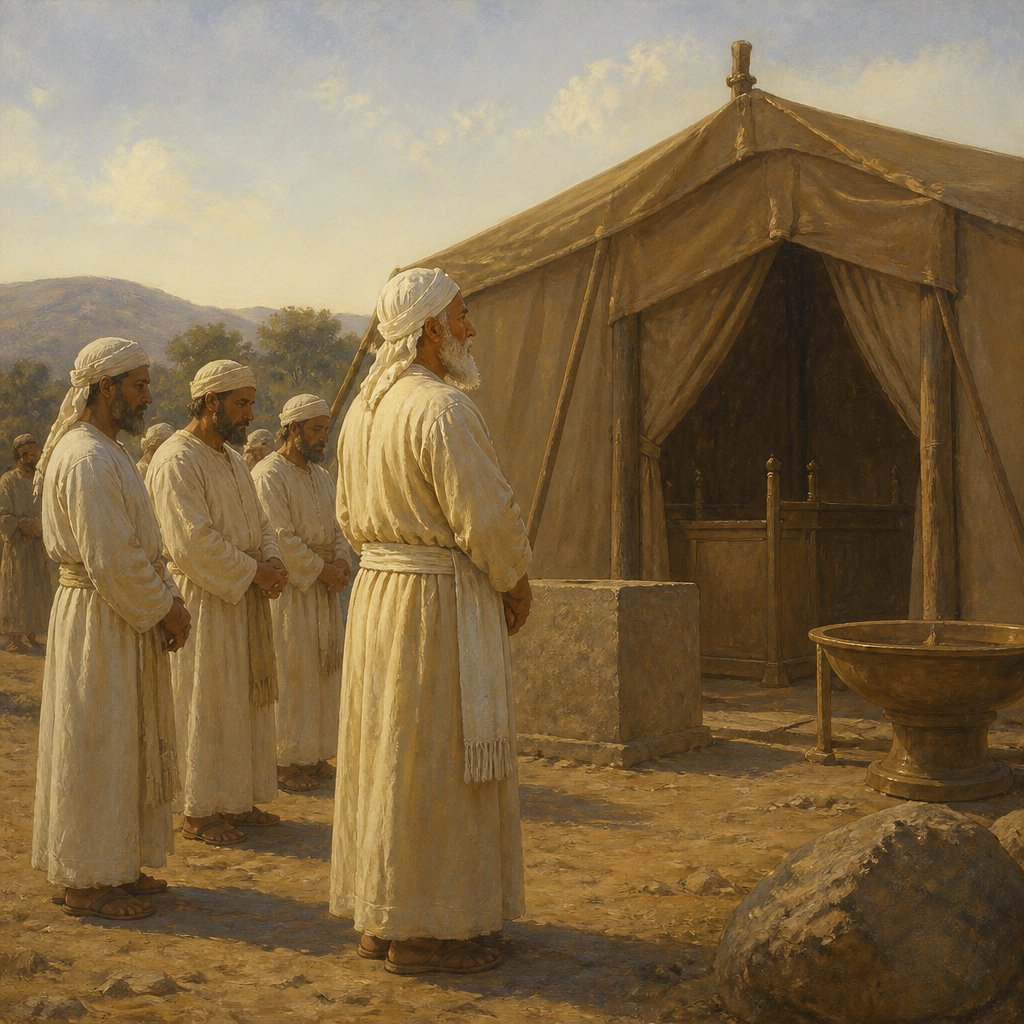
1 Chronicles 16:39 (KJV): "And Zadok the priest, and his brethren the priests, before the tabernacle of the Lord in the high place that was at Gibeon, To offer burnt offerings unto the Lord upon the altar of the burnt offering continually morning and evening, and to do according to all that is written in the law of the Lord, which he commanded Israel;"
This verse comes at the end of a passage that describes King David's actions after the Ark of the Covenant was brought to Jerusalem. In this verse, the focus is on Zadok the priest and his brothers as they oversee the offering of burnt sacrifices to the Lord at the tabernacle that was set up at the high place in Gibeon. This verse is rich in its themes of obedience to the law of the Lord, the role of the priesthood, and the importance of regular and continual worship.
The context of this verse is important in understanding its significance. King David had recently brought the Ark of the Covenant to Jerusalem, and he appointed Zadok and the other priests to oversee the tabernacle and the offerings that were to be made there. This was a crucial moment in Israel's history, as the Ark represented the presence of God among His people, and David's actions signaled a recommitment to the worship and service of the Lord.
One of the key themes of this verse is the importance of obedience to the law of the Lord. Zadok and his fellow priests were instructed to "do according to all that is written in the law of the Lord, which he commanded Israel." This reflects the central role of the Mosaic law in the life of the Israelites. The law was given to them by God as a guide for living in obedience to Him, and the priests were responsible for upholding and enforcing its requirements. This verse serves as a reminder that faithfulness to God's commands is essential for His people.
Another theme that is present in this verse is the role of the priesthood. Zadok and his brothers were charged with the responsibility of overseeing the offering of burnt sacrifices to the Lord. As priests, they served as intermediaries between the people and God, offering sacrifices on behalf of the people and ministering in the tabernacle. This verse highlights the significance of the priesthood in the worship and service of God, as well as the importance of their faithful execution of their duties.
The symbolism present in this verse is also worth noting. The burnt offerings that Zadok and his fellow priests offered on the altar were a symbolic representation of the people's desire for atonement and reconciliation with God. The continual morning and evening sacrifices served as a reminder of the constant need for repentance and the seeking of God's forgiveness. Additionally, the tabernacle itself was a symbol of God's dwelling among His people, and the offerings made there were a demonstration of the Israelites' commitment to honoring and worshiping Him.
In conclusion, 1 Chronicles 16:39 is a verse that carries important themes of obedience to God's law, the role of the priesthood, and the symbolism of worship and sacrifice. It serves as a reminder of the central place of God in the life of His people and the importance of faithful service to Him. It also points to the need for continual worship and devotion to God, as represented by the regular offerings made by the priests. This verse has relevance for believers today as a call to faithful obedience, dedicated service, and a continual seeking after God.
Get our apps


Artwork for 1 Chronicles 16:39

1 Chronicles 16:39 - "And Zadok the priest, and his brethren the priests, before the tabernacle of the LORD in the high place that was at Gibeon,"
"And Zadok the priest, and his brethren the priests, before the tabernacle of the LORD in the high place that was at Gibeon," - 1 Chronicles 16:39

1 Chronicles 1:39 - "And the sons of Lotan; Hori, and Homam: and Timna was Lotan's sister."

1 Chronicles 7:39 - "And the sons of Ulla; Arah, and Haniel, and Rezia."

1 Chronicles 2:39 - "And Azariah begat Helez, and Helez begat Eleasah,"

1 Chronicles 11:39 - "Zelek the Ammonite, Naharai the Berothite, the armourbearer of Joab the son of Zeruiah,"

1 Chronicles 12:39 - "And there they were with David three days, eating and drinking: for their brethren had prepared for them."

1 Chronicles 4:39 - "¶ And they went to the entrance of Gedor, even unto the east side of the valley, to seek pasture for their flocks."

1 Chronicles 8:39 - "And the sons of Eshek his brother were, Ulam his firstborn, Jehush the second, and Eliphelet the third."

"And the sons of Ulla; Arah, and Haniel, and Rezia." - 1 Chronicles 7:39

"And the sons of Lotan; Hori, and Homam: and Timna was Lotan's sister." - 1 Chronicles 1:39

1 Chronicles 6:39 - "And his brother Asaph, who stood on his right hand, even Asaph the son of Berachiah, the son of Shimea,"

1 Chronicles 9:39 - "And Ner begat Kish; and Kish begat Saul; and Saul begat Jonathan, and Malchi-shua, and Abinadab, and Esh-baal."

1 Chronicles 1:16 - "And the Arvadite, and the Zemarite, and the Hamathite."

"And Azariah begat Helez, and Helez begat Eleasah," - 1 Chronicles 2:39

1 Chronicles 16:16 - "Even of the covenant which he made with Abraham, and of his oath unto Isaac;"

"Zelek the Ammonite, Naharai the Berothite, the armourbearer of Joab the son of Zeruiah," - 1 Chronicles 11:39

1 Chronicles 24:16 - "The nineteenth to Pethahiah, the twentieth to Jehezekel,"

1 Chronicles 23:16 - "Of the sons of Gershom, Shebuel was the chief."

1 Chronicles 6:16 - "¶ The sons of Levi; Gershom, Kohath, and Merari."

1 Chronicles 8:16 - "And Michael, and Ispah, and Joha, the sons of Beriah;"

1 Kings 22:39 - "Now the rest of the acts of Ahab, and all that he did, and the ivory house which he made, and all the cities that he built, are they not written in the book of the chronicles of the kings of Israel?"

"And the Arvadite, and the Zemarite, and the Hamathite." - 1 Chronicles 1:16

1 Chronicles 11:16 - "And David was then in the hold, and the Philistines' garrison was then at Beth-lehem."

1 Chronicles 4:16 - "And the sons of Jehaleleel; Ziph, and Ziphah, Tiria, and Asareel."

1 Chronicles 16:19 - "When ye were but few, even a few, and strangers in it."

1 Chronicles 12:16 - "And there came of the children of Benjamin and Judah to the hold unto David."

1 Chronicles 16:26 - "For all the gods of the people are idols: but the LORD made the heavens."

1 Chronicles 16:27 - "Glory and honour are in his presence; strength and gladness are in his place."

1 Chronicles 3:16 - "And the sons of Jehoiakim: Jeconiah his son, Zedekiah his son."