What does 1 Chronicles 19:5 mean?
“Then there went certain, and told David how the men were served. And he sent to meet them: for the men were greatly ashamed. And the king said, Tarry at Jericho until your beards be grown, and then return.” — 1 Chronicles 19:5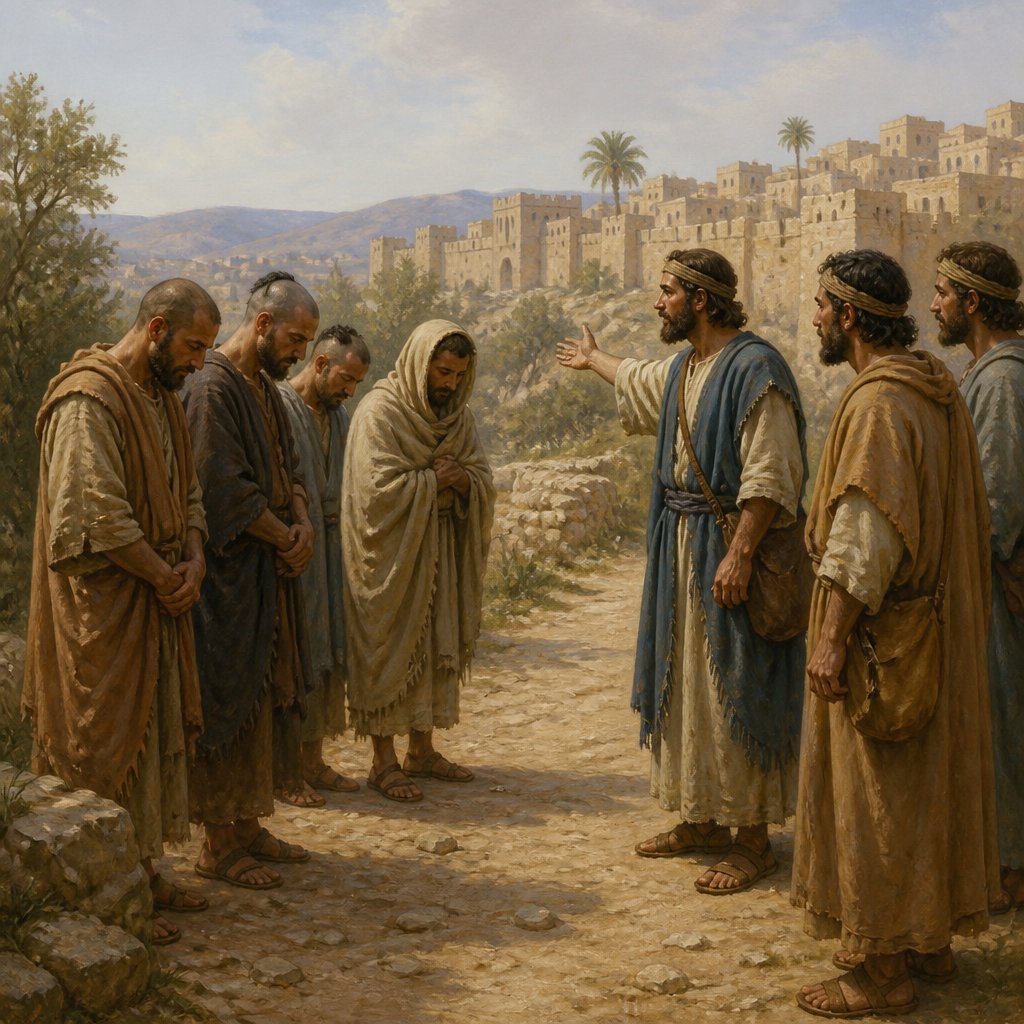
The Bible verse 1 Chronicles 19:5 in the King James Version reads, "Then there went certain, and told David how the men were served. And he sent to meet them: for the men were greatly ashamed. And the king said, Tarry at Jericho until your beards be grown, and then return."
In order to understand the verse in context, it is important to look at the background and surrounding verses. In 1 Chronicles 19, we see that the Ammonites, a neighboring enemy of Israel, had insulted David by humiliating his ambassadors. As a result, David decides to retaliate against the Ammonites.
In verse 5, we find David's response to hearing about the humiliation of his men. The fact that David was told about how the men were served shows that he was not initially aware of the situation, but upon learning about it, he responded promptly. It reflects David's leadership and concern for his people. He took immediate action to rectify the situation.
It is important to note the response of the men to the humiliation they faced. They were greatly ashamed, which signifies the depth of the insult they suffered. This emphasizes the disgrace and dishonor that the Ammonites had brought upon David's men. David, being a leader who cares for his people, decided to take measures to restore their dignity and honor.
David's command for the men to tarry at Jericho until their beards grew back carries symbolic meaning. In ancient Jewish culture, a man's beard was a symbol of honor and dignity. To have one's beard forcibly shaven off was considered a great humiliation. By instructing the men to remain in Jericho until their beards grew back, David was giving them time to heal from the shame they had experienced and to regain their lost honor.
Furthermore, David's decision to wait for the men's beards to grow back before their return shows his desire for the men to be restored to their former state of honor before rejoining society. This decision reflects David's understanding of the psychological and emotional impact of the humiliation his men endured.
In a broader context, this verse also speaks to the themes of honor, shame, and restoration. It shows how important it is for a leader to protect the dignity of his people and to take swift action when that dignity is compromised. The verse also emphasizes the restoration of honor as an essential part of the healing process after experiencing shame or humiliation.
Symbolically, the regrowth of the men's beards also represents a process of renewal and restoration. It reflects the idea of overcoming humiliation and regaining confidence and honor. This mirrors the spiritual concept of renewal and redemption, where individuals can find healing and restoration after facing adversity.
In conclusion, 1 Chronicles 19:5 portrays David as a compassionate and decisive leader who takes action to restore the honor of his people. The verse speaks to the themes of honor, shame, and restoration, and symbolically represents the process of healing and renewal. It serves as a reminder of the importance of protecting the dignity of others and the potential for restoration after experiencing shame or humiliation.
Get our apps


Artwork for 1 Chronicles 19:5

1 Chronicles 19:5 - "Then there went certain, and told David how the men were served. And he sent to meet them: for the men were greatly ashamed. And the king said, Tarry at Jericho until your beards be grown, and then return."
"Then there went certain, and told David how the men were served. And he sent to meet them: for the men were greatly ashamed. And the king said, Tarry at Jericho until your beards be grown, and then return." - 1 Chronicles 19:5

1 Chronicles 5:19 - "And they made war with the Hagarites, with Jetur, and Nephish, and Nodab."
"And they made war with the Hagarites, with Jetur, and Nephish, and Nodab." - 1 Chronicles 5:19

2 Chronicles 19:5 - "¶ And he set judges in the land throughout all the fenced cities of Judah, city by city,"

1 Chronicles 8:19 - "And Jakim, and Zichri, and Zabdi,"

1 Thessalonians 5:19 - "Quench not the Spirit."

"¶ And he set judges in the land throughout all the fenced cities of Judah, city by city," - 2 Chronicles 19:5

luke 21:5-19

1 Chronicles 5:5 - "Micah his son, Reaia his son, Baal his son,"

1 Chronicles 16:19 - "When ye were but few, even a few, and strangers in it."

1 Chronicles 7:19 - "And the sons of Shemidah were, Ahian, and Shechem, and Likhi, and Aniam."

1 Chronicles 8:5 - "And Gera, and Shephuphan, and Huram."

1 Chronicles 14:5 - "And Ibhar, and Elishua, and Elpalet,"

1 Chronicles 26:19 - "These are the divisions of the porters among the sons of Kore, and among the sons of Merari."

1 Chronicles 6:19 - "The sons of Merari; Mahli, and Mushi. And these are the families of the Levites according to their fathers."

1 Chronicles 2:5 - "The sons of Pharez; Hezron, and Hamul."

1 Chronicles 27:19 - "Of Zebulun, Ishmaiah the son of Obadiah: of Naphtali, Jerimoth the son of Azriel:"

2 Chronicles 19:1 - "And Jehoshaphat the king of Judah returned to his house in peace to Jerusalem."

1 Chronicles 1:5 - "¶ The sons of Japheth; Gomer, and Magog, and Madai, and Javan, and Tubal, and Meshech, and Tiras."

1 Chronicles 25:19 - "The twelfth to Hashabiah, he, his sons, and his brethren, were twelve:"

1 Chronicles 9:5 - "And of the Shilonites; Asaiah the firstborn, and his sons."

1 Chronicles 19:1 - "Now it came to pass after this, that Nahash the king of the children of Ammon died, and his son reigned in his stead."

"And Jakim, and Zichri, and Zabdi," - 1 Chronicles 8:19

1 Chronicles 15:19 - "So the singers, Heman, Asaph, and Ethan, were appointed to sound with cymbals of brass;"

1 Chronicles 19:8 - "And when David heard of it, he sent Joab, and all the host of the mighty men."

1 Chronicles 21:19 - "And David went up at the saying of Gad, which he spake in the name of the LORD."

1 Chronicles 23:19 - "Of the sons of Hebron; Jeriah the first, Amariah the second, Jahaziel the third, and Jekameam the fourth."

1 Chronicles 12:5 - "Eluzai, and Jerimoth, and Bealiah, and Shemariah, and Shephatiah the Haruphite,"

1 Chronicles 6:5 - "And Abishua begat Bukki, and Bukki begat Uzzi,"