What does 1 Chronicles 20:7 mean?
“But when he defied Israel, Jonathan the son of Shimea David’s brother slew him.” — 1 Chronicles 20:7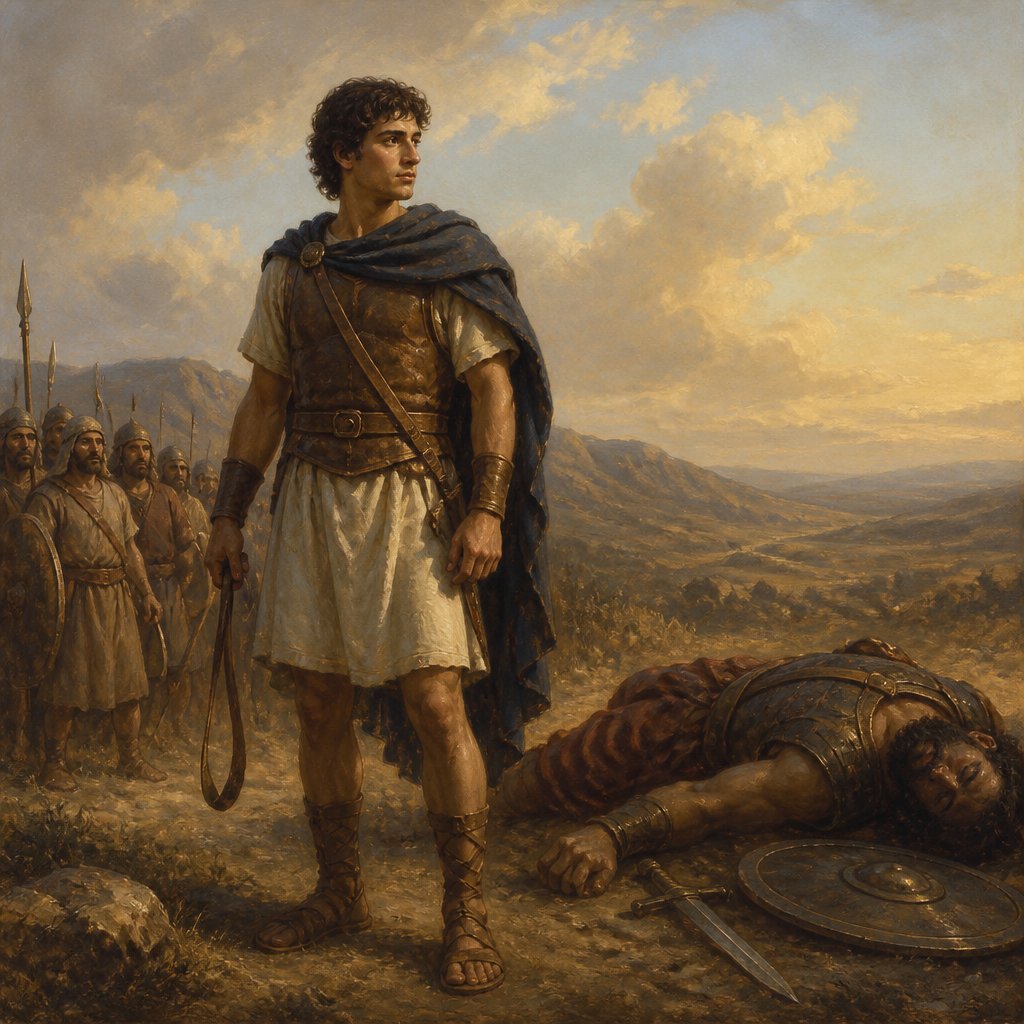
The Bible verse 1 Chronicles 20:7 in the King James Version reads, "But when the children of Israel had turned again, and pursued the Philistines, and smote them, and took their spoil."
This verse is found in the context of the book of 1 Chronicles, which is a historical record of the genealogies and events of the nation of Israel, focusing on the reigns of David and Solomon. In this particular passage, the verse is part of the account of David's military victories.
In this verse, the phrase "children of Israel" refers to the Israelite army, led by King David. The Philistines were a longstanding enemy of Israel, and this verse describes a turn of events where the Israelites, after a period of retreat or inactivity, regrouped, pursued the Philistines, attacked them, and plundered their possessions.
This recounting of military conquest serves several themes and purposes in the broader context of the Bible. Firstly, it highlights the theme of God's faithfulness and deliverance. Throughout the Old Testament, God often used the Israelites' military victories to demonstrate His power and faithfulness in fulfilling His promises to protect and bless His chosen people. In this instance, the success of the Israelite army in defeating the Philistines reflects God's faithfulness to His covenant with the nation of Israel.
Secondly, the verse reflects the theme of perseverance and courage in the face of opposition. The fact that the Israelites turned again and pursued the Philistines despite previous setbacks shows the importance of persistence and determination in the pursuit of God's purposes. It is a reminder that The Israelites remained committed to their mission and were eventually rewarded with success.
Additionally, this passage provides a historical record of the military achievements of King David, who is celebrated as a key figure in the Old Testament. David's military exploits are often regarded as emblematic of his trust in God and his leadership qualities, and this verse adds to the portrayal of David as a powerful and victorious king who led his people to triumph over their enemies.
Symbolically, the defeat of the Philistines could be seen as a representation of the triumph of good over evil, righteousness over wickedness. The Philistines often symbolized the enemies of God's people, and their defeat at the hands of the Israelites represents the victory of God's chosen people over those who sought to oppose them.
In the broader context of the Bible, this verse aligns with the overarching narrative of God's redemptive plan for humanity. The military successes of the Israelites, including those under King David's leadership, were part of God's larger purpose to establish His kingdom and ultimately bring salvation to the world through Jesus Christ. It is through the lineage of David that Jesus, the ultimate conqueror of sin and death, would eventually be born, fulfilling God's promise to bless all nations through the offspring of Abraham.
In conclusion, 1 Chronicles 20:7 provides a record of a specific military victory of the Israelites over the Philistines, but it also carries broader themes of God's faithfulness, human perseverance, the triumph of good over evil, and the fulfillment of God's redemptive plan. It is a part of the larger narrative of God's work in history and His ultimate purpose to bring salvation to the world through His chosen people.
Get our apps


Artwork for 1 Chronicles 20:7

1 Chronicles 20:7 - "But when he defied Israel, Jonathan the son of Shimea David's brother slew him."
"But when he defied Israel, Jonathan the son of Shimea David's brother slew him." - 1 Chronicles 20:7

1 Chronicles 7:20 - "¶ And the sons of Ephraim; Shuthelah, and Bered his son, and Tahath his son, and Eladah his son, and Tahath his son,"

1 Chronicles 1:20 - "And Joktan begat Almodad, and Sheleph, and Hazarmaveth, and Jerah,"

1 Chronicles 8:20 - "And Elienai, and Zilthai, and Eliel,"

2 Chronicles 20:7 - "Art not thou our God, who didst drive out the inhabitants of this land before thy people Israel, and gavest it to the seed of Abraham thy friend for ever?"

1 Chronicles 23:20 - "Of the sons of Uzziel; Michah the first, and Jesiah the second."

1 Chronicles 2:20 - "And Hur begat Uri, and Uri begat Bezaleel."

1 Chronicles 1:7 - "And the sons of Javan; Elishah, and Tarshish, Kittim, and Dodanim."

1 Chronicles 3:20 - "And Hashubah, and Ohel, and Berechiah, and Hasadiah, Jushab-hesed, five."

1 Chronicles 14:7 - "And Elishama, and Beeliada, and Eliphalet."

1 Chronicles 3:7 - "And Nogah, and Nepheg, and Japhia,"

1 Chronicles 23:7 - "¶ Of the Gershonites were, Laadan, and Shimei."

1 Chronicles 25:20 - "The thirteenth to Shubael, he, his sons, and his brethren, were twelve:"

"And Elienai, and Zilthai, and Eliel," - 1 Chronicles 8:20

1 Chronicles 7:39 - "And the sons of Ulla; Arah, and Haniel, and Rezia."

1 Chronicles 7:38 - "And the sons of Jether; Jephunneh, and Pispah, and Ara."

1 Chronicles 12:7 - "And Joelah, and Zebadiah, the sons of Jeroham of Gedor."
"¶ And the sons of Ephraim; Shuthelah, and Bered his son, and Tahath his son, and Eladah his son, and Tahath his son," - 1 Chronicles 7:20

1 Chronicles 7:1 - "Now the sons of Issachar were, Tola, and Puah, Jashub, and Shimron, four."

1 Chronicles 6:20 - "Of Gershom; Libni his son, Jahath his son, Zimmah his son,"

1 Chronicles 15:20 - "And Zechariah, and Aziel, and Shemiramoth, and Jehiel, and Unni, and Eliab, and Maaseiah, and Benaiah, with psalteries on Alamoth;"

1 Chronicles 16:20 - "And when they went from nation to nation, and from one kingdom to another people;"

1 Chronicles 9:20 - "And Phinehas the son of Eleazar was the ruler over them in time past, and the LORD was with him."

1 Chronicles 24:20 - "¶ And the rest of the sons of Levi were these: Of the sons of Amram; Shubael: of the sons of Shubael; Jehdeiah."

1 Chronicles 26:20 - "¶ And of the Levites, Ahijah was over the treasures of the house of God, and over the treasures of the dedicated things."

1 Chronicles 7:6 - "¶ The sons of Benjamin; Bela, and Becher, and Jediael, three."

1 Chronicles 4:7 - "And the sons of Helah were, Zereth, and Jezoar, and Ethnan."

1 Chronicles 7:34 - "And the sons of Shamer; Ahi, and Rohgah, Jehubbah, and Aram."

1 Chronicles 6:7 - "Meraioth begat Amariah, and Amariah begat Ahitub,"