What does 1 Chronicles 21:26 mean?
“And David built there an altar unto the LORD, and offered burnt offerings and peace offerings, and called upon the LORD; and he answered him from heaven by fire upon the altar of burnt offering.” — 1 Chronicles 21:26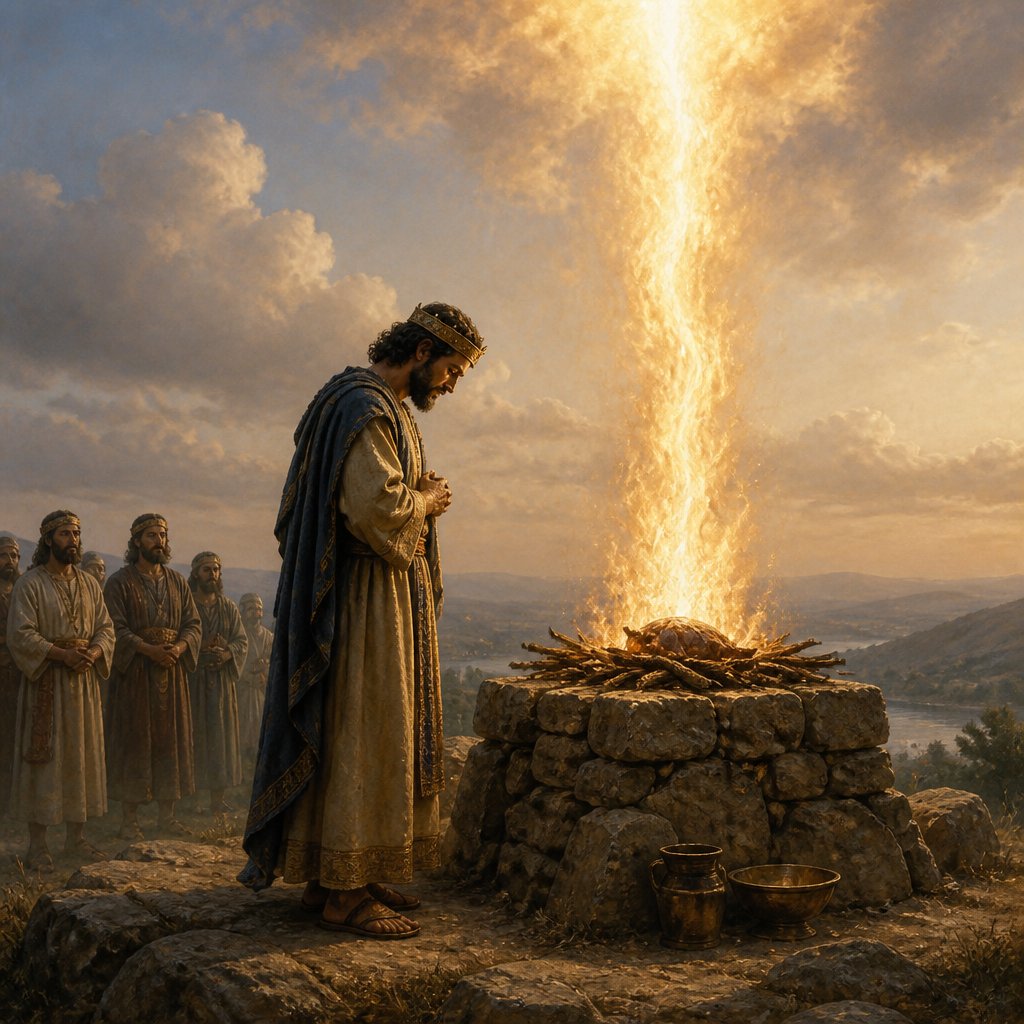
1 Chronicles 21:26 (KJV) – "And David built there an altar unto the LORD, and offered burnt offerings and peace offerings, and called upon the LORD; and he answered him from heaven by fire upon the altar of burnt offering."
The book of 1 Chronicles in the Bible provides a historical account of the lineage of David and his reign as king over Israel. This particular verse occurs within the context of a significant event in David's life, where he displays humble obedience and seeks forgiveness from God. The passage focuses on David's response to a specific event and highlights his faith, humility, and reliance on God.
The verse represents the culmination of a significant turning point in David's life. Earlier in this chapter, David made a devastating error by succumbing to pride and conducting a census of Israel, a decision that displeased God. As a result, God punished the nation and sent a great plague upon the people of Israel. To avert further devastation, David recognized his wrongdoing and sought God's mercy. The king humbly acknowledged his sin and pleaded with God to forgive the people of Israel. In response, God instructed David to build an altar on the threshing floor of Araunah the Jebusite and offer sacrifices to atone for his wrongs.
This verse holds several noteworthy themes, the most significant being the themes of repentance and atonement. David's actions display a deep sense of remorse and a willingness to make amends for his mistakes. He takes responsibility for his actions and seeks to reconcile with God and restore his relationship with Him. Additionally, the verse underscores the importance of seeking forgiveness and making offerings as a means of reconciliation with God. Through this act, David demonstrates faith and trust in God's mercy and sovereign authority.
The context of this verse is also significant. In ancient Israel, altars were places of worship and sacrifice, where individuals sought God’s favor and made offerings to atone for their sins. David’s decision to build an altar and offer sacrifices reflects the cultural and religious practices of his time. It also underscores the importance of proper worship and obedience to God's commandments.
Symbolism plays a crucial role in this verse as well. The altar represents a place of meeting with God and a symbol of sacrifice and worship. The burnt offerings and peace offerings symbolize the act of seeking forgiveness and making peace with God. The fire from heaven upon the altar serves as a tangible sign of God's acceptance and forgiveness.
Overall, 1 Chronicles 21:26 is a powerful testament to the themes of repentance, atonement, and humility. It serves as a reminder of the significance of seeking forgiveness and making offerings to reconcile with God. Through David's actions, the verse also highlights the importance of faith, trust, and obedience to God's commands. This passage continues to inspire believers to seek God's mercy and pursue reconciliation with Him, even in the face of their own failings.
Get our apps


Artwork for 1 Chronicles 21:26

1 Chronicles 21:26 - "And David built there an altar unto the LORD, and offered burnt offerings and peace offerings, and called upon the LORD; and he answered him from heaven by fire upon the altar of burnt offering."
"And David built there an altar unto the LORD, and offered burnt offerings and peace offerings, and called upon the LORD; and he answered him from heaven by fire upon the altar of burnt offering." - 1 Chronicles 21:26

1 Chronicles 26:21 - "As concerning the sons of Laadan; the sons of the Gershonite Laadan, chief fathers, even of Laadan the Gershonite, were Jehieli."

1 Chronicles 1:26 - "Serug, Nahor, Terah,"

1 Chronicles 8:26 - "And Shamsherai, and Shehariah, and Athaliah,"

"As concerning the sons of Laadan; the sons of the Gershonite Laadan, chief fathers, even of Laadan the Gershonite, were Jehieli." - 1 Chronicles 26:21

1 Chronicles 1:21 - "Hadoram also, and Uzal, and Diklah,"

1 Chronicles 26:23 - "Of the Amramites, and the Izharites, the Hebronites, and the Uzzielites:"

1 Chronicles 26:1 - "Concerning the divisions of the porters: Of the Korhites was Meshelemiah the son of Kore, of the sons of Asaph."

"Serug, Nahor, Terah," - 1 Chronicles 1:26

1 Chronicles 12:26 - "Of the children of Levi four thousand and six hundred."

1 Chronicles 26:18 - "At Parbar westward, four at the causeway, and two at Parbar."

1 Chronicles 26:3 - "Elam the fifth, Jehohanan the sixth, Elioenai the seventh."

1 Chronicles 26:24 - "And Shebuel the son of Gershom, the son of Moses, was ruler of the treasures."

1 Chronicles 26:9 - "And Meshelemiah had sons and brethren, strong men, eighteen."

1 Chronicles 16:26 - "For all the gods of the people are idols: but the LORD made the heavens."

1 Chronicles 26:15 - "To Obed-edom southward; and to his sons the house of Asuppim."

1 Chronicles 29:26 - "¶ Thus David the son of Jesse reigned over all Israel."

1 Chronicles 8:21 - "And Adaiah, and Beraiah, and Shimrath, the sons of Shimhi;"

1 Chronicles 21:1 - "And Satan stood up against Israel, and provoked David to number Israel."

1 Chronicles 26:19 - "These are the divisions of the porters among the sons of Kore, and among the sons of Merari."

1 Chronicles 24:26 - "The sons of Merari were Mahli and Mushi: the sons of Jaaziah; Beno."

1 Chronicles 7:26 - "Laadan his son, Ammihud his son, Elishama his son,"

1 Chronicles 25:26 - "The nineteenth to Mallothi, he, his sons, and his brethren, were twelve:"

1 Chronicles 26:27 - "Out of the spoils won in battles did they dedicate to maintain the house of the LORD."

1 Chronicles 26:5 - "Ammiel the sixth, Issachar the seventh, Peulthai the eighth: for God blessed him."

1 Chronicles 24:21 - "Concerning Rehabiah: of the sons of Rehabiah, the first was Isshiah."

1 Chronicles 6:26 - "As for Elkanah: the sons of Elkanah; Zophai his son, and Nahath his son,"

"And Shamsherai, and Shehariah, and Athaliah," - 1 Chronicles 8:26

1 Chronicles 27:26 - "And over them that did the work of the field for tillage of the ground was Ezri the son of Chelub:"