What does 1 Chronicles 21:3 mean?
“And Joab answered, The LORD make his people an hundred times so many more as they be: but, my lord the king, are they not all my lord’s servants? why then doth my lord require this thing? why will he be a cause of trespass to Israel?” — 1 Chronicles 21:3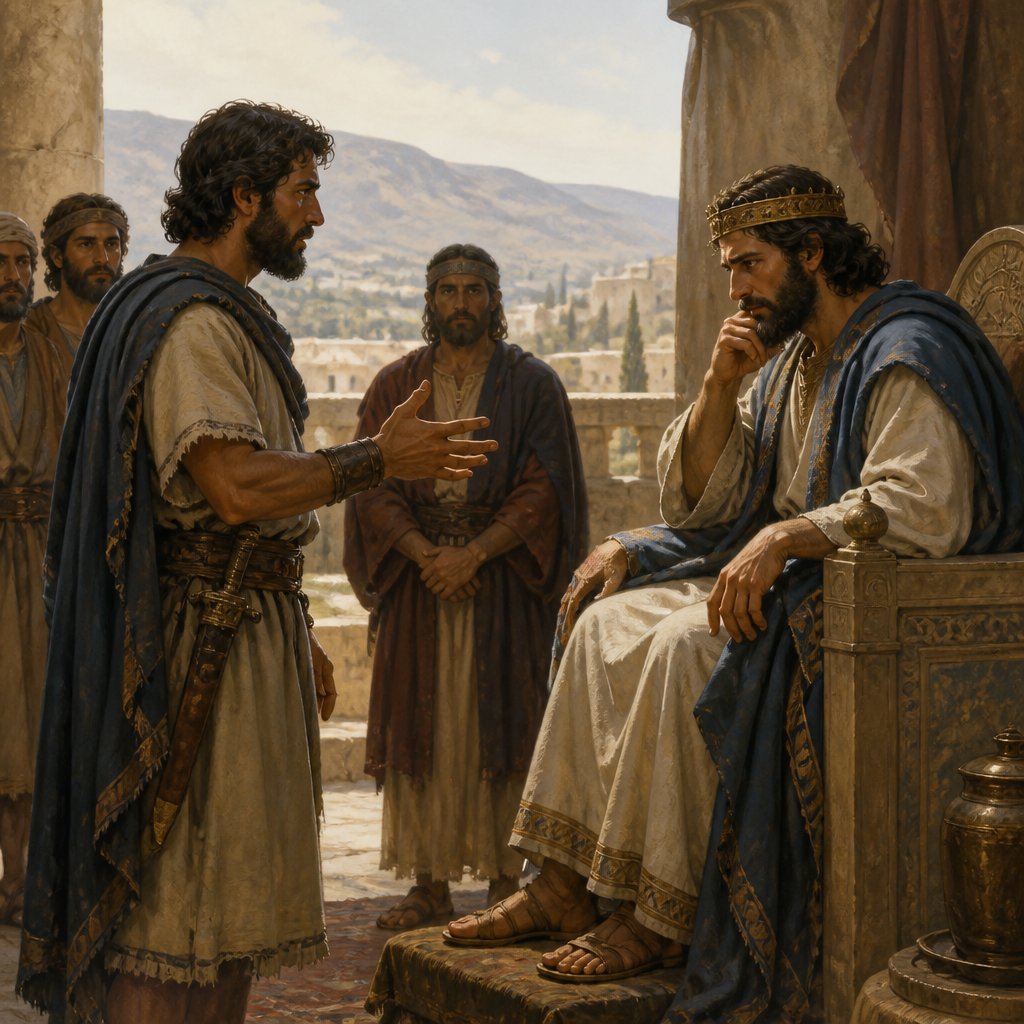
The verse 1 Chronicles 21:3 from the King James Version (KJV) of the Bible reads, "And Joab answered, The Lord make his people an hundred times so many more as they be: but, my lord the king, are they not all my lord's servants? why then doth my lord require this thing? Why will he be a cause of trespass to Israel?" This verse comes from the book of 1 Chronicles, which is a part of the Old Testament and contains the history of the nation of Israel from Adam to the time of the Babylonian captivity.
In this particular verse, we see a conversation between Joab, the commander of King David's army, and King David himself. The context of this verse is that David had ordered a census to be taken of the people of Israel. Joab questions the reasoning behind this command, and he is concerned that it may lead to a trespass against Israel.
One of the key themes in this verse is the concept of pride and the dangers associated with it. The act of taking a census may seem harmless at first, but it reflects David's desire to boast about the size of his kingdom and army. The act of counting the people could be seen as a demonstration of power and control, which goes against the principles of humility and trust in God. Joab's question to David reflects his concern that this act of pride may lead to consequences for the nation of Israel.
Another important theme in this verse is the idea of obedience and servanthood. Joab reminds David that the people of Israel are ultimately the Lord's servants, and it is not for David to demand such a thing. Joab's question challenges David to consider the implications of his actions and to reflect on his role as a leader appointed by God. This serves as a reminder that leadership should be carried out with a sense of responsibility and humility, recognizing that God is the ultimate authority.
Symbolism can also be found in this verse, particularly in the act of taking a census. In biblical times, a census was often taken for the purpose of taxation or military conscription, and it was seen as a way for the ruling authority to exert control over the people. This act symbolizes the temptation for earthly leaders to rely on their own strength and power, rather than trusting in God. By questioning David's decision, Joab symbolizes the voice of reason and accountability, urging David to consider the consequences of his actions.
Overall, this verse serves as a cautionary tale about the dangers of pride and the importance of obedience and humility in leadership. It highlights the need for leaders to seek wisdom and guidance from God, rather than relying on their own strength and understanding. The message of this verse is relevant not only in the context of biblical history but also in the broader context of leadership and the responsibility that comes with it. It serves as a reminder for leaders to prioritize the well-being of their people and to recognize that true authority comes from God.
Get our apps


Artwork for 1 Chronicles 21:3
1 Chronicles 21:3 - "And Joab answered, The LORD make his people an hundred times so many more as they be: but, my lord the king, are they not all my lord's servants? why then doth my lord require this thing? why will he be a cause of trespass to Israel?"
"And Joab answered, The LORD make his people an hundred times so many more as they be: but, my lord the king, are they not all my lord's servants? why then doth my lord require this thing? why will he be a cause of trespass to Israel?" - 1 Chronicles 21:3

1 Chronicles 3:21 - "And the sons of Hananiah; Pelatiah, and Jesaiah: the sons of Rephaiah, the sons of Arnan, the sons of Obadiah, the sons of Shechaniah."

1 Chronicles 1:21 - "Hadoram also, and Uzal, and Diklah,"

1 Chronicles 8:21 - "And Adaiah, and Beraiah, and Shimrath, the sons of Shimhi;"

1 Chronicles 21:1 - "And Satan stood up against Israel, and provoked David to number Israel."
"And the sons of Hananiah; Pelatiah, and Jesaiah: the sons of Rephaiah, the sons of Arnan, the sons of Obadiah, the sons of Shechaniah." - 1 Chronicles 3:21

1 Chronicles 1:3 - "Henoch, Methuselah, Lamech,"

1 Chronicles 24:21 - "Concerning Rehabiah: of the sons of Rehabiah, the first was Isshiah."

Revelation 21:3

1 Chronicles 9:21 - "And Zechariah the son of Meshelemiah was porter of the door of the tabernacle of the congregation."

1 Chronicles 21:7 - "And God was displeased with this thing; therefore he smote Israel."

1 Chronicles 21:9 - "¶ And the LORD spake unto Gad, David's seer, saying,"

"Hadoram also, and Uzal, and Diklah," - 1 Chronicles 1:21

1 Chronicles 21:21 - "And as David came to Ornan, Ornan looked and saw David, and went out of the threshingfloor, and bowed himself to David with his face to the ground."

1 Chronicles 23:21 - "¶ The sons of Merari; Mahli, and Mushi. The sons of Mahli; Eleazar, and Kish."
1 Samuel 3:21
1 Samuel 3:21
1 Samuel 3:21

Genesis 21:1-3

1 Chronicles 3:3 - "The fifth, Shephatiah of Abital: the sixth, Ithream by Eglah his wife."

1 Samuel 3:21

Genesis 21:1-3

1 Chronicles 25:21 - "The fourteenth to Mattithiah, he, his sons, and his brethren, were twelve:"

1 Chronicles 3:7 - "And Nogah, and Nepheg, and Japhia,"

1 Chronicles 21:19 - "And David went up at the saying of Gad, which he spake in the name of the LORD."

1 Chronicles 21:6 - "But Levi and Benjamin counted he not among them: for the king's word was abominable to Joab."

1 Chronicles 15:21 - "And Mattithiah, and Elipheleh, and Mikneiah, and Obed-edom, and Jeiel, and Azaziah, with harps on the Sheminith to excel."

1 Chronicles 21:25 - "So David gave to Ornan for the place six hundred shekels of gold by weight."

1 Chronicles 3:8 - "And Elishama, and Eliada, and Eliphelet, nine."