What does 1 Chronicles 23:5 mean?
“Moreover four thousand were porters; and four thousand praised the LORD with the instruments which I made, said David, to praise therewith.” — 1 Chronicles 23:5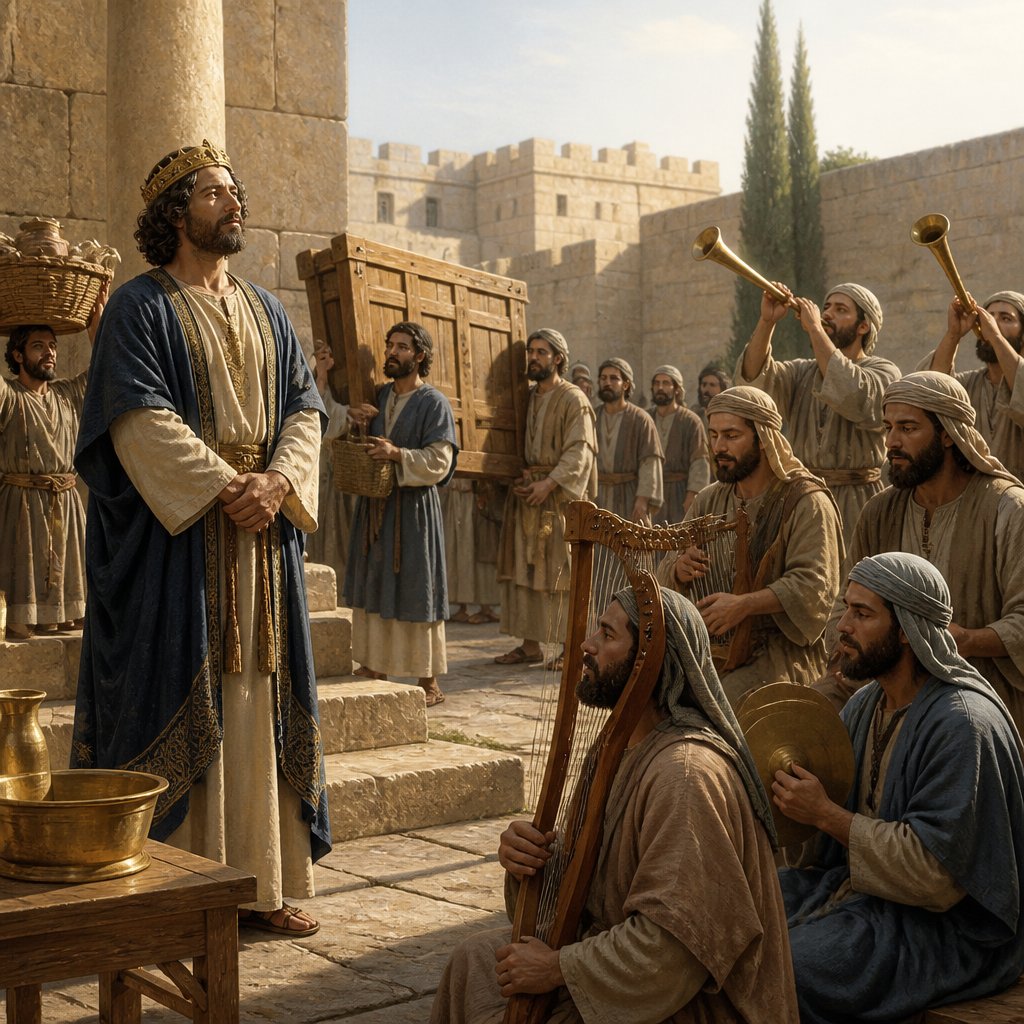
The verse 1 Chronicles 23:5 from the King James Version of the Bible states, "Moreover four thousand were porters; and four thousand praised the Lord with the instruments which I made, said David, to praise therewith." This verse is part of a larger passage in which King David is organizing the Levites for the service of the tabernacle and temple.
The context of this verse is crucial to understanding its significance. David, the great king of Israel, is in the process of establishing the organization and administration of the Levites and priestly duties for the service of the tabernacle and eventually the temple. In the preceding verses, David divides the Levites into groups to perform different tasks such as musicians, gatekeepers, and officials. This verse specifically mentions the role of porters and musicians in the service of the Lord.
The verse speaks to the importance of music and praise in the worship of God. The mention of the "instruments which I made" by David emphasizes the dedication and craftsmanship put into creating the tools and instruments for the worship of God. It also signifies the personal commitment and investment that David had in the worship and praise of the Lord.
The themes present in this verse include the significance of worship, the organization of religious duties, and the value of music in religious practice. The verse highlights the importance of praise and worship in the service of God, as well as the specific roles and responsibilities of different groups within the religious community.
Symbolically, the porters and musicians mentioned in the verse represent the different ways in which individuals can contribute to the worship of God. The porters were responsible for guarding and protecting the tabernacle or temple, symbolizing the importance of reverence and respect in approaching God. The musicians, on the other hand, were responsible for leading the congregation in praise and worship, using their talents and skills to glorify God. This symbolizes the role of creativity and artistry in religious expression.
The verse also symbolizes the idea of unity and collaboration within the religious community. By organizing the Levites into different groups and assigning them specific duties, David is creating a sense of shared purpose and responsibility. This emphasizes the idea that everyone has a role to play in the worship and service of God, and that each individual's contribution is valuable and necessary.
Overall, 1 Chronicles 23:5 holds deep meaning and significance within the larger context of the organization of the Levites for the service of the tabernacle and temple. It emphasizes the importance of worship, the value of music in religious practice, and the role of individuals within the religious community. As a symbol of dedication and unity, the verse serves as a reminder of the central role that praise and worship play in the life of faith.
Get our apps


Artwork for 1 Chronicles 23:5

1 Chronicles 23:5 - "Moreover four thousand were porters; and four thousand praised the LORD with the instruments which I made, said David, to praise therewith."
"Moreover four thousand were porters; and four thousand praised the LORD with the instruments which I made, said David, to praise therewith." - 1 Chronicles 23:5

1 Chronicles 5:23 - "¶ And the children of the half tribe of Manasseh dwelt in the land: they increased from Bashan unto Baal-hermon and Senir, and unto mount Hermon."

1 Chronicles 23:23 - "The sons of Mushi; Mahli, and Eder, and Jeremoth, three."

1 Chronicles 8:23 - "And Abdon, and Zichri, and Hanan,"

1 Chronicles 1:23 - "And Ophir, and Havilah, and Jobab. All these were the sons of Joktan."

1 Chronicles 23:7 - "¶ Of the Gershonites were, Laadan, and Shimei."

1 Chronicles 26:23 - "Of the Amramites, and the Izharites, the Hebronites, and the Uzzielites:"

1 Chronicles 23:18 - "Of the sons of Izhar; Shelomith the chief."

1 Chronicles 23:16 - "Of the sons of Gershom, Shebuel was the chief."

1 Chronicles 23:15 - "The sons of Moses were, Gershom, and Eliezer."

1 Chronicles 15:23 - "And Berechiah and Elkanah were doorkeepers for the ark."

1 Chronicles 23:20 - "Of the sons of Uzziel; Michah the first, and Jesiah the second."

1 Chronicles 3:23 - "And the sons of Neariah; Elioenai, and Hezekiah, and Azrikam, three."

2 Chronicles 23:5 - "And a third part shall be at the king's house; and a third part at the gate of the foundation: and all the people shall be in the courts of the house of the LORD."

1 Chronicles 23:8 - "The sons of Laadan; the chief was Jehiel, and Zetham, and Joel, three."

1 Chronicles 23:12 - "¶ The sons of Kohath; Amram, Izhar, Hebron, and Uzziel, four."

"The sons of Mushi; Mahli, and Eder, and Jeremoth, three." - 1 Chronicles 23:23

1 Chronicles 23:2 - "¶ And he gathered together all the princes of Israel, with the priests and the Levites."

1 Chronicles 23:30 - "And to stand every morning to thank and praise the LORD, and likewise at even;"

1 Chronicles 23:21 - "¶ The sons of Merari; Mahli, and Mushi. The sons of Mahli; Eleazar, and Kish."

1 Chronicles 5:5 - "Micah his son, Reaia his son, Baal his son,"

1 Chronicles 8:5 - "And Gera, and Shephuphan, and Huram."

1 Chronicles 14:5 - "And Ibhar, and Elishua, and Elpalet,"

1 Chronicles 6:23 - "Elkanah his son, and Ebiasaph his son, and Assir his son,"

"And Abdon, and Zichri, and Hanan," - 1 Chronicles 8:23

1 Chronicles 25:23 - "The sixteenth to Hananiah, he, his sons, and his brethren, were twelve:"

1 Chronicles 2:5 - "The sons of Pharez; Hezron, and Hamul."

1 Chronicles 23:1 - "So when David was old and full of days, he made Solomon his son king over Israel."

1 Chronicles 24:23 - "And the sons of Hebron; Jeriah the first, Amariah the second, Jahaziel the third, Jekameam the fourth."