What does 1 Chronicles 3:8 mean?
“And Elishama, and Eliada, and Eliphelet, nine.” — 1 Chronicles 3:8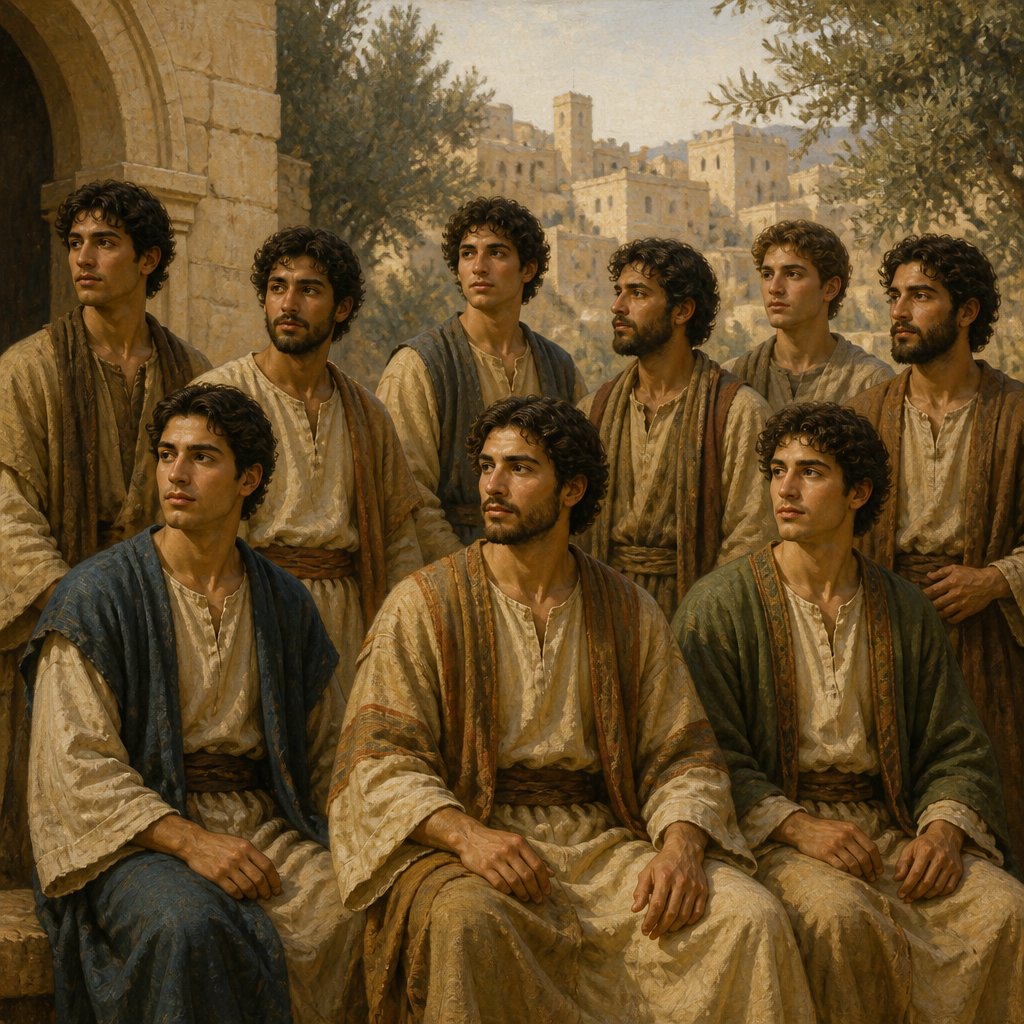
1 Chronicles 3:8 (KJV) reads: "And Elishama, and Eliada, and Eliphelet, nine."
This verse is part of a genealogy listed in 1 Chronicles 3, which traces the line of descendants from David, King of Israel. This particular verse refers to the sons of King David, who are listed along with their siblings. In this section of the Bible, the genealogy serves to establish the lineage of the royal family and to record the succession of kings in Israel.
To give a detailed and in-depth commentary on this verse, it is important to consider the historical and cultural context in which it was written, as well as the themes and symbolism it holds within the larger narrative of the Bible.
The genealogical records were highly significant in ancient Israelite culture, as they played a crucial role in determining one's lineage, inheritance rights, and social status. The genealogy provided a link to the past and served as a reminder of God's faithfulness in preserving and fulfilling His promises to the descendants of Abraham, Isaac, and Jacob. This lineage was also an important factor in establishing the legitimacy of the Davidic monarchy and its rightful succession.
The mention of Elishama, Eliada, and Eliphelet in 1 Chronicles 3:8 signals their place within the royal family and their importance in the line of succession. Elishama, Eliada, and Eliphelet were three of David's nine sons, and their inclusion in the genealogy underscores the continuation of the Davidic dynasty. Each of these names holds meaning and significance within the broader biblical narrative.
Elishama means "God has heard," which conveys the idea of God's attentiveness to His people's prayers and needs. Eliada means "God knows," emphasizing God's omniscience and intimate knowledge of His creation. Eliphelet means "God is deliverance" or "God of deliverance," indicating the role of God as the ultimate source of salvation and rescue for His people.
The number nine, mentioned at the end of the verse, also carries symbolic significance. In biblical numerology, the number nine is often associated with finality, fullness, and completion. It can represent the culmination of a cycle or the fulfillment of a divine purpose. In this context, the mention of "nine" may underscore the completion and totality of David's offspring, signaling the established lineage and the continuation of the royal line.
Furthermore, the genealogy of David's descendants points forward to the ultimate fulfillment of God's promises through the Messiah, who would come from the lineage of David. This Messianic theme runs throughout the Old Testament and finds its fulfillment in the person of Jesus Christ in the New Testament. As the ultimate heir to David's throne, Jesus is the fulfillment of God's covenant with David and the ultimate King who will reign in righteousness and justice.
In conclusion, 1 Chronicles 3:8, with its mention of Elishama, Eliada, and Eliphelet, along with the reference to the number nine, serves as a testament to the continuity and fulfillment of God's purposes within the Davidic dynasty. It underscores the significance of lineage, the faithfulness of God in preserving His people, and points forward to the ultimate fulfillment of God's promises in the Messiah. It is a reminder of God's sovereignty and His redemptive plan for His people throughout history.
Get our apps


Artwork for 1 Chronicles 3:8

1 Chronicles 3:8 - "And Elishama, and Eliada, and Eliphelet, nine."

"And Elishama, and Eliada, and Eliphelet, nine." - 1 Chronicles 3:8

1 Chronicles 8:3 - "And the sons of Bela were, Addar, and Gera, and Abihud,"

"And the sons of Bela were, Addar, and Gera, and Abihud," - 1 Chronicles 8:3

2 Chronicles 8:3 - "And Solomon went to Hamath-zobah, and prevailed against it."

1 Chronicles 3:7 - "And Nogah, and Nepheg, and Japhia,"

1 Chronicles 3:6 - "Ibhar also, and Elishama, and Eliphelet,"

1 Chronicles 3:14 - "Amon his son, Josiah his son."

1 Chronicles 1:3 - "Henoch, Methuselah, Lamech,"

1 Chronicles 1:8 - "¶ The sons of Ham; Cush, and Mizraim, Put, and Canaan."

1 chronicles 12:8

1 Chronicles 8:31 - "And Gedor, and Ahio, and Zacher."

1 Chronicles 8:20 - "And Elienai, and Zilthai, and Eliel,"

1 Chronicles 8:19 - "And Jakim, and Zichri, and Zabdi,"

1 Chronicles 8:24 - "And Hananiah, and Elam, and Antothijah,"

1 Chronicles 8:5 - "And Gera, and Shephuphan, and Huram."

1 Chronicles 8:26 - "And Shamsherai, and Shehariah, and Athaliah,"

1 Chronicles 8:22 - "And Ishpan, and Heber, and Eliel,"

1 Chronicles 8:14 - "And Ahio, Shashak, and Jeremoth,"

1 Chronicles 2:8 - "And the sons of Ethan; Azariah."

1 Chronicles 8:23 - "And Abdon, and Zichri, and Hanan,"

1 Chronicles 8:4 - "And Abishua, and Naaman, and Ahoah,"

1 Chronicles 8:15 - "And Zebadiah, and Arad, and Ader,"

1 Chronicles 3:12 - "Amaziah his son, Azariah his son, Jotham his son,"

John 3:3-8

1 Chronicles 8:2 - "Nohah the fourth, and Rapha the fifth."

1 Chronicles 3:18 - "Malchiram also, and Pedaiah, and Shenazar, Jecamiah, Hoshama, and Nedabiah."

1 Chronicles 3:16 - "And the sons of Jehoiakim: Jeconiah his son, Zedekiah his son."

"Amon his son, Josiah his son." - 1 Chronicles 3:14

1 Chronicles 8:17 - "And Zebadiah, and Meshullam, and Hezeki, and Heber,"