What does 1 Chronicles 4:12 mean?
“And Eshton begat Beth-rapha, and Paseah, and Tehinnah the father of Ir-nahash. These are the men of Rechah.” — 1 Chronicles 4:12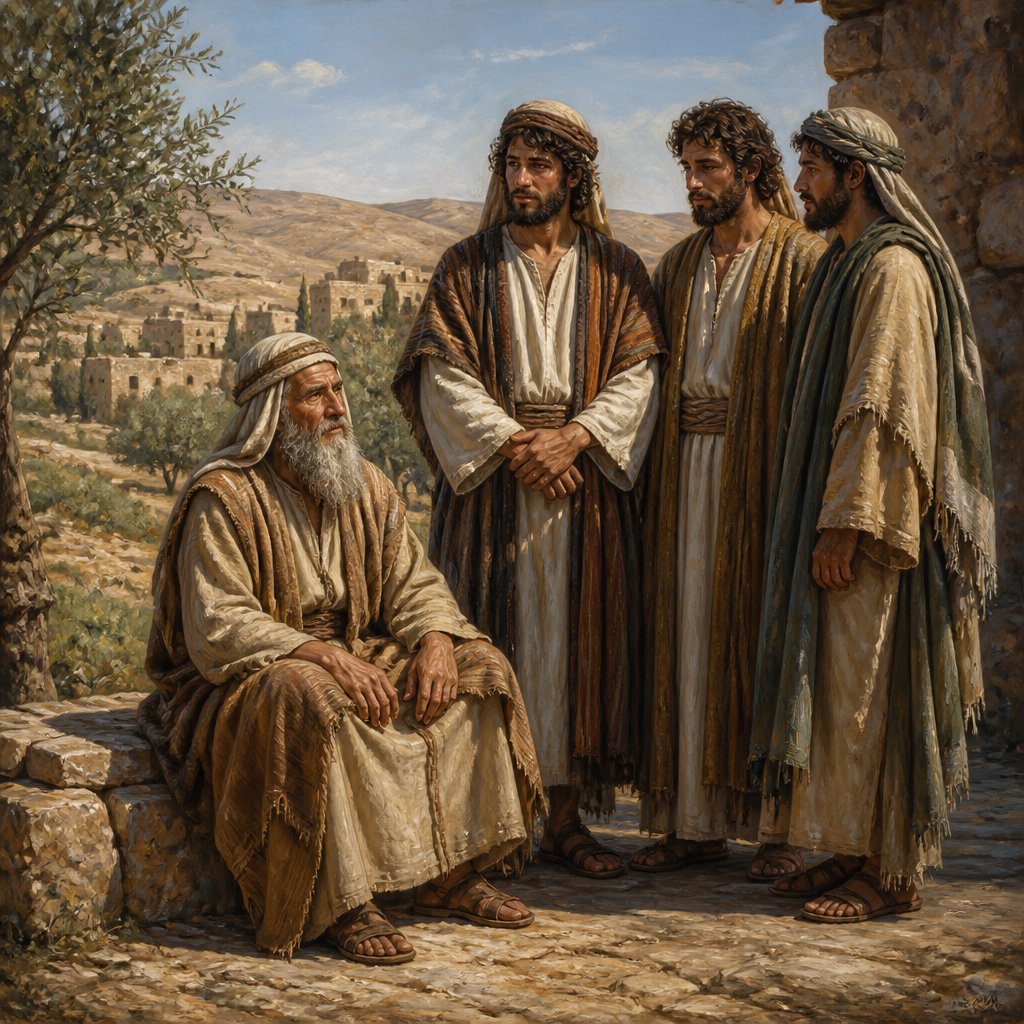
Sure, here is a detailed analysis of 1 Chronicles 4:12 from the King James Version of the Bible:
"And Eshton begat Bethrapha, and Paseah, and Tehinnah the father of Irnahash. These are the men of Rechah."
This verse comes from the book of 1 Chronicles, which is part of the Old Testament. 1 Chronicles is a historical book that traces the genealogy of the Israelites and provides a detailed account of their history, including the reigns of the kings of Israel and Judah. This particular verse is part of a genealogy that lists the descendants of Judah, one of the twelve sons of Jacob.
The verse begins with the statement "And Eshton begat Bethrapha, and Paseah, and Tehinnah the father of Irnahash." This is a typical genealogical statement in the Bible, indicating the lineage of a particular individual. Eshton is mentioned as the father of Bethrapha, Paseah, and Tehinnah, who in turn is the father of Irnahash. These names may not be well-known or significant figures in biblical history, but they are included in the genealogy to trace the lineage of Judah and the various branches of his descendants.
The verse concludes with the statement "These are the men of Rechah." Rechah is mentioned elsewhere in the Bible as one of the sons of Asher, another of Jacob's sons. This reference may indicate a connection between the descendants of Judah and the descendants of Asher, highlighting the interconnectedness of the Israelite tribes.
In terms of themes and context, this verse highlights the importance of lineage and genealogy in ancient Israelite society. The genealogies found throughout the Bible served several purposes, including establishing family heritage, inheritance rights, and tribal affiliations. They were also important for maintaining a sense of identity and continuity within the community. In the case of 1 Chronicles 4:12, the genealogy of Judah serves to connect the present-day Israelites to their ancestral roots and to establish the line of descendants from which the kings of Judah would eventually arise.
From a spiritual perspective, this verse also underscores the importance of individual identity and the role of each person within the larger community. Even though the names mentioned in this verse may not be well-known, they are part of a larger narrative that illustrates the intricate and interconnected nature of God's plan for His people. Each individual has a place and a purpose within the broader scope of history, and their actions and decisions can have a lasting impact on future generations.
In terms of symbolism, the genealogy in 1 Chronicles 4:12 can be seen as a representation of the interconnectedness of all humanity. The intricate web of relationships and lineages shows how each person is part of a larger tapestry of history and how their actions and choices can influence the course of events for generations to come. This serves as a reminder that every individual has a unique role to play in the unfolding of God's plan, and that no one is insignificant in the eyes of God.
In conclusion, 1 Chronicles 4:12 may appear to be a simple list of names, but it carries deep significance in terms of the themes of lineage, community, and individual purpose. It serves as a reminder of the importance of understanding and honoring our roots, as well as recognizing the interconnectedness of all people in the larger story of God's plan for humanity.
Get our apps


Artwork for 1 Chronicles 4:12

1 Chronicles 4:12 - "And Eshton begat Beth-rapha, and Paseah, and Tehinnah the father of Ir-nahash. These are the men of Rechah."
"And Eshton begat Beth-rapha, and Paseah, and Tehinnah the father of Ir-nahash. These are the men of Rechah." - 1 Chronicles 4:12

1 Chronicles 12:4 - "And Ismaiah the Gibeonite, a mighty man among the thirty, and over the thirty; and Jeremiah, and Jahaziel, and Johanan, and Josabad the Gederathite,"

1 Chronicles 12:12 - "Johanan the eighth, Elzabad the ninth,"

1 Chronicles 4 : 10

2 Chronicles 12:4 - "And he took the fenced cities which pertained to Judah, and came to Jerusalem."

1 Chronicles 1:12 - "And Pathrusim, and Casluhim, (of whom came the Philistines,) and Caphthorim."

1 chronicles 12:8

1 Chronicles 1:4 - "Noah, Shem, Ham, and Japheth."

1 Chronicles 12:11 - "Attai the sixth, Eliel the seventh,"

1 Chronicles 12:10 - "Mishmannah the fourth, Jeremiah the fifth,"

1 Chronicles 12:13 - "Jeremiah the tenth, Machbanai the eleventh."

1 Chronicles 24:12 - "The eleventh to Eliashib, the twelfth to Jakim,"

2 Chronicles 4:22

"Johanan the eighth, Elzabad the ninth," - 1 Chronicles 12:12

1 Chronicles 12:7 - "And Joelah, and Zebadiah, the sons of Jeroham of Gedor."

1 Chronicles 4:29 - "And at Bilhah, and at Ezem, and at Tolad,"

1 Chronicles 4:30 - "And at Bethuel, and at Hormah, and at Ziklag,"

1 Chronicles 8:4 - "And Abishua, and Naaman, and Ahoah,"

1 Chronicles 6:12 - "And Ahitub begat Zadok, and Zadok begat Shallum,"

1 Chronicles 12:26 - "Of the children of Levi four thousand and six hundred."

1 Chronicles 12:9 - "Ezer the first, Obadiah the second, Eliab the third,"

1 Chronicles 12:6 - "Elkanah, and Jesiah, and Azareel, and Joezer, and Jashobeam, the Korhites,"

1 Chronicles 4:1 - "The sons of Judah; Pharez, Hezron, and Carmi, and Hur, and Shobal."

1 Chronicles 12:5 - "Eluzai, and Jerimoth, and Bealiah, and Shemariah, and Shephatiah the Haruphite,"

1 Chronicles 2:12 - "And Boaz begat Obed, and Obed begat Jesse,"
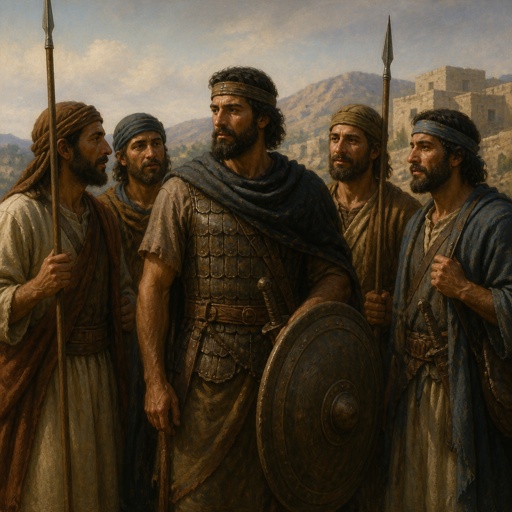
"And Ismaiah the Gibeonite, a mighty man among the thirty, and over the thirty; and Jeremiah, and Jahaziel, and Johanan, and Josabad the Gederathite," - 1 Chronicles 12:4

1 Samuel 4:12

1 Chronicles 5:12 - "Joel the chief, and Shapham the next, and Jaanai, and Shaphat in Bashan."

1 Chronicles 12:16 - "And there came of the children of Benjamin and Judah to the hold unto David."