What does 1 Chronicles 5:23 mean?
“And the children of the half tribe of Manasseh dwelt in the land: they increased from Bashan unto Baal-hermon and Senir, and unto mount Hermon.” — 1 Chronicles 5:23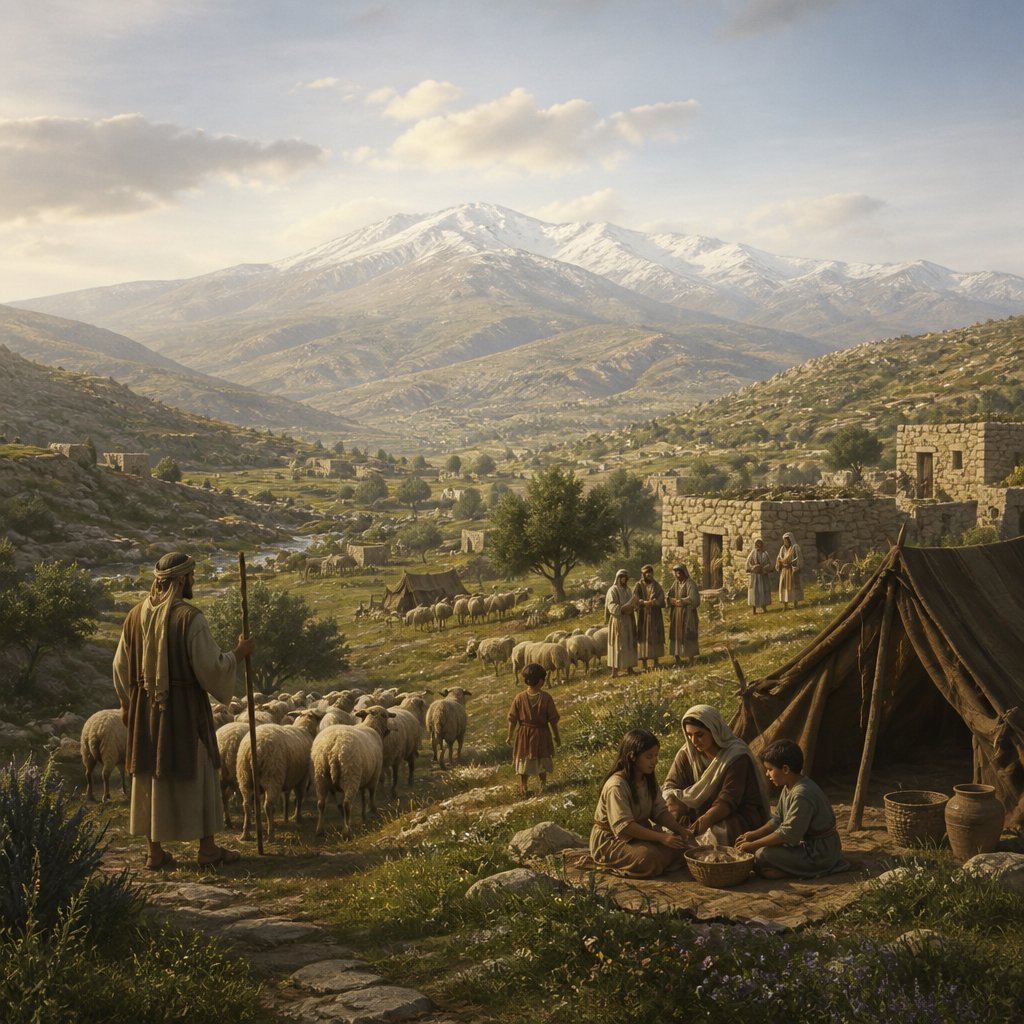
1 Chronicles 5:23 (KJV) states, "And the children of the half tribe of Manasseh dwelt in the land: they increased from Bashan unto Baal-hermon and Senir, and unto mount Hermon."
This verse is part of a larger passage which chronicles the genealogy of the half-tribe of Manasseh, one of the tribes of Israel. The verse specifically mentions Manasseh's descendants dwelling in the land and increasing their numbers. It also references the specific regions where they settled, including Bashan, Baal-hermon, Senir, and Mount Hermon.
The book of 1 Chronicles is largely concerned with genealogies and the history of the nation of Israel. It traces the lineage of God's chosen people, the Israelites, from the earliest days of creation to the period after the Babylonian exile. The purpose of these genealogies is to emphasize the continuity and legitimacy of the Israelite nation, as well as to provide a historical and cultural record of the people of Israel.
In this particular verse, the mention of Manasseh's descendants dwelling in the land and increasing in number reflects the fulfillment of God's promise to Abraham to make his descendants as numerous as the stars in the sky (Genesis 15:5). This theme is recurrent throughout the Bible and serves to reaffirm God's faithfulness to His covenant with the people of Israel.
The specific locations mentioned in the verse – Bashan, Baal-hermon, Senir, and Mount Hermon – hold symbolic significance in the context of the Israelite history. Bashan was known for its fertile land and abundance of resources, making it a desirable place for settlement. Baal-hermon and Senir were both mountains in the region, and Mount Hermon was the highest peak in the area. These geographical references serve to reinforce the idea of the prosperity and abundance that God had promised to His people when they remained faithful to Him.
Furthermore, Mount Hermon holds spiritual significance in the Bible. It is mentioned in the Old Testament as the site of significant events, such as the transfiguration of Jesus (Matthew 17:1-9) and the place where the "sons of God" descended to the earth in the days of Noah (Genesis 6:1-4). Mount Hermon is therefore associated with divine encounters and the presence of God.
In a broader sense, the verse can also serve as a reminder of the importance of spiritual and physical inheritance. Just as the land was the inheritance of the Israelites, God's promises and blessings are the inheritance of His people. The verse emphasizes the idea of God's faithfulness to His promises and His continued provision for His people, even in the face of challenges and opposition.
In summary, 1 Chronicles 5:23 reflects the themes of inheritance, prosperity, and God's faithfulness. It emphasizes the historical and spiritual significance of the land of Israel and the fulfillment of God's promises to His people. The specific geographical references in the verse serve to underscore the idea of God's provision and abundance, as well as the spiritual significance of certain locations. Ultimately, the verse serves to reinforce the importance of remaining faithful to God and trusting in His promises.
Get our apps


Artwork for 1 Chronicles 5:23

1 Chronicles 5:23 - "¶ And the children of the half tribe of Manasseh dwelt in the land: they increased from Bashan unto Baal-hermon and Senir, and unto mount Hermon."
"¶ And the children of the half tribe of Manasseh dwelt in the land: they increased from Bashan unto Baal-hermon and Senir, and unto mount Hermon." - 1 Chronicles 5:23

1 Chronicles 23:5 - "Moreover four thousand were porters; and four thousand praised the LORD with the instruments which I made, said David, to praise therewith."

1 Chronicles 23:23 - "The sons of Mushi; Mahli, and Eder, and Jeremoth, three."

1 Chronicles 8:23 - "And Abdon, and Zichri, and Hanan,"

1 Chronicles 1:23 - "And Ophir, and Havilah, and Jobab. All these were the sons of Joktan."

1 Chronicles 23:7 - "¶ Of the Gershonites were, Laadan, and Shimei."

1 Chronicles 26:23 - "Of the Amramites, and the Izharites, the Hebronites, and the Uzzielites:"

1 Chronicles 23:18 - "Of the sons of Izhar; Shelomith the chief."

1 Chronicles 23:16 - "Of the sons of Gershom, Shebuel was the chief."

1 Chronicles 23:15 - "The sons of Moses were, Gershom, and Eliezer."

1 Chronicles 15:23 - "And Berechiah and Elkanah were doorkeepers for the ark."

1 Chronicles 23:20 - "Of the sons of Uzziel; Michah the first, and Jesiah the second."

1 Chronicles 3:23 - "And the sons of Neariah; Elioenai, and Hezekiah, and Azrikam, three."

2 Chronicles 23:5 - "And a third part shall be at the king's house; and a third part at the gate of the foundation: and all the people shall be in the courts of the house of the LORD."

1 Chronicles 5:5 - "Micah his son, Reaia his son, Baal his son,"

1 Chronicles 23:8 - "The sons of Laadan; the chief was Jehiel, and Zetham, and Joel, three."

1 Chronicles 23:12 - "¶ The sons of Kohath; Amram, Izhar, Hebron, and Uzziel, four."

"The sons of Mushi; Mahli, and Eder, and Jeremoth, three." - 1 Chronicles 23:23

1 Chronicles 23:2 - "¶ And he gathered together all the princes of Israel, with the priests and the Levites."

1 Chronicles 23:30 - "And to stand every morning to thank and praise the LORD, and likewise at even;"

1 Chronicles 23:21 - "¶ The sons of Merari; Mahli, and Mushi. The sons of Mahli; Eleazar, and Kish."

1 Chronicles 8:5 - "And Gera, and Shephuphan, and Huram."

1 Chronicles 14:5 - "And Ibhar, and Elishua, and Elpalet,"

1 Chronicles 6:23 - "Elkanah his son, and Ebiasaph his son, and Assir his son,"

"And Abdon, and Zichri, and Hanan," - 1 Chronicles 8:23

1 Chronicles 25:23 - "The sixteenth to Hananiah, he, his sons, and his brethren, were twelve:"

1 Chronicles 2:5 - "The sons of Pharez; Hezron, and Hamul."

1 Chronicles 23:1 - "So when David was old and full of days, he made Solomon his son king over Israel."

1 Chronicles 5:19 - "And they made war with the Hagarites, with Jetur, and Nephish, and Nodab."