What does 1 Chronicles 6:8 mean?
“And Ahitub begat Zadok, and Zadok begat Ahimaaz,” — 1 Chronicles 6:8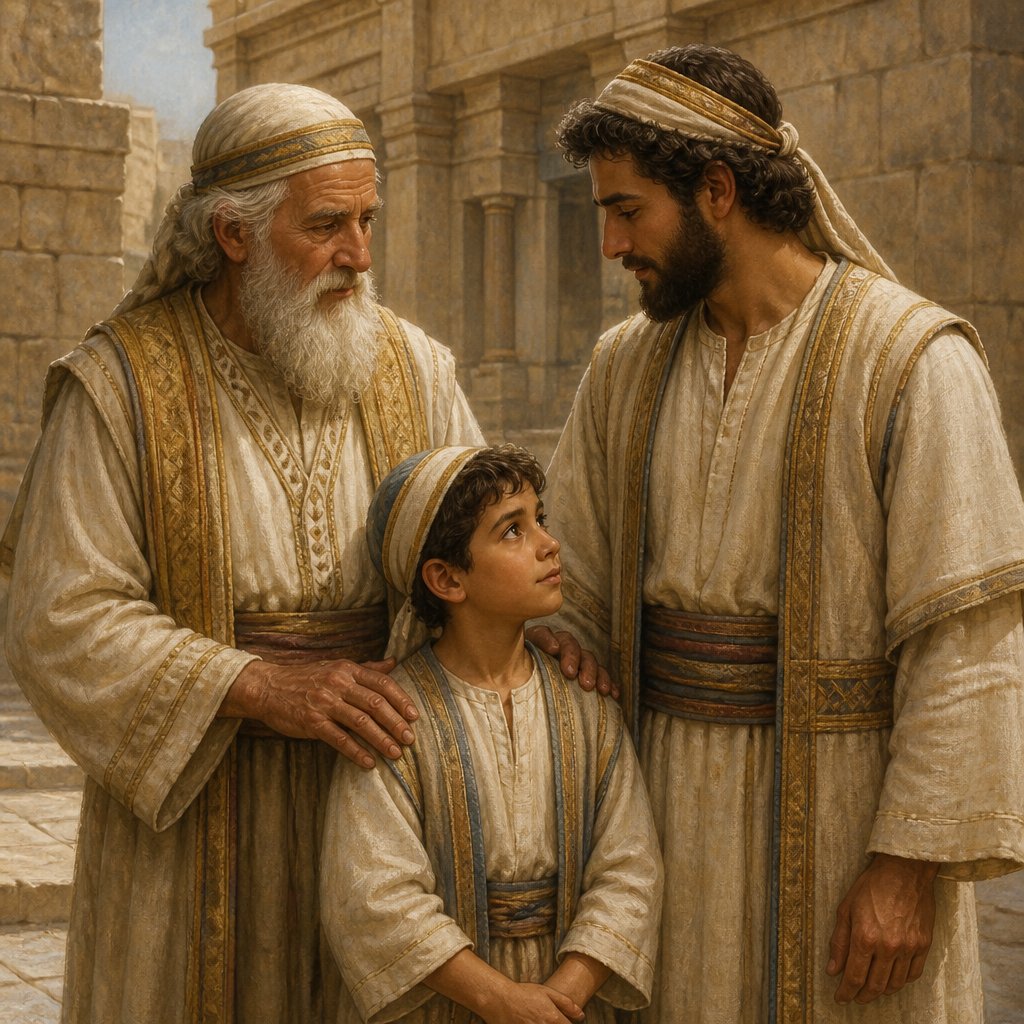
The verse 1 Chronicles 6:8 from the King James Version of the Bible reads: "And Ahitub begat Zadok, and Zadok begat Ahimaaz."
At first glance, this verse may seem simple and straightforward, a part of the genealogy of the sons of Levi. However, like every verse in the Bible, there is a deeper, more profound meaning to be found within it.
To truly understand the significance of this verse, it is important to consider the context in which it appears. 1 Chronicles is part of the Old Testament, specifically the books of Chronicles, which were written to serve as a historical record of the people of Israel. This particular verse appears within a genealogy of the tribe of Levi, one of the twelve tribes of Israel. The tribe of Levi was set apart for the service of the Lord, and they were responsible for the religious and priestly duties in Israel.
In the genealogy listed in 1 Chronicles 6, we see the lineage of the priestly family of Aaron, who was the brother of Moses and the ancestor of many of the priests in Israel. The verse in question, 1 Chronicles 6:8, specifically mentions the lineage of Ahitub, who begat Zadok, and Zadok, who begat Ahimaaz.
Now, let's delve into the deeper meanings and themes that can be found within this verse.
One of the themes that can be derived from this verse is the importance of lineage and heritage in the Bible. Throughout the Old Testament, lineage and genealogy are given significant importance, as they determine one's place within the community and the fulfillment of certain roles and responsibilities. In the case of 1 Chronicles 6, the genealogy of the priests is crucial because it establishes their right to serve in the temple and offer sacrifices to God on behalf of the people.
Another theme that can be explored in this verse is the concept of succession and the passing down of responsibilities from one generation to the next. The mention of Ahitub begetting Zadok, and Zadok begetting Ahimaaz highlights the continuity of the priestly line and the passing down of the priestly duties from father to son. This theme of succession is a recurring motif in the Bible, as it emphasizes the idea of God's faithfulness and the continuation of His work through successive generations.
From a symbolic standpoint, this verse can also be interpreted as a representation of the spiritual journey of believers. The names Ahitub, Zadok, and Ahimaaz all have specific meanings that can be symbolically significant. Ahitub means "brother of goodness," Zadok means "righteous," and Ahimaaz means "brother of anger." When these meanings are considered in the context of the priestly lineage, they can be seen as representing the progression from goodness, to righteousness, to victory over anger and sin. This progression mirrors the spiritual journey of believers as they strive to live a life of righteousness and overcome the struggles and temptations of the world.
In conclusion, while 1 Chronicles 6:8 may seem like a simple lineage verse on the surface, it holds deeper meanings and themes that speak to the importance of heritage, succession, and the spiritual journey of believers. By examining the verse within its historical and cultural context, as well as exploring its symbolic significance, we can gain a richer understanding of its relevance and message for us today.
Get our apps


Artwork for 1 Chronicles 6:8

1 Chronicles 6:8 - "And Ahitub begat Zadok, and Zadok begat Ahimaaz,"
"And Ahitub begat Zadok, and Zadok begat Ahimaaz," - 1 Chronicles 6:8

1 Chronicles 8:6 - "And these are the sons of Ehud: these are the heads of the fathers of the inhabitants of Geba, and they removed them to Manahath:"
"And these are the sons of Ehud: these are the heads of the fathers of the inhabitants of Geba, and they removed them to Manahath:" - 1 Chronicles 8:6

1 Chronicles 6:6 - "And Uzzi begat Zerahiah, and Zerahiah begat Meraioth,"

1 Chronicles 1:6 - "And the sons of Gomer; Ashchenaz, and Riphath, and Togarmah."

1 Chronicles 6:1 - "The sons of Levi; Gershon, Kohath, and Merari."

1 Chronicles 1:8 - "¶ The sons of Ham; Cush, and Mizraim, Put, and Canaan."

1 chronicles 12:8

1 Chronicles 8:31 - "And Gedor, and Ahio, and Zacher."

1 Chronicles 8:20 - "And Elienai, and Zilthai, and Eliel,"

1 Chronicles 8:19 - "And Jakim, and Zichri, and Zabdi,"

1 Chronicles 8:24 - "And Hananiah, and Elam, and Antothijah,"

1 Chronicles 8:5 - "And Gera, and Shephuphan, and Huram."

1 Chronicles 8:26 - "And Shamsherai, and Shehariah, and Athaliah,"

1 Chronicles 8:22 - "And Ishpan, and Heber, and Eliel,"

1 Chronicles 8:14 - "And Ahio, Shashak, and Jeremoth,"

1 Chronicles 2:8 - "And the sons of Ethan; Azariah."

1 Chronicles 8:23 - "And Abdon, and Zichri, and Hanan,"

1 Chronicles 8:4 - "And Abishua, and Naaman, and Ahoah,"

1 Chronicles 8:15 - "And Zebadiah, and Arad, and Ader,"

Genesis 1:6-8

Genesis 1:6-8

1 Chronicles 14:6 - "And Nogah, and Nepheg, and Japhia,"

1 Kings 8:6-8

1 Chronicles 8:2 - "Nohah the fourth, and Rapha the fifth."

1 Chronicles 3:8 - "And Elishama, and Eliada, and Eliphelet, nine."

1 Chronicles 8:17 - "And Zebadiah, and Meshullam, and Hezeki, and Heber,"

1 Chronicles 24:8 - "The third to Harim, the fourth to Seorim,"

1 Chronicles 8:25 - "And Iphedeiah, and Penuel, the sons of Shashak;"