What does 1 Chronicles 9:3 mean?
“And in Jerusalem dwelt of the children of Judah, and of the children of Benjamin, and of the children of Ephraim, and Manasseh;” — 1 Chronicles 9:3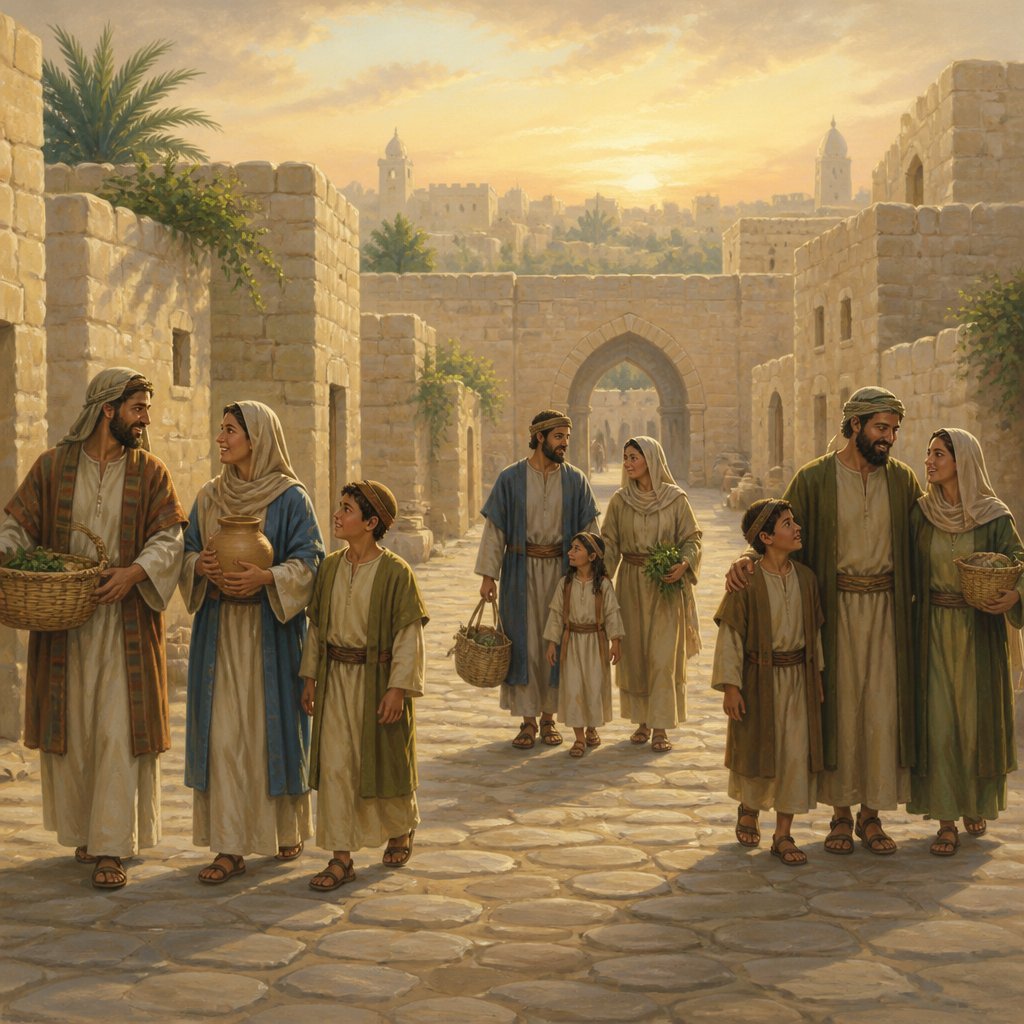
1 Chronicles 9:3 (KJV): "And in Jerusalem dwelt of the children of Judah, and of the children of Benjamin, and of the children of Ephraim, and Manasseh."
This verse from the book of 1 Chronicles may appear to be straightforward on the surface, simply listing the tribes that dwelt in Jerusalem. However, when examined more closely, it reveals significant themes and provides important context for the history and symbolism of the Israelites.
The first theme that this verse presents is the idea of unity and diversity within the nation of Israel. Jerusalem, as the capital city, was a melting pot of various tribes and people. The mention of the children of Judah, Benjamin, Ephraim, and Manasseh living in Jerusalem speaks to the diverse nature of the Israelite community. Despite their differences, they all called Jerusalem their home, emphasizing the unity of the nation under the banner of Israel.
This unity and diversity are crucial in understanding the historical context of this verse. The Israelites had a long and complex history, filled with division, conquest, and exile. The mention of these tribes dwelling together in Jerusalem serves as a reminder of the nation's resilience and ability to come together, despite their differences and past conflicts. It also signals a time of peace and stability, as the different tribes were able to live side by side in the capital city.
Furthermore, the mention of Judah, Benjamin, Ephraim, and Manasseh holds symbolic significance. Judah and Benjamin were two of the twelve tribes of Israel, tracing their lineage back to the sons of Jacob. Ephraim and Manasseh were the sons of Joseph, who was sold into slavery by his brothers but later rose to become a ruler in Egypt. The inclusion of these tribes represents a continuation of the legacy of the patriarchs and the fulfillment of God's promises to their descendants.
The verse also highlights the importance of Jerusalem as a spiritual and cultural center for the Israelites. It was not only a political capital but also a religious hub, hosting the temple and serving as the focal point for worship and the center of the nation's spiritual life. The presence of these tribes in Jerusalem signifies their commitment to their faith and their dedication to maintaining the religious traditions of their ancestors.
The theme of identity is also present in this verse. The Israelites' tribal identity was a fundamental aspect of their culture and society. By listing the specific tribes that dwelt in Jerusalem, the verse emphasizes the unique contributions and characteristics of each tribe. It reinforces the idea that, while they were all part of the nation of Israel, each tribe had its distinct heritage and heritage that contributed to the overall identity of the people.
In conclusion, 1 Chronicles 9:3 offers a deeper understanding of the unity, diversity, history, and symbolism of the Israelites. It provides valuable insight into the complexities of their society, the importance of Jerusalem as a spiritual and cultural center, and the significance of tribal identity. This verse serves as a testament to the enduring strength and resilience of the Israelite nation and their commitment to upholding their faith and heritage.
Get our apps


Artwork for 1 Chronicles 9:3

1 Chronicles 9:3 - "And in Jerusalem dwelt of the children of Judah, and of the children of Benjamin, and of the children of Ephraim, and Manasseh;"
"And in Jerusalem dwelt of the children of Judah, and of the children of Benjamin, and of the children of Ephraim, and Manasseh;" - 1 Chronicles 9:3

1 Chronicles 3:9 - "These were all the sons of David, beside the sons of the concubines, and Tamar their sister."

2 Chronicles 9:3 - "And when the queen of Sheba had seen the wisdom of Solomon, and the house that he had built,"

"These were all the sons of David, beside the sons of the concubines, and Tamar their sister." - 1 Chronicles 3:9

1 Chronicles 1:3 - "Henoch, Methuselah, Lamech,"

2 Chronicles 3:9 - "And the weight of the nails was fifty shekels of gold. And he overlaid the upper chambers with gold."

1 Chronicles 9:37 - "And Gedor, and Ahio, and Zechariah, and Mikloth."

1 Chronicles 9:10 - "¶ And of the priests; Jedaiah, and Jehoiarib, and Jachin,"

1 Chronicles 24:9 - "The fifth to Malchijah, the sixth to Mijamin,"

1 Chronicles 9:5 - "And of the Shilonites; Asaiah the firstborn, and his sons."

1 Chronicles 3:3 - "The fifth, Shephatiah of Abital: the sixth, Ithream by Eglah his wife."

"And when the queen of Sheba had seen the wisdom of Solomon, and the house that he had built," - 2 Chronicles 9:3

1 Chronicles 3:7 - "And Nogah, and Nepheg, and Japhia,"

1 Chronicles 6:9 - "And Ahimaaz begat Azariah, and Azariah begat Johanan,"

1 Chronicles 9:30 - "And some of the sons of the priests made the ointment of the spices."

1 Chronicles 12:9 - "Ezer the first, Obadiah the second, Eliab the third,"

1 Chronicles 14:9 - "And the Philistines came and spread themselves in the valley of Rephaim."

1 Chronicles 3:8 - "And Elishama, and Eliada, and Eliphelet, nine."

1 Chronicles 1:9 - "And the sons of Cush; Seba, and Havilah, and Sabta, and Raamah, and Sabtecha. And the sons of Raamah; Sheba, and Dedan."

1 Chronicles 3:6 - "Ibhar also, and Elishama, and Eliphelet,"

1 Chronicles 26:9 - "And Meshelemiah had sons and brethren, strong men, eighteen."

1 Chronicles 21:9 - "¶ And the LORD spake unto Gad, David's seer, saying,"

1 Chronicles 9:41 - "And the sons of Micah were, Pithon, and Melech, and Tahrea, and Ahaz."

1 Chronicles 9:9 - "And their brethren, according to their generations, nine hundred and fifty and six. All these men were chief of the fathers in the house of their fathers."

1 Chronicles 9:6 - "And of the sons of Zerah; Jeuel, and their brethren, six hundred and ninety."

1 Chronicles 15:9 - "Of the sons of Hebron; Eliel the chief, and his brethren fourscore:"

1 Chronicles 9:21 - "And Zechariah the son of Meshelemiah was porter of the door of the tabernacle of the congregation."

"Henoch, Methuselah, Lamech," - 1 Chronicles 1:3

1 Chronicles 9:40 - "And the son of Jonathan was Merib-baal: and Merib-baal begat Micah."