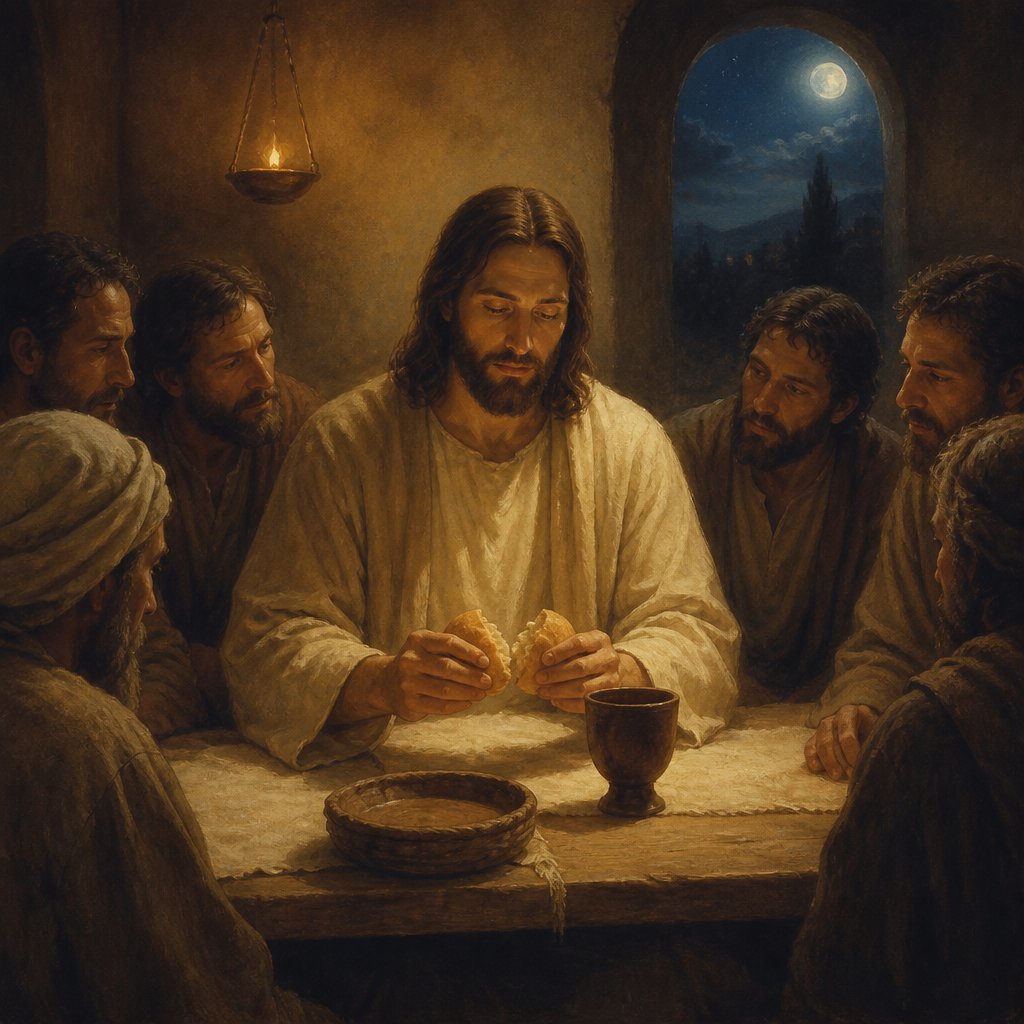
1 Corinthians 11:23-26 in the King James Version of the Bible reads:
23 For I have received of the Lord that which also I delivered unto you, that the Lord Jesus the same night in which he was betrayed took bread:
24 And when he had given thanks, he brake it, and said, Take, eat: this is my body, which is broken for you: this do in remembrance of me.
25 After the same manner also he took the cup, when he had supped, saying, This cup is the new testament in my blood: this do ye, as oft as ye drink it, in remembrance of me.
26 For as often as ye eat this bread, and drink this cup, ye do shew the Lord's death till he come.
This passage is a powerful reminder of the significance of the Last Supper, where Jesus instituted the sacrament of Communion. In these verses, the Apostle Paul is describing the instructions he received from the Lord regarding the practice of Communion and its purpose for the church in Corinth.
The theme of remembrance is central to this passage, as Jesus instructs his disciples to partake in the bread and the cup in remembrance of him. This act of remembrance is not simply a mental recollection of past events, but a profound participation in the ongoing effects of Christ's sacrifice. By partaking in the bread and the cup, believers are actively remembering and proclaiming the death of Jesus Christ until he returns.
The context of the passage is important for understanding its significance. The church in Corinth was struggling with issues of division and unity, as well as a lack of reverence and understanding of the Lord's Supper. Paul's instructions to them regarding the practice of Communion were intended to correct their misguided attitudes and behaviors, and to refocus their attention on the true meaning and purpose of this sacred act.
The symbolism in these verses is rich and profound. The bread symbolizes the broken body of Christ, which was sacrificed for the redemption of humanity. As Jesus broke the bread and gave it to his disciples, he instructed them to eat it in remembrance of his body that was broken for them. This act symbolizes not only the physical suffering and death of Christ, but also the spiritual nourishment and sustenance that believers receive through his sacrifice.
Likewise, the cup symbolizes the new covenant in Christ's blood, which was shed for the forgiveness of sins. As Jesus presented the cup to his disciples, he instructed them to drink it in remembrance of him, symbolizing the spiritual cleansing and renewal that comes through his blood.
The act of partaking in Communion is a deeply symbolic and spiritual experience for believers. It represents their participation in the death and resurrection of Jesus Christ, as well as their unity with one another as the body of Christ. This act is not to be taken lightly, but with reverence and understanding of its profound significance.
In conclusion, 1 Corinthians 11:23-26 is a powerful and instructive passage that highlights the significance of the Lord's Supper and its purpose for the church. The themes of remembrance, sacrifice, and unity are central to this passage, and the symbolism of the bread and the cup underscores the profound spiritual realities that believers experience through partaking in Communion. This passage serves as a timely reminder for believers to approach the Lord's Supper with reverence and understanding, and to allow it to deepen their faith and unity with Christ and one another.
Get our apps


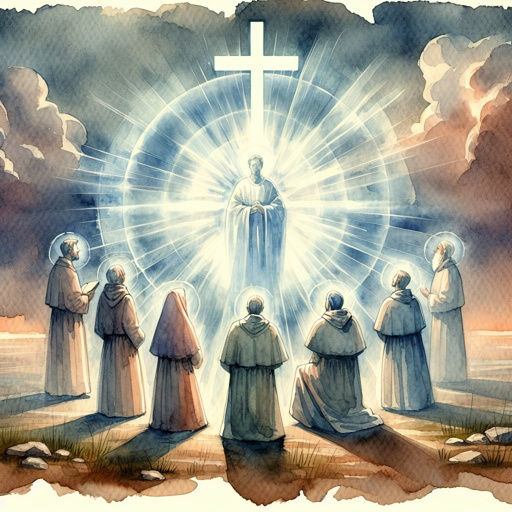
Artwork for 1 Corinthians 11:23-26

1 Corinthians 11:23-26 - "For I received from the Lord what I also passed on to you: The Lord Jesus, on the night he was betrayed, took bread, and when he had given thanks, he broke it and said, 'This is my body, which is for you; do this in remembrance of me.' In the same way, after supper, he took the cup, saying, 'This cup is the new covenant in my blood; do this, whenever you drink it, in remembrance of me.' For whenever you eat this bread and drink this cup, you proclaim the Lord’s death until he comes."
"For I received from the Lord what I also passed on to you: The Lord Jesus, on the night he was betrayed, took bread, and when he had given thanks, he broke it and said, 'This is my body, which is for you; do this in remembrance of me.' In the same way, after supper, he took the cup, saying, 'This cup is the new covenant in my blood; do this, whenever you drink it, in remembrance of me.' For whenever you eat this bread and drink this cup, you proclaim the Lord’s death until he comes." - 1 Corinthians 11:23-26

1 Corinthians 11:26-29

1 Corinthians 11:26-29

1 Corinthians 11:26 - "For as often as ye eat this bread, and drink this cup, ye do shew the Lord's death till he come."

1 Corinthians 11:23 - "For I have received of the Lord that which also I delivered unto you, That the Lord Jesus the same night in which he was betrayed took bread:"

1 Corinthians 14:26-33

1 Corinthians 10:26 - "For the earth is the Lord's, and the fulness thereof."

1 Corinthians 15:26 - "The last enemy that shall be destroyed is death."

1 Corinthians 3:23 - "And ye are Christ's; and Christ is God's."

1 Corinthians 16:23 - "The grace of our Lord Jesus Christ be with you."

1 Corinthians 7:23 - "Ye are bought with a price; be not ye the servants of men."

1 Chronicles 26:23 - "Of the Amramites, and the Izharites, the Hebronites, and the Uzzielites:"

1 Corinthians 1:23 - "But we preach Christ crucified, unto the Jews a stumblingblock, and unto the Greeks foolishness;"
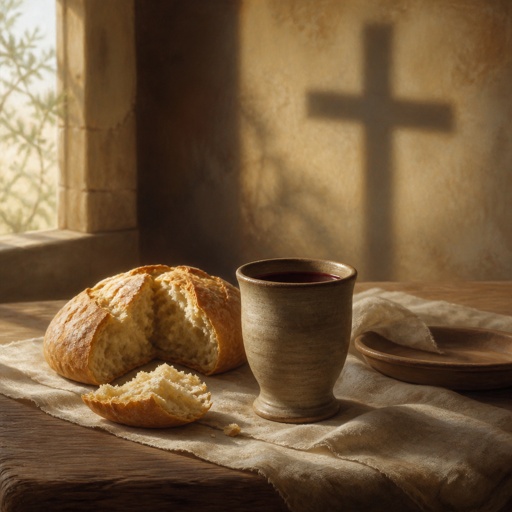
"For as often as ye eat this bread, and drink this cup, ye do shew the Lord's death till he come." - 1 Corinthians 11:26

1 Corinthians 11:8 - "For the man is not of the woman; but the woman of the man."

1 Corinthians 11:1 - "Be ye followers of me, even as I also am of Christ."

1 Corinthians 11:11 - "Nevertheless neither is the man without the woman, neither the woman without the man, in the Lord."

1 Corinthians 7:26 - "I suppose therefore that this is good for the present distress, I say, that it is good for a man so to be."

1 Corinthians 9:23 - "And this I do for the gospel's sake, that I might be partaker thereof with you."

1 Corinthians 15:8-11
2 Corinthians 11:23 - "Are they ministers of Christ? (I speak as a fool) I am more; in labours more abundant, in stripes above measure, in prisons more frequent, in deaths oft."

"For the earth is the Lord's, and the fulness thereof." - 1 Corinthians 10:26

luke 11:23

1 Corinthians 9:26 - "I therefore so run, not as uncertainly; so fight I, not as one that beateth the air:"

2 Corinthians 11:26 - "In journeyings often, in perils of waters, in perils of robbers, in perils by mine own countrymen, in perils by the heathen, in perils in the city, in perils in the wilderness, in perils in the sea, in perils among false brethren;"

1 Corinthians 1:26 - "For ye see your calling, brethren, how that not many wise men after the flesh, not many mighty, not many noble, are called:"

1 Corinthians 11:9 - "Neither was the man created for the woman; but the woman for the man."
1 Corinthians 3:23 And you are Christ’s, and Christ is God’s.

1 Corinthians 3:23 And you are Christ’s, and Christ is God’s.