What does 1 Corinthians 11:27 mean?
“Wherefore whosoever shall eat this bread, and drink this cup of the Lord, unworthily, shall be guilty of the body and blood of the Lord.” — 1 Corinthians 11:27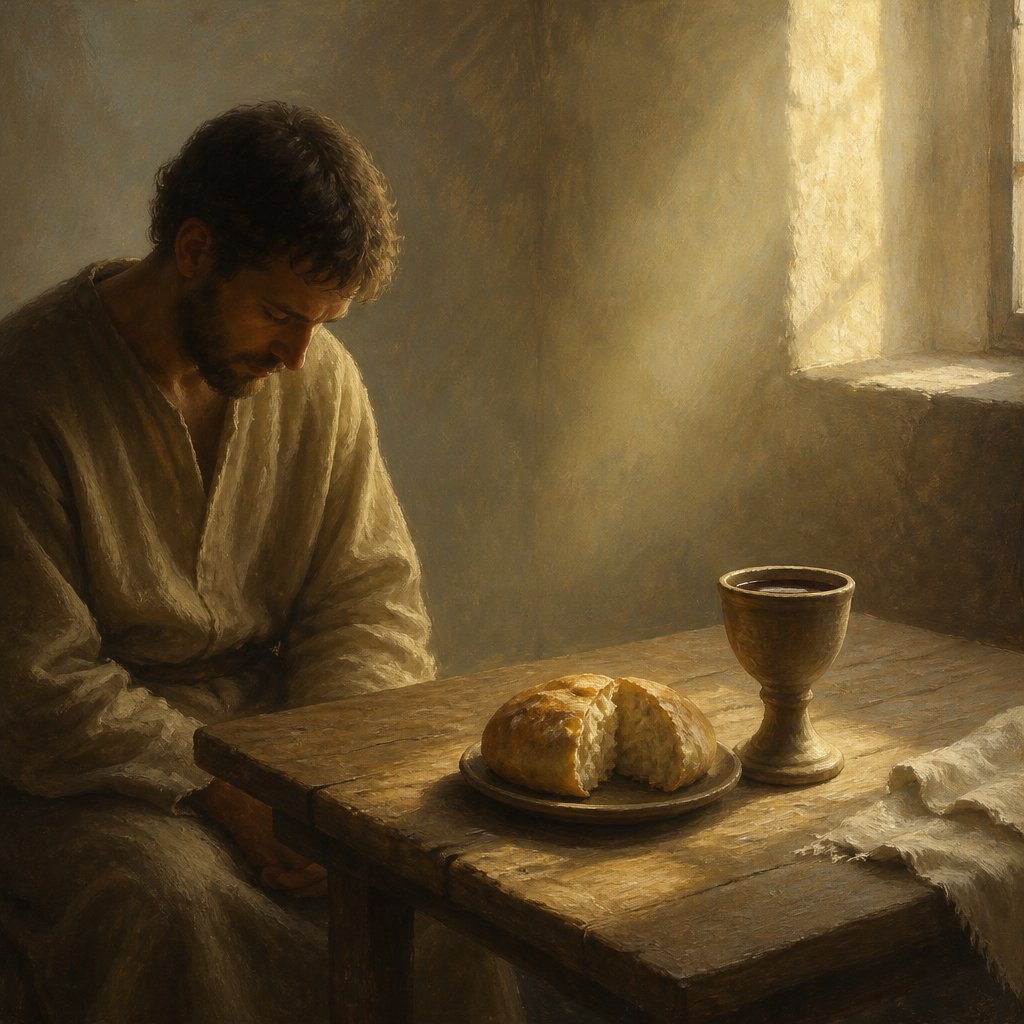
The verse 1 Corinthians 11:27 from the King James Version of the Bible reads: "Wherefore whosoever shall eat this bread, and drink this cup of the Lord, unworthily, shall be guilty of the body and blood of the Lord."
This verse is part of a larger passage in which the apostle Paul addresses the Corinthian church regarding the proper way to partake in the Lord's Supper, or communion. In this particular verse, Paul emphasizes the seriousness and reverence with which the Corinthians should approach the sacrament.
The theme of unworthiness is central to this verse. Paul warns against partaking in the bread and cup of the Lord in an unworthy manner, as doing so would result in being guilty of the body and blood of the Lord. This language is strong and underscores the gravity of approaching the Lord's Supper with a lack of proper reverence and respect.
The context of this verse is important to its meaning. The Corinthian church was known for its divisions, chaos, and moral laxity, and this passage represents Paul's attempt to correct their behavior and attitude toward the Lord's Supper. By addressing their conduct in partaking of the sacrament, Paul seeks to guide them toward a more respectful and solemn approach to this sacred ritual.
The symbolism of the bread and cup in this verse is significant. The bread and cup represent the body and blood of Jesus Christ, respectively, and the act of partaking in them symbolizes the believer's participation in the sacrifice of Christ and the covenant relationship with God. Therefore, approaching the Lord's Supper unworthily not only dishonors the sacred act itself but also disrespects the sacrifice of Christ.
Paul's language of being guilty of the body and blood of the Lord is weighty and implies a serious consequence for those who partake in the Lord's Supper unworthily. This language serves to emphasize the significance of the sacrament and to caution the Corinthian believers against approaching it carelessly or with an unrepentant heart.
Overall, 1 Corinthians 11:27 serves as a reminder to believers to approach the Lord's Supper with reverence, humility, and a clear conscience. It underscores the importance of recognizing the sanctity of the sacrament and the significance of the sacrifice of Christ. This verse challenges believers to examine their hearts and motives before participating in communion and to ensure that they do so in a manner that honors and remembers the sacrifice of Christ.
Get our apps


Artwork for 1 Corinthians 11:27

1 Corinthians 11:27 - "Wherefore whosoever shall eat this bread, and drink this cup of the Lord, unworthily, shall be guilty of the body and blood of the Lord."
"Wherefore whosoever shall eat this bread, and drink this cup of the Lord, unworthily, shall be guilty of the body and blood of the Lord." - 1 Corinthians 11:27

1 Corinthians 9:25-27

1 Corinthians 9:25-27

1 Corinthians 9:25-27

1 Corinthians 9:25-27

2 Corinthians 11:27 - "In weariness and painfulness, in watchings often, in hunger and thirst, in fastings often, in cold and nakedness."

1 Corinthians 12:27

1 Corinthians 12:27 - "Now ye are the body of Christ, and members in particular."

1 Corinthians 11:26-29

1 Corinthians 11:26-29

1 Corinthians 11:8 - "For the man is not of the woman; but the woman of the man."

1 Corinthians 11:1 - "Be ye followers of me, even as I also am of Christ."

1 Corinthians 11:11 - "Nevertheless neither is the man without the woman, neither the woman without the man, in the Lord."

1 Corinthians 15:8-11

1 Chronicles 11:27 - "Shammoth the Harorite, Helez the Pelonite,"

1 Corinthians 14:27 - "If any man speak in an unknown tongue, let it be by two, or at the most by three, and that by course; and let one interpret."

1 Corinthians 11:9 - "Neither was the man created for the woman; but the woman for the man."

1 Corinthians 11:31 - "For if we would judge ourselves, we should not be judged."

1 Corinthians 1:27 - "But God hath chosen the foolish things of the world to confound the wise; and God hath chosen the weak things of the world to confound the things which are mighty;"

1 Corinthians 7:27 - "Art thou bound unto a wife? seek not to be loosed. Art thou loosed from a wife? seek not a wife."

"In weariness and painfulness, in watchings often, in hunger and thirst, in fastings often, in cold and nakedness." - 2 Corinthians 11:27

1 Corinthians 11:30 - "For this cause many are weak and sickly among you, and many sleep."

1 Corinthians 11:13 - "Judge in yourselves: is it comely that a woman pray unto God uncovered?"

"Now ye are the body of Christ, and members in particular." - 1 Corinthians 12:27

1 Corinthians 11:10 - "For this cause ought the woman to have power on her head because of the angels."

1 Corinthians 11:20 - "When ye come together therefore into one place, this is not to eat the Lord's supper."

1 Corinthians 1:11 - "For it hath been declared unto me of you, my brethren, by them which are of the house of Chloe, that there are contentions among you."

1 Corinthians 11:32 - "But when we are judged, we are chastened of the Lord, that we should not be condemned with the world."

1 Corinthians 11:16 - "But if any man seem to be contentious, we have no such custom, neither the churches of God."