What does 1 Corinthians 12:25 mean?
“That there should be no schism in the body; but that the members should have the same care one for another.” — 1 Corinthians 12:25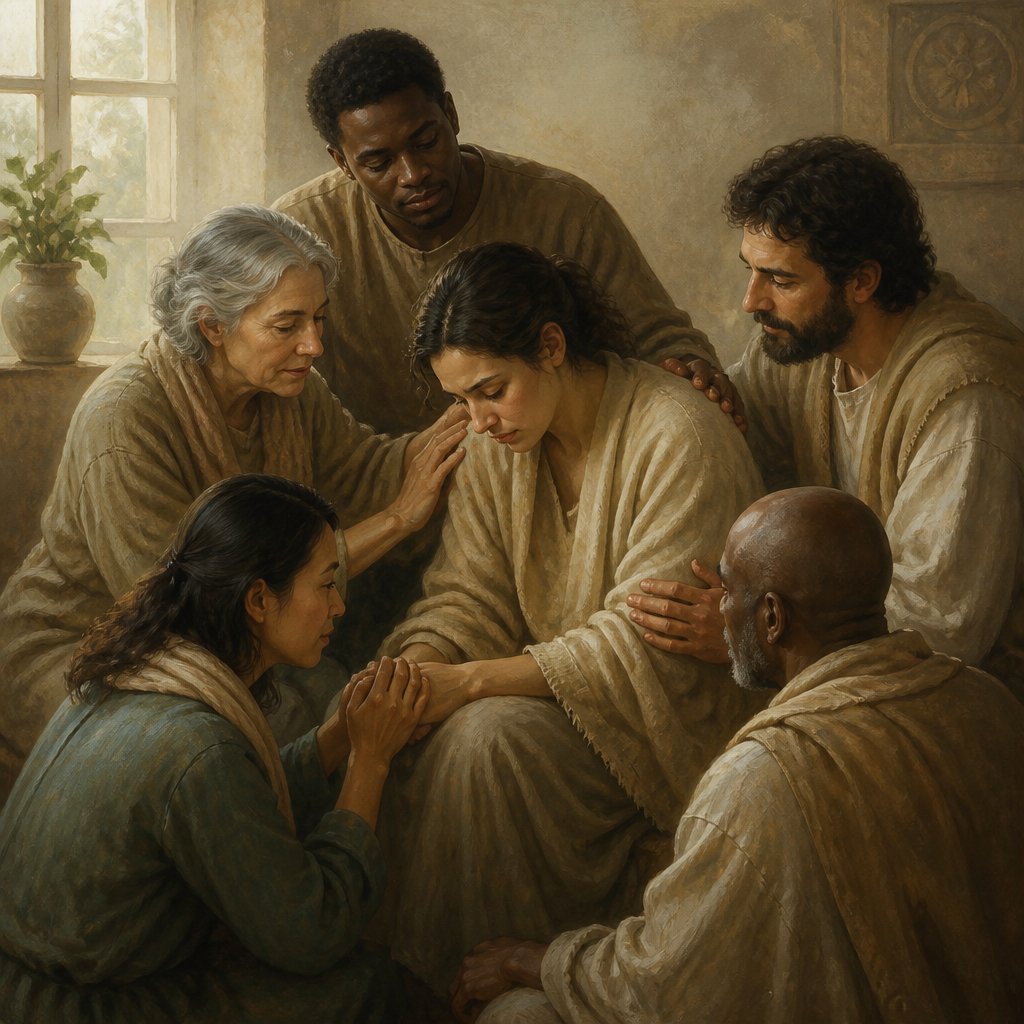
1 Corinthians 12:25 - "That there should be no schism in the body; but that the members should have the same care one for another."
This verse from the King James Version of the Bible, found in the first book of Corinthians, imparts an essential lesson about the nature of unity and love within the body of Christ. The context of this verse lies within a larger discussion on spiritual gifts and their purpose within the church. In the preceding verses, the apostle Paul outlines the importance of diversity within the body of Christ, as each member is uniquely gifted to serve the common good. However, in verse 25, Paul emphasizes the critical necessity of unity and care for one another within the body, highlighting the need for harmonious coexistence and mutual concern.
The theme of unity is central to the Christian faith and is frequently emphasized throughout the New Testament. Paul's instruction to the Corinthians regarding the importance of maintaining harmony and solidarity within the body of Christ remains relevant and pertinent within the modern-day church. The implications of this verse extend beyond mere interpersonal relationships within the church, as its message holds broader implications for societal, communal, and global unity.
The use of the term "schism" in this verse denotes a division or separation within the body of believers. Paul warns against the dangers of discord and disunity that can arise within a community of faith, as these can lead to a weakening and fragmentation of the church. The emphasis on "the same care one for another" reinforces the idea that each member of the body should exhibit genuine concern and compassion for one another, fostering a spirit of mutual support and empathy.
The context of this verse within a discussion on spiritual gifts further reinforces the idea that diverse individuals within the body of Christ are called to operate in harmony and mutual respect. Rather than allowing differences in gifting, opinions, or background to create division, believers are urged to cultivate an environment of unity and cooperation. This concept aligns with the biblical notion of the church functioning as a cohesive and interdependent unit, with each member contributing to the edification and flourishing of the whole.
Symbolically, the body of Christ is often used as a metaphor for the church, with Christ being the head and believers constituting the various members of the body. This imagery underscores the interconnectedness and interdependence of individuals within the faith community, as well as the collective responsibility to ensure the well-being and flourishing of the entire body. Just as the various parts of the human body work together in unison to maintain health and functionality, so too are believers called to work together in unity and love for the greater good of the church.
Beyond its immediate application to the church, 1 Corinthians 12:25 carries broader implications for human relationships and community interactions. The overarching message of unity and mutual care transcends religious boundaries and can be applied to various social, cultural, and political contexts. In a world marked by division, conflict, and discord, the biblical call for unity and compassion serves as a timeless and universal exhortation for individuals and communities to seek common ground, embrace diversity, and prioritize the well-being of others.
In conclusion, 1 Corinthians 12:25 encapsulates a profound and timeless message about the indispensable need for unity and care within the body of Christ. Its exhortation to avoid schism and promote mutual concern resonates not only within the context of the early church but also speaks to the enduring importance of unity and love in human relationships and societal interactions. As believers, we are called to embody the spirit of unity and strive for the well-being of others, recognizing that our collective strength lies in our ability to work together in harmony and mutual care.
Get our apps


Artwork for 1 Corinthians 12:25

1 Corinthians 12:25 - "That there should be no schism in the body; but that the members should have the same care one for another."

1 Corinthians 12:25-27 - "So that there may be no dissension within the body, but the members may have the same care for one another. If one member suffers, all suffer together; if one member is honored, all rejoice together. Now you are the body of Christ and individually members of it."
"That there should be no schism in the body; but that the members should have the same care one for another." - 1 Corinthians 12:25

"So that there may be no dissension within the body, but the members may have the same care for one another. If one member suffers, all suffer together; if one member is honored, all rejoice together. Now you are the body of Christ and individually members of it." - 1 Corinthians 12:25-27

1 Corinthians 9:25-27

1 Corinthians 9:25-27

1 Corinthians 9:25-27

1 Corinthians 9:25-27

1 Corinthians 12:12

1 corinthians 2:12

1 corinthians 2:12

1 corinthians 2:12

1 corinthians 2:12

1 Corinthians 12:12-13

1 Corinthians 12:12-22

1 Corinthians 1:25 - "Because the foolishness of God is wiser than men; and the weakness of God is stronger than men."

1 Corinthians 10:25 - "Whatsoever is sold in the shambles, that eat, asking no question for conscience sake:"

1 Corinthians 12:27

Eternal Victor's Crown: 1 Corinthians 9:25

1 Corinthians 12:3-13

1 Corinthians 12:14 - "For the body is not one member, but many."

1 Corinthians 12:5 - "And there are differences of administrations, but the same Lord."

1 Corinthians 12:4 - "Now there are diversities of gifts, but the same Spirit."

1 Corinthians 12:27 - "Now ye are the body of Christ, and members in particular."

1 Corinthians 12:20 - "But now are they many members, yet but one body."

1 Corinthians 12:1 - "Now concerning spiritual gifts, brethren, I would not have you ignorant."

1 Corinthians 15:25 - "For he must reign, till he hath put all enemies under his feet."

1 Corinthians 12:7 - "But the manifestation of the Spirit is given to every man to profit withal."

1 Corinthians 12:19 - "And if they were all one member, where were the body?"

1 Corinthians 12:6 - "And there are diversities of operations, but it is the same God which worketh all in all."