What does 1 Corinthians 15:41 mean?
“There is one glory of the sun, and another glory of the moon, and another glory of the stars: for one star differeth from another star in glory.” — 1 Corinthians 15:41
“ There is one glory of the sun, and another glory of the moon, and another glory of the stars: for one star differeth from another star in glory.” 1 Corinthians 15:41 (KJV).
In 1 Corinthians 15 Paul is answering doubts and confusions about the resurrection of the dead. He insists that the resurrection is not a vague spiritual idea but a real work of God grounded in the resurrection of Jesus Christ, and he explains that resurrection involves both continuity and change: the same person truly rises, yet in a transformed condition. The immediate context leading into verse 41 is Paul’s use of created things to show that God already fills the world with varieties of “bodies” and varieties of “glory,” so it should not surprise anyone that the resurrection body can be both truly a body and also wonderfully different from the present one. Just before this verse, he says, “All flesh is not the same flesh,” and then, “There are also celestial bodies, and bodies terrestrial: but the glory of the celestial is one, and the glory of the terrestrial is another.” The point is not to satisfy curiosity about astronomy, but to establish a principle: difference in kind and difference in splendor are already built into God’s creation, and therefore the resurrection is neither impossible nor incoherent.
The word “glory” in this setting carries the sense of brightness, splendor, honor, and manifest excellence. Paul chooses the most universally recognizable examples of differing splendor: the sun, the moon, and the stars. All are lights in the heavens, yet their radiance is not the same. The sun’s glory is overpowering and life-giving; the moon’s glory is gentler and governs the night; the stars’ glory is countless and varied, some appearing brighter, some fainter. By pointing to these differing glories, Paul is saying that God is the author of ordered diversity. He gives different measures and kinds of radiance according to his wisdom. That observation prepares the reader for what he says next about resurrection: “So also is the resurrection of the dead.” He is about to speak of the contrast between what is “sown” now and what is “raised” then, and the language of glory becomes a bridge between present weakness and future splendor.
Symbolically, the heavens function as a picture of the coming transformation. The sun, moon, and stars are “celestial,” and their differing glories hint that the world to come is not a flat sameness but a realm where God’s workmanship displays distinct excellence. The phrase “for one star differeth from another star in glory” suggests individuality within unity: all are stars, yet each has its own appointed brilliance. In the flow of Paul’s argument, that image serves at least two purposes. First, it answers the implied question, “With what body do they come?” by emphasizing that God can give a body suited to its sphere, just as he has done in creation. Second, it quietly corrects the assumption that resurrection must merely restore what was before; instead, it raises what was sown into a higher order marked by glory.
This verse also strengthens Paul’s larger theme that God’s power is not limited by human categories. If God can make varied kinds of flesh, varied kinds of bodies, and varied degrees of heavenly splendor, then it is not a great thing for him to raise the dead with a body that is truly bodily and yet suited for the age to come. The significance of the verse, therefore, lies in how it trains the imagination and the faith of the church: the resurrection is not to be measured by the poverty of present experience. Just as the sky contains lights that differ in glory, the resurrection will reveal a glory that is real, ordered, and bestowed by God, and it will display his wisdom in the transformation he gives to his people.
Get our apps


Artwork for 1 Corinthians 15:41
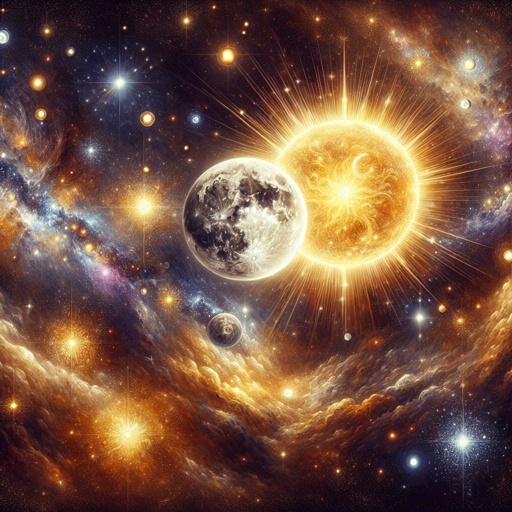
1 Corinthians 15:41 - "There is one glory of the sun, and another glory of the moon, and another glory of the stars: for one star differeth from another star in glory."

1 Corinthians 15:41 – "The sun has one kind of splendor, the moon another and the stars another; and star differs from star in splendor."

"There is one glory of the sun, and another glory of the moon, and another glory of the stars: for one star differeth from another star in glory." - 1 Corinthians 15:41

"There is one glory of the sun, and another glory of the moon, and another glory of the stars: for one star differeth from another star in glory." - 1 Corinthians 15:41

"There is one glory of the sun, and another glory of the moon, and another glory of the stars: for one star differeth from another star in glory." - 1 Corinthians 15:41

"There is one glory of the sun, and another glory of the moon, and another glory of the stars: for one star differeth from another star in glory." - 1 Corinthians 15:41

Ephesians 4:1-5

1 Corinthians 15:36

Exodus 4:1-5

Ephesians 4:1-5

Ephesians 4:1-5

Ephesians 4:1-5

Ephesians 4:1-5

Ephesians 4:1-5

Ephesians 4:1-5

Ephesians 4:1-5

Ephesians 4:1-5

Ephesians 4:1-5

Ephesians 4:1-5

Ephesians 4:1-5

Ephesians 4:1-5

Ephesians 4:1-5

Ephesians 4:1-5

Ephesians 4:1-5

Ephesians 4:1-5

Ephesians 4:1-5

Ephesians 4:1-5

Ephesians 4:1-5

Ephesians 4:1-5

Ephesians 4:1-5