What does 1 Corinthians 15:58 mean?
“Therefore, my beloved brethren, be ye stedfast, unmoveable, always abounding in the work of the Lord, forasmuch as ye know that your labour is not in vain in the Lord.” — 1 Corinthians 15:58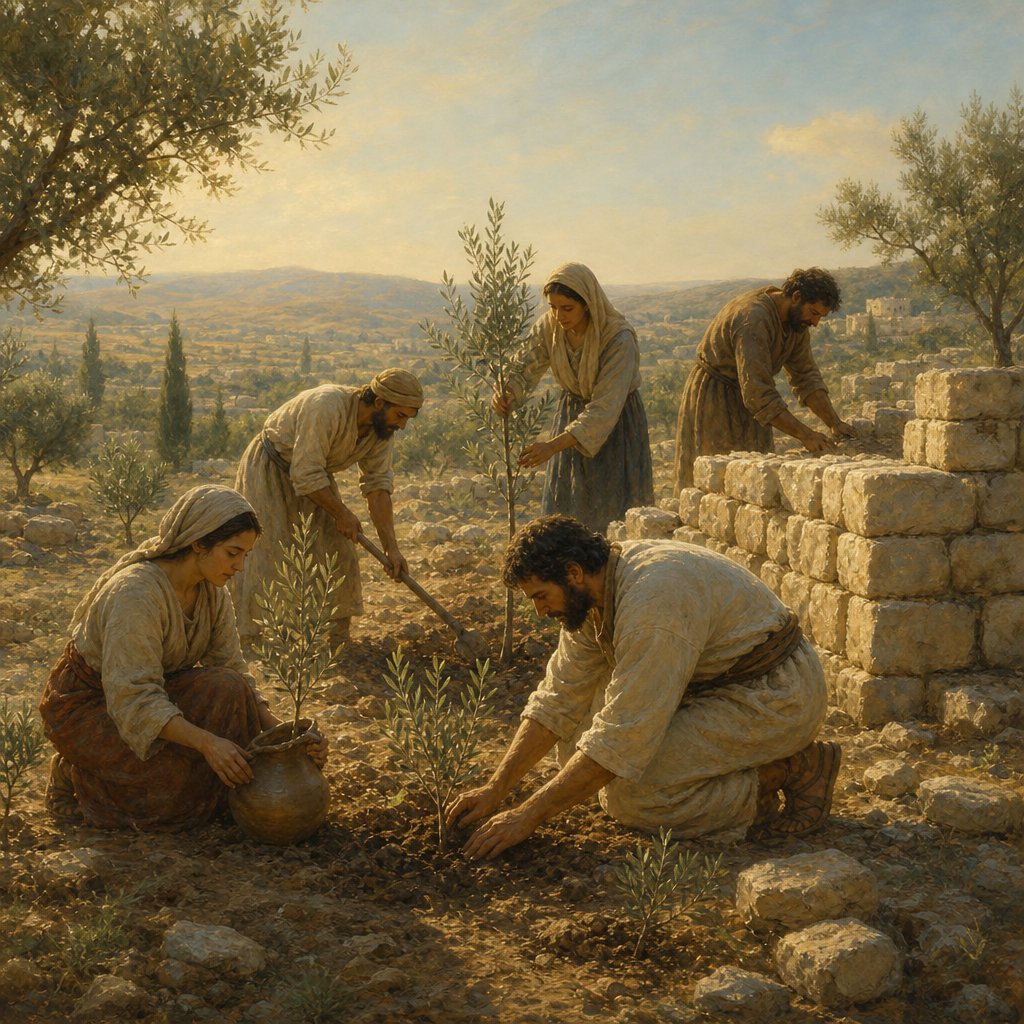
“Therefore, my beloved brethren, be ye stedfast, unmoveable, always abounding in the work of the Lord, forasmuch as ye know that your labour is not in vain in the Lord.” (1 Corinthians 15:58, KJV)
In the KJV, the verse begins with “Therefore,” and that single word carries the full weight of the chapter that comes before it. First Corinthians 15 is Paul’s great declaration of the resurrection: that “Christ died for our sins according to the scriptures; and … he was buried, and … he rose again the third day” (15:3–4), that many witnesses saw him, and that the resurrection of Christ is the foundation of the believer’s hope. Paul insists that if the dead rise not, then “your faith is vain; ye are yet in your sins” (15:17), and Christian preaching and suffering would be empty. But because Christ is risen, death is not ultimate; it is an enemy destined to be put down, until at last the promise is fulfilled: “Death is swallowed up in victory” (15:54). Verse 58 is the practical conclusion of that doctrine. It is not merely advice for religious effort; it is a call to live in the present in light of the future that God has guaranteed.
Paul addresses them as “my beloved brethren,” and this affectionate pastoral tone matters. The Corinthians had been troubled by divisions, pride, and confusion, and in this chapter some were wavering on the doctrine of resurrection. Paul does not speak as a distant lecturer, but as a spiritual father pleading with family. The command that follows is not cold discipline; it is a loving summons to stability and purpose rooted in the gospel. The affection also frames the obedience he calls for: perseverance is not demanded to earn acceptance, but urged because they are already embraced as “brethren.”
The phrase “be ye stedfast, unmoveable” uses the language of firmness and resistance to shifting ground. In the immediate context, the ground that must not shift is the truth of Christ’s resurrection and the believer’s resurrection in him. The Corinthians lived amid philosophies that could dismiss bodily resurrection as foolish or unnecessary, and Paul counters that the body matters to God, the future is bodily, and the gospel is historical and real. To be “stedfast” and “unmoveable” is to refuse to be pushed off the hope of resurrection by doubt, persecution, fashionable ideas, or discouragement. There is symbolism here of standing on a foundation that does not crack: the risen Christ. When Paul has just declared, “thanks be to God, which giveth us the victory through our Lord Jesus Christ” (15:57), the believer is pictured as one who stands his ground because the decisive battle has already been won.
Yet this steadfastness is not passive stubbornness. It is paired with motion in the right direction: “always abounding in the work of the Lord.” The verse holds two seemingly opposite ideas together—unmoveable in faith, overflowing in service. The believer is not to be tossed by falsehood, but is to be lavish in obedience. “Always” broadens the scope beyond occasional zeal; it speaks of a settled pattern of life. “Abounding” suggests more than meeting a minimum; it conveys excess, overflow, and fruitfulness. The “work of the Lord” is not merely private spirituality but all labor done under Christ’s lordship and for his sake—gospel ministry, acts of love, endurance under trial, holiness that costs something, service that may be unseen. In the chapter’s context, this work is energized by resurrection reality: because God will raise the dead, what is done for Christ is not wasted by death, time, or obscurity.
The closing reason clause gives the heart of the verse: “forasmuch as ye know that your labour is not in vain in the Lord.” Paul speaks to knowledge, not wishful thinking. Their certainty is anchored in what he has argued throughout the chapter: Christ is risen, Christ will reign until he has subdued all enemies, the dead in Christ shall be raised, and believers shall be changed (15:20–28, 51–52). Therefore, “labour” is reinterpreted. It may be exhausting; it may involve suffering; it may appear unproductive. The Corinthians would understand “labour” as toil that can feel heavy and thankless. Paul does not deny the cost; he dignifies it by setting it inside the sphere of “in the Lord.” That phrase is crucial. The promise is not that every human effort will succeed on its own terms, but that labour joined to Christ—done in union with him, for his glory, in his name—cannot finally be empty, because the Lord who rose will also raise, judge, and reward. The resurrection makes the moral universe solid: deeds done in Christ do not evaporate, and faithfulness that looks small now will be revealed as significant when God completes what he has promised.
“In vain” is especially striking because earlier in the chapter Paul used the same idea in negative form: if Christ be not raised, “your faith is vain” (15:17). Verse 58 flips the logic. Since Christ is raised, their labour is not vain. The entire meaning of the Christian life is tethered to that event. The verse is, in effect, a bridge between doctrine and daily obedience: because death does not have the last word, the believer’s present obedience is not a futile gesture against inevitable decay. It is participation in the Lord’s enduring kingdom, which death cannot cancel.
The significance of 1 Corinthians 15:58, then, is that it makes resurrection hope practical. It calls for steadiness amid doctrinal pressure, resilience amid suffering, and energetic service that refuses the despairing thought that nothing matters. Paul’s logic is simple and profound: because the end is secure in Christ, the middle is meaningful. The believer stands firm because truth is firm, and the believer works abundantly because the Lord will not allow what is done “in the Lord” to be wasted. In that way, the verse becomes a final trumpet-note after the chapter’s triumph: the victory over death is not only something to celebrate in words, but something to live out in steadfast faith and overflowing labour, with the settled knowledge that such labour is never empty when it is “in the Lord.”
Get our apps


Artwork for 1 Corinthians 15:58

1 Corinthians 15:58 - "Therefore, my beloved brethren, be ye stedfast, unmoveable, always abounding in the work of the Lord, forasmuch as ye know that your labour is not in vain in the Lord."

"Therefore, my beloved brethren, be ye stedfast, unmoveable, always abounding in the work of the Lord, forasmuch as ye know that your labour is not in vain in the Lord." - 1 Corinthians 15:58
"Therefore, my beloved brethren, be ye stedfast, unmoveable, always abounding in the work of the Lord, forasmuch as ye know that your labour is not in vain in the Lord." - 1 Corinthians 15:58

"Therefore, my beloved brethren, be ye stedfast, unmoveable, always abounding in the work of the Lord, forasmuch as ye know that your labour is not in vain in the Lord." - 1 Corinthians 15:58

1 Corinthians 15:57-58 - "But thanks be to God, who gives us the victory through our Lord Jesus Christ. Therefore, my beloved brethren, be steadfast, immovable, always abounding in the work of the Lord, knowing that your labor is not in vain in the Lord."

Joshua 15:58 - "Halhul, Beth-zur, and Gedor,"

1 Corinthians 15:36

"Halhul, Beth-zur, and Gedor," - Joshua 15:58

1 Corinthians 15:13 - "But if there be no resurrection of the dead, then is Christ not risen:"

1 Corinthians 15:51-52

1 Corinthians 15:51-52

1 Corinthians 15:51-52

1 Corinthians 15:5 - "And that he was seen of Cephas, then of the twelve:"

1 Corinthians 15:16 - "For if the dead rise not, then is not Christ raised:"

1 Corinthians 15:26 - "The last enemy that shall be destroyed is death."

"But thanks be to God, who gives us the victory through our Lord Jesus Christ. Therefore, my beloved brethren, be steadfast, immovable, always abounding in the work of the Lord, knowing that your labor is not in vain in the Lord." - 1 Corinthians 15:57-58

1 Corinthians 15:51-52

1 Corinthians 15:8-11

1 Corinthians 15:7 - "After that, he was seen of James; then of all the apostles."

1 Corinthians 1:15 - "Lest any should say that I had baptized in mine own name."

isaias 58:8

1 Corinthians 15:30 - "And why stand we in jeopardy every hour?"

1 Corinthians 15:56 - "The sting of death is sin; and the strength of sin is the law."

1 Corinthians 15:48 - "As is the earthy, such are they also that are earthy: and as is the heavenly, such are they also that are heavenly."

1 Corinthians 15:33 - "Be not deceived: evil communications corrupt good manners."

1 Corinthians 15:18 - "Then they also which are fallen asleep in Christ are perished."

1 Corinthians 15:36 - "Thou fool, that which thou sowest is not quickened, except it die:"

1 Corinthians 15:42 - "So also is the resurrection of the dead. It is sown in corruption; it is raised in incorruption:"

Isaiah 58: 1-12

1 Corinthians 15:43 - "It is sown in dishonour; it is raised in glory: it is sown in weakness; it is raised in power:"