What does 1 Corinthians 2:2 mean?
“For I determined not to know any thing among you, save Jesus Christ, and him crucified.” — 1 Corinthians 2:2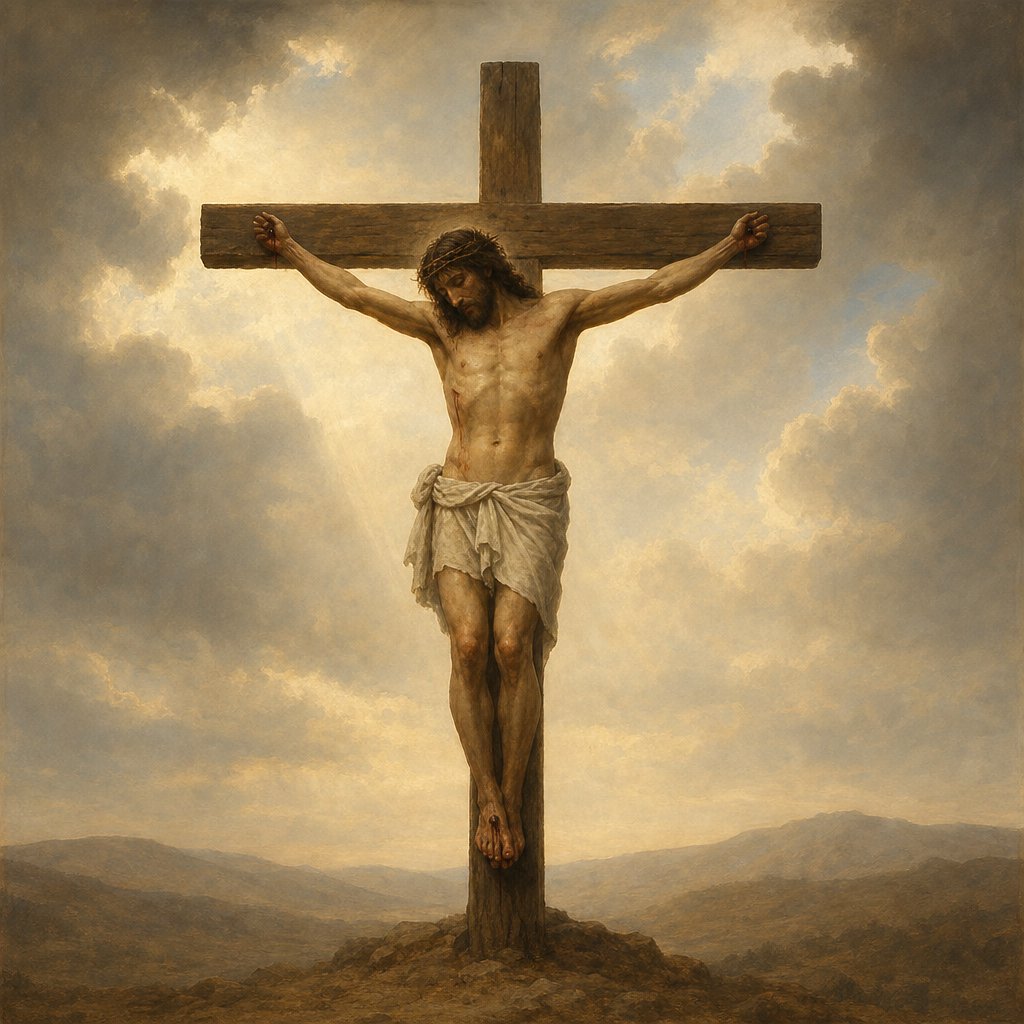
“For I determined not to know any thing among you, save Jesus Christ, and him crucified.” (1 Corinthians 2:2, KJV)
In 1 Corinthians 2:2 Paul is describing a deliberate decision he made when he came to the church at Corinth: he resolved that the center of his message, his manner, and even his personal posture among them would be narrowed to one great subject, “Jesus Christ, and him crucified.” The verse is not a claim of ignorance, nor a denial that Paul possessed learning or could address many subjects. It is a statement of priority and purpose. “I determined” speaks of settled intent. “Not to know any thing among you” uses the language of “knowing” in the sense of making something the recognized ground of ministry and the acknowledged basis of confidence. Paul would not present himself as the Corinthians’ intellectual champion, nor would he build the church on the admiration of eloquence, philosophy, or spiritual show. He would have them know him, and be known by him, chiefly in relation to the gospel of the crucified Christ.
The immediate context in the KJV shows why Paul speaks this way. In the opening chapters of 1 Corinthians, Paul addresses divisions and party spirit in the church, where believers were attaching themselves to names and styles—“I am of Paul; and I of Apollos; and I of Cephas; and I of Christ.” (1 Corinthians 1:12, KJV). That spirit of comparison and boasting is tied to the world’s way of measuring greatness: persuasive speech, philosophical reputation, and the applause of men. Paul answers this by contrasting “the wisdom of this world” with what he calls “the preaching of the cross.” (1 Corinthians 1:18, KJV). He insists that God has acted in such a way that human pride is brought low: “God hath chosen the foolish things of the world to confound the wise; and God hath chosen the weak things of the world to confound the things which are mighty.” (1 Corinthians 1:27, KJV). When Paul says in 2:2 that he knew nothing among them except Christ crucified, he is applying that theology to the practical problem of Corinthian pride. The remedy for a church intoxicated with status and self-display is to be re-centered on the cross, where all boasting is silenced.
The broader flow of 1 Corinthians 2 in the KJV reinforces this. Just before 2:2 Paul says, “And I, brethren, when I came to you, came not with excellency of speech or of wisdom, declaring unto you the testimony of God.” (1 Corinthians 2:1, KJV). Immediately after 2:2 he adds, “And I was with you in weakness, and in fear, and in much trembling. And my speech and my preaching was not with enticing words of man’s wisdom, but in demonstration of the Spirit and of power: That your faith should not stand in the wisdom of men, but in the power of God.” (1 Corinthians 2:3–5, KJV). Paul’s “determination” in 2:2 is therefore not only about content but about foundation. He did not want a congregation whose faith rested on the attractiveness of a messenger or the cleverness of an argument. He wanted their faith to stand on God’s act in Christ, made effectual by the Spirit. The cross, in this context, functions as a kind of spiritual plumb line: it tests what is truly of God by exposing what is merely impressive to men.
The phrase “save Jesus Christ” is intensely Christ-centered, but Paul does not stop at Christ in the abstract; he adds “and him crucified.” This is crucial. “Jesus Christ” names the person; “him crucified” names the way God chose to accomplish salvation and reveal His wisdom. In Corinth, a city familiar with power, prestige, and public rhetoric, the idea of a crucified Messiah would have sounded like defeat and shame. Paul has already said, “But we preach Christ crucified, unto the Jews a stumblingblock, and unto the Greeks foolishness.” (1 Corinthians 1:23, KJV). By emphasizing “him crucified,” Paul insists that God’s saving work is not merely a set of moral teachings, not merely an inspiring example, not merely a heavenly philosophy, but a redemptive death. The crucifixion is the heart of the gospel because it is where sin is judged, where reconciliation is secured, and where God’s power is displayed under the appearance of weakness. The cross is both the means of salvation and the revelation of God’s character: holiness that does not ignore evil, love that does not spare itself, and wisdom that overturns the world’s definitions of success.
There is also symbolism in Paul’s language of “knowing.” In Scripture, to “know” often carries covenantal weight, implying recognition, intimacy, and allegiance. Paul is, in effect, refusing to build a relationship with the Corinthians on any shared ground other than the gospel itself. He will not “know” them as patrons know clients in a system of social advancement; he will not “know” them as audiences know performers, drawn by entertainment or novelty. He will know them as fellow sinners saved by a crucified Lord, and he will insist they know him in the same way. This strips away the Corinthian impulse to turn Christian leaders into badges of honor and returns the church to humility and unity under Christ.
The significance of the verse also lies in its pastoral strategy. Paul is not minimizing truth outside the cross; rather, he is saying that all truth for the church must be ordered under and interpreted through “Jesus Christ, and him crucified.” The cross becomes the interpretive center for doctrine, conduct, and spiritual life. It redefines wisdom, because what looks “foolish” to the world is God’s saving plan. It redefines power, because divine strength is manifested through apparent weakness. It redefines identity, because the believer’s standing is not achieved but received through Christ’s sacrifice. It redefines ministry, because the preacher’s calling is not to impress but to bear witness to “the testimony of God” (1 Corinthians 2:1, KJV) in a way that depends on “the Spirit and … power” (1 Corinthians 2:4, KJV). And it redefines the church’s unity, because a community gathered at the foot of the cross cannot honestly exalt one sinner over another.
In sum, 1 Corinthians 2:2 is Paul’s declaration that the Christian message and the Christian life in Corinth must be anchored in the crucified Christ. Against the background of division, worldly wisdom, and spiritual pride, Paul sets one controlling focus: not human brilliance, not rhetorical display, not factional identity, but “Jesus Christ, and him crucified.” The verse calls the church in every age to measure its faith, its leaders, its priorities, and its confidence by the cross, so that, as Paul says, “your faith should not stand in the wisdom of men, but in the power of God.” (1 Corinthians 2:5, KJV)
Get our apps


Artwork for 1 Corinthians 2:2

1 Corinthians 2:2 - "For I determined not to know any thing among you, save Jesus Christ, and him crucified."

"For I determined not to know any thing among you, save Jesus Christ, and him crucified." - 1 Corinthians 2:2
"For I determined not to know any thing among you, save Jesus Christ, and him crucified." - 1 Corinthians 2:2

1 corinthians 2:12

1 corinthians 2:12

1 corinthians 2:12

1 corinthians 2:12

2 Corinthians 2:1 - "But I determined this with myself, that I would not come again to you in heaviness."

1 Corinthians 4:1-2

2 Corinthians 1:2 - "Grace be to you and peace from God our Father, and from the Lord Jesus Christ."

2 Corinthians 1:3-4

1 Corinthians 4:2 - "Moreover it is required in stewards, that a man be found faithful."

1 Corinthians 2:3 - "And I was with you in weakness, and in fear, and in much trembling."

2 Corinthians 9:1 - "For as touching the ministering to the saints, it is superfluous for me to write to you:"

1 Corinthians 10:2 - "And were all baptized unto Moses in the cloud and in the sea;"

1 Corinthians 2:5 - "That your faith should not stand in the wisdom of men, but in the power of God."

2 Corinthians 1:18 - "But as God is true, our word toward you was not yea and nay."

2 Corinthians 12:1 - "It is not expedient for me doubtless to glory. I will come to visions and revelations of the Lord."

1 Corinthians 2:15 - "But he that is spiritual judgeth all things, yet he himself is judged of no man."

2 Corinthians 1:22 - "Who hath also sealed us, and given the earnest of the Spirit in our hearts."

1 Corinthians 2:1 - "And I, brethren, when I came to you, came not with excellency of speech or of wisdom, declaring unto you the testimony of God."

2 Corinthians 1:21 - "Now he which stablisheth us with you in Christ, and hath anointed us, is God;"

2 Corinthians 4:1 - "Therefore seeing we have this ministry, as we have received mercy, we faint not;"

1 Corinthians 2:4 - "And my speech and my preaching was not with enticing words of man's wisdom, but in demonstration of the Spirit and of power:"

2 Corinthians 1:20 - "For all the promises of God in him are yea, and in him Amen, unto the glory of God by us."

1 Corinthians 2:16 The mind of Christ African American

2 Corinthians 8:1 - "Moreover, brethren, we do you to wit of the grace of God bestowed on the churches of Macedonia;"

The old has gone, the new is here. — 2 Corinthians 5:17

2 Corinthians 1:15 - "And in this confidence I was minded to come unto you before, that ye might have a second benefit;"

1 Corinthians 2:8 - "Which none of the princes of this world knew: for had they known it, they would not have crucified the Lord of glory."