What does 1 Corinthians 2:5 mean?
"That your faith should not stand in the wisdom of men, but in the power of God." - 1 Corinthians 2:5
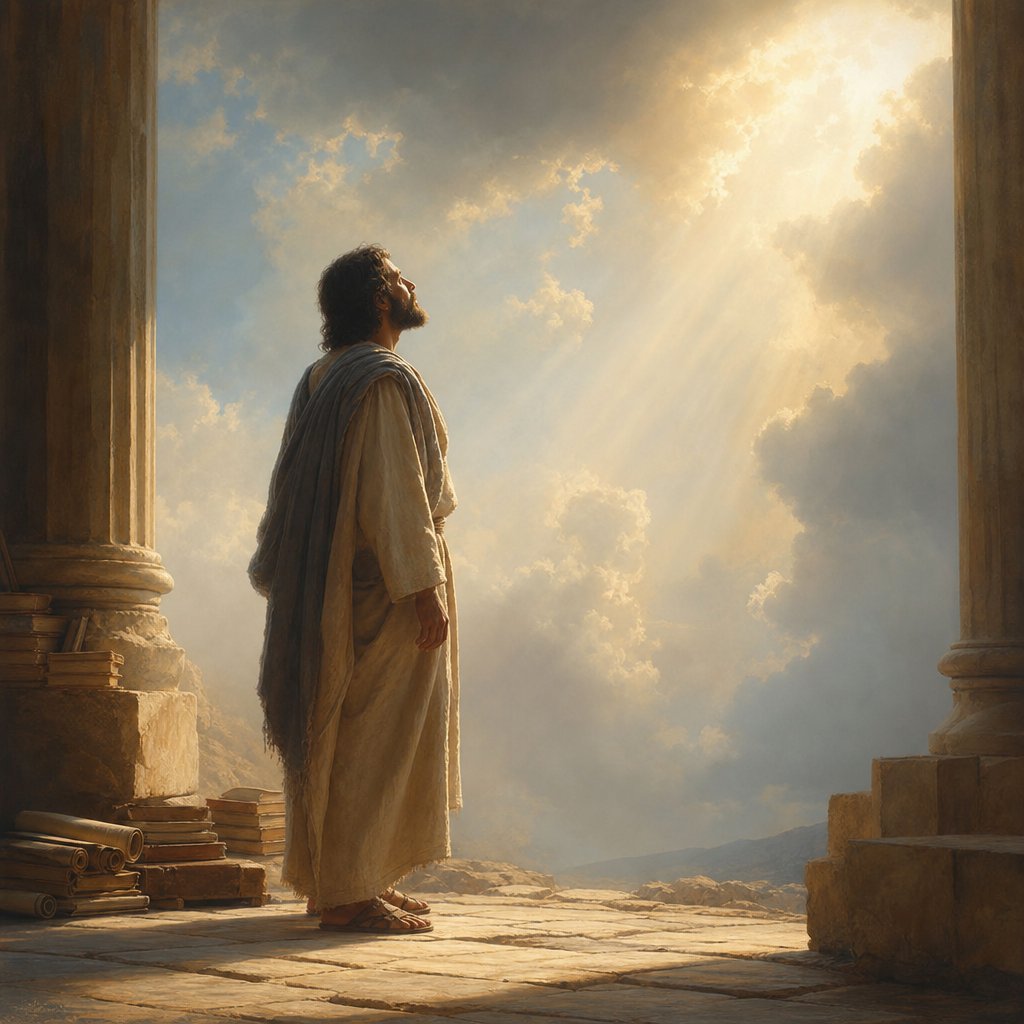
“1 Corinthians 2:5” in the King James Version reads, “That your faith should not stand in the wisdom of men, but in the power of God.”
In its immediate context, Paul is addressing a church in Corinth that lived in a culture enamored with eloquence, rhetoric, philosophical display, and the status that came from being aligned with impressive teachers. In the verses leading into this line, he reminds them that when he first came to them he did not present the gospel as a performance meant to win admiration for human skill. He speaks of coming “not with excellency of speech or of wisdom” and of determining to know nothing among them “save Jesus Christ, and him crucified.” He also describes his own weakness, fear, and trembling, and insists that his preaching was marked not by “enticing words of man’s wisdom” but by “demonstration of the Spirit and of power.” Verse 5 is the reason for that approach. He deliberately refused to build their confidence on the kind of foundation that Corinth valued, because he wanted their faith to rest on something far stronger and truer.
The heart of the verse is the contrast between two foundations: “the wisdom of men” and “the power of God.” “Wisdom of men” refers to the best that human reasoning, persuasion, and cultural sophistication can produce when left to itself. It is not merely intelligence; it is a way of arriving at truth and certainty that relies on human capability—argument, charm, reputation, learning, and the shifting consensus of what seems impressive. Paul is not saying that human thinking is worthless in every respect; rather, he is saying that faith in Christ must not be propped up by human cleverness as though the gospel were one philosophy among many, requiring rhetorical brilliance to make it credible. If faith “stands” in that kind of wisdom, then it rises or falls with the speaker’s talent, the listener’s preferences, and the fashion of the age. What is built on man is vulnerable to being unbuilt by man.
Against that, Paul sets “the power of God.” In this passage, “power” is not an abstract idea; it is God actively at work to make the message of Christ real and convincing in the hearer. The wider paragraph shows what that power looks like: it is tied to the Spirit’s operation and to the message of “Christ crucified,” which in itself runs against ordinary human expectations of triumph and prestige. The “power of God” therefore includes God’s ability to pierce the heart, to convict, to reveal, to regenerate, and to establish faith on divine reality rather than on mere human probability. Paul’s aim is that the Corinthians would know they were not Christians because a gifted man talked them into it, but because God met them through the preached word. This makes their faith stable when the preacher is unimpressive, when circumstances are hard, and when competing voices sound more refined. It also guards the glory of God, because it removes the temptation to attribute spiritual outcomes to human technique.
There is also a strong theme of humility and dependence. The verse assumes that genuine faith is not self-made. If the foundation is God’s power, then the believer’s confidence is not ultimately confidence in oneself, one’s discernment, or one’s ability to choose the right argument. It is confidence in God’s action and God’s faithfulness. That humility is not meant to weaken assurance; it is meant to deepen it, because what God establishes is firmer than what human influence produces. The Corinthians were tempted toward factional pride—boasting in leaders, styles, and schools of thought—and Paul’s insistence here cuts that pride off at the root. If faith is grounded in God’s power, then no Christian can boast as though he were converted by superior taste, intellect, or spiritual savvy.
The verse also carries a subtle symbolism in the word “stand.” Faith is pictured as something that needs a footing, like a person upright on a foundation, or like a structure resting on what supports it. Paul is concerned with what holds faith up when pressures come: scrutiny, persecution, doubt, disappointment, intellectual challenge, and the allure of worldly approval. Human wisdom can create a temporary stance, but God’s power creates a standing that endures because it is anchored beyond human changeability. This fits the larger message Paul is developing in these early chapters: the cross overturns worldly measures of strength and wisdom, and God chooses what looks weak to display His strength, so that “no flesh should glory in his presence.”
The significance of 1 Corinthians 2:5, then, is that it defines the proper basis of Christian belief and the proper method of Christian ministry. It calls believers to examine what their faith is resting on—whether it is resting on personality, argument, tradition, social belonging, and intellectual fashion, or resting on God’s own work through the message of Jesus Christ crucified. Paul’s purpose is not anti-intellectualism, but God-centeredness. Faith that “stands” in the power of God is faith that has been brought into being and sustained by God, and therefore points back to Him as its source, its strength, and its certainty.
Have questions about 1 Corinthians 2:5?
Dive deeper into this scripture with Bible Chat — an AI-powered tool for exploring God's Word through conversation. Ask questions, get context, and grow in your understanding of the Bible.
Get Our Apps


1 Corinthians 2:5 Artwork

1 Corinthians 2:5 - "That your faith should not stand in the wisdom of men, but in the power of God."

"That your faith should not stand in the wisdom of men, but in the power of God." - 1 Corinthians 2:5
"That your faith should not stand in the wisdom of men, but in the power of God." - 1 Corinthians 2:5

The old has gone, the new is here. — 2 Corinthians 5:17

1 corinthians 2:12

1 corinthians 2:12

1 corinthians 2:12

1 corinthians 2:12

2 corinthians 10:3-5

2 corinthians 10:3-5

2 corinthians 10:3-5

2 corinthians 10:3-5

2 corinthians 10:3-5

2 corinthians 10:3-5

2 corinthians 10:3-5

2 corinthians 10:3-5

2 corinthians 10:3-5

2 corinthians 10:3-5

2 corinthians 10:3-5

2 corinthians 10:3-5

1 Corinthians 5:2 - "And ye are puffed up, and have not rather mourned, that he that hath done this deed might be taken away from among you."
2 Corinthians 5:1 - "For we know that if our earthly house of this tabernacle were dissolved, we have a building of God, an house not made with hands, eternal in the heavens."

2 Corinthians 5:17

2 Corinthians 5:17

2 Corinthians 5:17

2 Corinthians 5:17

2 Corinthians 5:17

2 Corinthians 5:17

2 Corinthians 5:17

2 Corinthians 5:17