What does 1 Corinthians 7:36 mean?
"But if any man think that he behaveth himself uncomely toward his virgin, if she pass the flower of her age, and need so require, let him do what he will, he sinneth not: let them marry." - 1 Corinthians 7:36
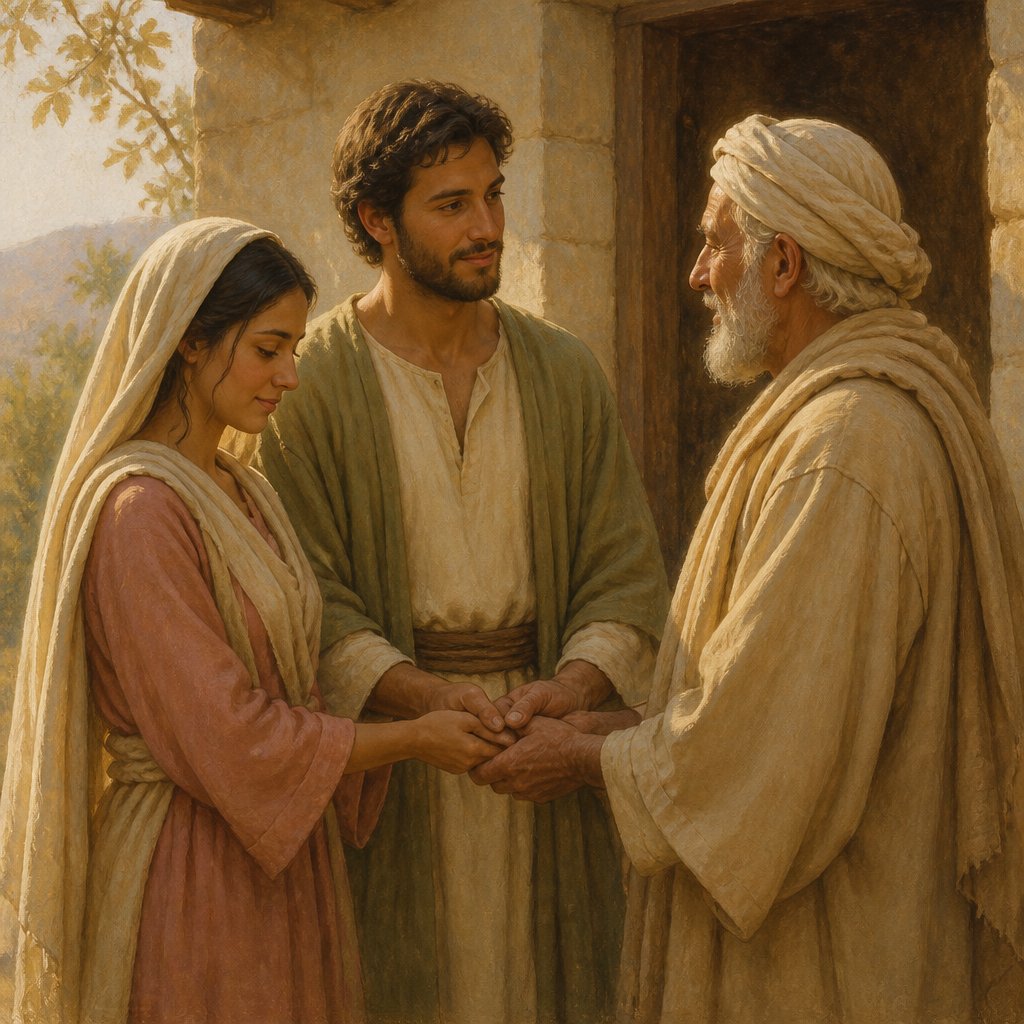
1 Corinthians 7:36 (KJV) states, "But if any man think that he behaveth himself uncomely toward his virgin, if she pass the flower of her age, and need so require, let him do what he will, he sinneth not: let them marry."
This verse from the New Testament, a letter written by the apostle Paul to the church in Corinth, addresses the topic of marriage and the proper treatment of virgins, or unmarried women. In the broader context of 1 Corinthians 7, Paul discusses various aspects of marriage, celibacy, and the Christian's responsibility to live according to God's will.
The verse begins with "But if any man think that he behaveth himself uncomely toward his virgin," This phrase suggests that the passage is addressing men who feel they are not treating their unmarried daughters or wards appropriately. In ancient Corinthian society, as in many cultures of the time, a woman's virginity was highly valued, and it was the responsibility of her male relatives to protect her purity and make decisions about her marital status.
The next part of the verse addresses the scenario where a virgin is approaching the age of marriageability. It says, "if she pass the flower of her age, and need so require, let him do what he will, he sinneth not: let them marry." This passage can be interpreted as giving fathers or guardians the permission to allow their unmarried daughters or charges to marry if they are of age and desire to do so, without sinning.
In the broader context of the chapter, Paul emphasizes the advantages of remaining single and celibate in order to fully devote oneself to God. He also acknowledges the challenges that may arise from such a lifestyle and addresses the differing circumstances and callings of individuals. In the specific context of 1 Corinthians 7:36, the passage reflects a pragmatic and compassionate approach to the marriage of young women and acknowledges that there may be valid reasons for them to marry.
One of the key themes in this passage is the ethical treatment and consideration of unmarried women. The verse acknowledges the agency and desires of the virgin herself, rather than solely focusing on the decisions of her male relatives. This reflects a degree of respect for the autonomy and well-being of women, although it must be understood within the cultural and historical context of the time.
Furthermore, this passage offers a perspective on Christian ethics and the importance of upholding moral standards within the context of marriage. It recognizes the complexities of human relationships and the need for compassion and understanding in making decisions related to marriage.
Symbolically, this passage can be seen as a demonstration of the balance between individual agency and the guidance of authority figures in the Christian life. It reflects the biblical principle of mutual respect and consideration within the family and wider community.
In conclusion, 1 Corinthians 7:36 is a verse that addresses the sensitive issue of marriage and the treatment of unmarried women in the context of first-century Corinthian society. It offers a balanced perspective on the ethical considerations and decision-making processes concerning marriage, emphasizing the importance of compassion, understanding, and respect for all individuals involved.
Have questions about 1 Corinthians 7:36?
Dive deeper into this scripture with Bible Chat — an AI-powered tool for exploring God's Word through conversation. Ask questions, get context, and grow in your understanding of the Bible.
Get Our Apps


1 Corinthians 7:36 Artwork

1 Corinthians 7:36 - "But if any man think that he behaveth himself uncomely toward his virgin, if she pass the flower of her age, and need so require, let him do what he will, he sinneth not: let them marry."
"But if any man think that he behaveth himself uncomely toward his virgin, if she pass the flower of her age, and need so require, let him do what he will, he sinneth not: let them marry." - 1 Corinthians 7:36

1 Corinthians 15:36

1 Corinthians 14:36

1 Corinthians 14:36

1 Corinthians 14:36-40

1 Corinthians 14:36-37

1 Corinthians 15:36 - "Thou fool, that which thou sowest is not quickened, except it die:"

1 Corinthians 14:36 - "What? came the word of God out from you? or came it unto you only?"

1 Chronicles 7:36 - "The sons of Zophah; Suah, and Harnepher, and Shual, and Beri, and Imrah,"

1 Corinthians 7:6 - "But I speak this by permission, and not of commandment."

1 Corinthians 13:4-7

"Thou fool, that which thou sowest is not quickened, except it die:" - 1 Corinthians 15:36

1 Corinthians 13:4-7

1 Corinthians 13:4-7

1 Corinthians 13:4-7

1 Corinthians 15:7 - "After that, he was seen of James; then of all the apostles."

1 Corinthians 7:23 - "Ye are bought with a price; be not ye the servants of men."

1 Corinthians 7:19 - "Circumcision is nothing, and uncircumcision is nothing, but the keeping of the commandments of God."

1 Corinthians 7:31 - "And they that use this world, as not abusing it: for the fashion of this world passeth away."

1 Corinthians 1:7 - "So that ye come behind in no gift; waiting for the coming of our Lord Jesus Christ:"

1 Corinthians 12:7 - "But the manifestation of the Spirit is given to every man to profit withal."

1 Corinthians 7:1 - "Now concerning the things whereof ye wrote unto me: It is good for a man not to touch a woman."

1 Corinthians 7:20 - "Let every man abide in the same calling wherein he was called."

1 Corinthians 7:9 - "But if they cannot contain, let them marry: for it is better to marry than to burn."

1 Corinthians 7:30 - "And they that weep, as though they wept not; and they that rejoice, as though they rejoiced not; and they that buy, as though they possessed not;"

1 Corinthians 7:24 - "Brethren, let every man, wherein he is called, therein abide with God."

"What? came the word of God out from you? or came it unto you only?" - 1 Corinthians 14:36

1 Corinthians 7:8 - "I say therefore to the unmarried and widows, It is good for them if they abide even as I."

1 Corinthians 7:26 - "I suppose therefore that this is good for the present distress, I say, that it is good for a man so to be."