What does 1 Corinthians 7:31 mean?
“And they that use this world, as not abusing it: for the fashion of this world passeth away.” — 1 Corinthians 7:31
The Bible verse 1 Corinthians 7:31 from the King James Version (KJV) states, "And they that use this world, as not abusing it: for the fashion of this world passeth away." This verse is found in the context of Paul’s letter to the Corinthians, in which he addresses various questions and concerns that have arisen in the church. In this particular section, Paul is discussing the idea of being content with one's current status and not being overly attached to the things of this world.
In the broader context of the chapter, Paul is addressing issues related to marriage, singleness, and the Christian’s stance in the world. In verse 29-31, Paul writes, "But this I say, brethren, the time is short: it remaineth, that both they that have wives be as though they had none; And they that weep, as though they wept not; and they that rejoice, as though they rejoiced not; and they that buy, as though they possessed not; And they that use this world, as not abusing it: for the fashion of this world passeth away." This passage serves as a reminder that the ultimate focus of believers should be on the eternal rather than the temporary things of this world.
The theme of the transient nature of the world is a central message in this verse. The phrase "the fashion of this world passeth away" emphasizes the impermanence and fleeting nature of the things we see and experience in this world. This idea is consistent with other passages in the Bible that remind believers that the world and its desires are passing away (1 John 2:17), and that they should not love the world or anything in the world (1 John 2:15). Instead, believers are urged to set their hearts and minds on things above, where Christ is seated at the right hand of God (Colossians 3:1-2).
The concept of not abusing the world also brings to mind the notion of stewardship. Believers are called to use the resources and blessings of this world responsibly and with gratitude, recognizing that they ultimately belong to God. This aligns with the biblical principle of stewardship, which teaches that humans are entrusted with the care and management of God's creation. The Bible reminds believers that they are accountable for how they use the resources, talents, and opportunities that are given to them (Luke 12:48, 1 Peter 4:10).
The broader message of this verse can also be seen in the context of the culture and challenges faced by the Corinthian church. The city of Corinth was known for its wealth, luxury, and moral corruption. The Corinthians were surrounded by a culture that placed great emphasis on material success, pleasure-seeking, and the pursuit of worldly knowledge. In this context, Paul's message of not being overly attached to the things of this world, and using them responsibly, would have been a counter-cultural and challenging teaching for the believers in Corinth.
In addition, the verse 31 can be understood as a call to live with an eternal perspective. As believers, our ultimate citizenship is in heaven (Philippians 3:20), and our true home is not in this world, but in the presence of God. This perspective should inform our priorities, values, and the way we interact with the world around us. It requires us to hold loosely to the things of this world and place our ultimate hope and trust in God and his eternal kingdom.
Symbolically, the passing away of the fashion of this world can be seen as a reminder of the temporary and fleeting nature of human existence and the physical world. It points to the ultimate reality of the spiritual realm and the eternal kingdom of God. This symbolism emphasizes the transient nature of material possessions, physical beauty, and worldly status, and calls believers to focus on the enduring and unchanging truths of God's kingdom.
In conclusion, 1 Corinthians 7:31 from the King James Version (KJV) serves as a powerful reminder of the transient nature of the world and the need for believers to prioritize the eternal over the temporal. It challenges us to live as faithful stewards of the resources and blessings we have been given, and to hold loosely to the things of this world while setting our hearts and minds on the eternal kingdom of God. This message continues to be relevant and impactful for believers today, as they navigate the challenges and distractions of the world, and seek to live with an eternal perspective.
Get our apps


Artwork for 1 Corinthians 7:31

1 Corinthians 7:31 - "And they that use this world, as not abusing it: for the fashion of this world passeth away."

"And they that use this world, as not abusing it: for the fashion of this world passeth away." - 1 Corinthians 7:31

1 Corinthians 1:31 - "That, according as it is written, He that glorieth, let him glory in the Lord."

1 Corinthians 11:31 - "For if we would judge ourselves, we should not be judged."

1 Corinthians 7:29-31 - "But this I say, brethren, the time is short: it remaineth, that both they that have wives be as though they had none; And they that weep, as though they wept not; and they that rejoice, as though they rejoiced not; and they that buy, as though they possessed not; And they that use this world, as not abusing it: for the fashion of this world passeth away."

1 Corinthians 14:31 - "For ye may all prophesy one by one, that all may learn, and all may be comforted."

1 Corinthians 10:31 - "Whether therefore ye eat, or drink, or whatsoever ye do, do all to the glory of God."

1 Corinthians 12:31 - "But covet earnestly the best gifts: and yet shew I unto you a more excellent way."

1 Corinthians 15:31 - "I protest by your rejoicing which I have in Christ Jesus our Lord, I die daily."

1 Corinthians 7:6 - "But I speak this by permission, and not of commandment."

1 Corinthians 13:4-7

"That, according as it is written, He that glorieth, let him glory in the Lord." - 1 Corinthians 1:31

1 Corinthians 13:4-7

1 Corinthians 13:4-7

1 Corinthians 13:4-7

1 Corinthians 15:7 - "After that, he was seen of James; then of all the apostles."

1 Corinthians 7:23 - "Ye are bought with a price; be not ye the servants of men."

1 Corinthians 1:30-31 - "But of him are ye in Christ Jesus, who of God is made unto us wisdom, and righteousness, and sanctification, and redemption: That, according as it is written, He that glorieth, let him glory in the Lord."

1 Chronicles 7:31 - "And the sons of Beriah; Heber, and Malchiel, who is the father of Birzavith."

"For if we would judge ourselves, we should not be judged." - 1 Corinthians 11:31
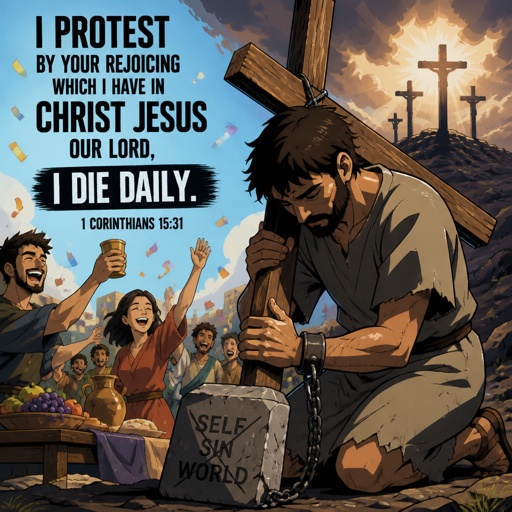
I protest by your rejoicing which I have in Christ Jesus our Lord, I die daily. 1 Corinthians 15:31

1 Corinthians 7:19 - "Circumcision is nothing, and uncircumcision is nothing, but the keeping of the commandments of God."

1 Corinthians 1:7 - "So that ye come behind in no gift; waiting for the coming of our Lord Jesus Christ:"

1 Corinthians 12:7 - "But the manifestation of the Spirit is given to every man to profit withal."

1 Corinthians 7:1 - "Now concerning the things whereof ye wrote unto me: It is good for a man not to touch a woman."

1 Corinthians 7:20 - "Let every man abide in the same calling wherein he was called."

1 Corinthians 7:9 - "But if they cannot contain, let them marry: for it is better to marry than to burn."

1 Corinthians 7:30 - "And they that weep, as though they wept not; and they that rejoice, as though they rejoiced not; and they that buy, as though they possessed not;"

1 Corinthians 7:24 - "Brethren, let every man, wherein he is called, therein abide with God."

1 Corinthians 7:8 - "I say therefore to the unmarried and widows, It is good for them if they abide even as I."