What does 1 Corinthians 9:10 mean?
“Or saith he it altogether for our sakes? For our sakes, no doubt, this is written: that he that ploweth should plow in hope; and that he that thresheth in hope should be partaker of his hope.” — 1 Corinthians 9:10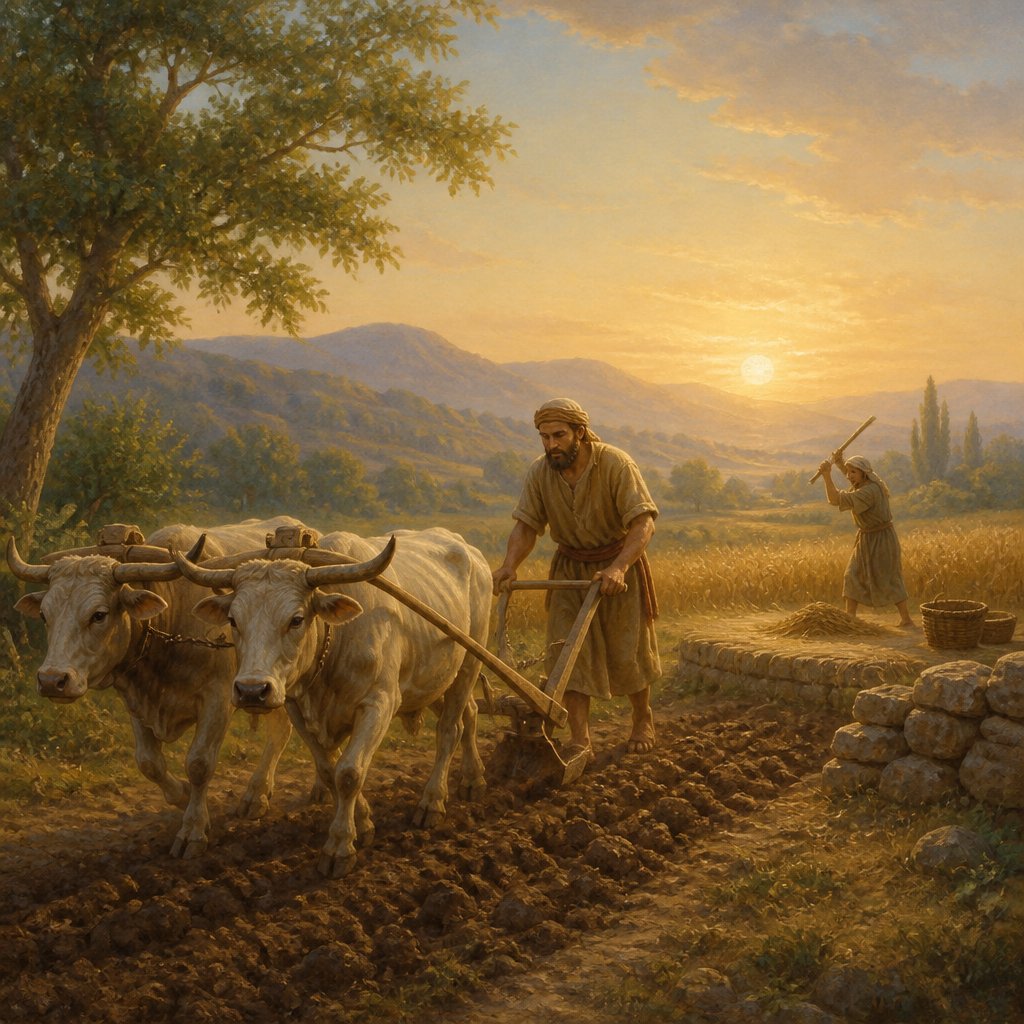
1 Corinthians 9:10 (KJV) - "Or saith he it altogether for our sakes? For our sakes, no doubt, this is written: that he that ploweth should plow in hope; and that he that thresheth in hope should be partaker of his hope."
In this verse, the apostle Paul is addressing the Corinthians regarding the rights and privileges of ministers of the gospel. He is using the analogy of agricultural work to illustrate the principle that those who labor should expect to receive a reward for their efforts.
The verse begins with the question, "Or saith he it altogether for our sakes?" This is a rhetorical question that Paul is using to draw attention to the fact that the Old Testament scriptures were written for the benefit of believers. The principles and lessons contained in the Old Testament are still relevant and applicable to the lives of Christians.
Paul then emphasizes, "For our sakes, no doubt, this is written." This is a reminder that the scriptures were intended to instruct and encourage believers, and that they should take heed of the lessons contained within them.
The analogy that Paul uses to illustrate his point is that of agricultural work. He says, "that he that ploweth should plow in hope; and that he that thresheth in hope should be partaker of his hope." This is a reference to the expectation of rewards for those who work diligently and faithfully. The plowman and the thresher both have the expectation of a fruitful harvest, and they should be able to enjoy the benefits of their labor.
The broader context of this verse is the discussion of the apostle Paul's rights as an apostle and minister of the gospel. Paul was defending his right to receive support and compensation for his work in spreading the gospel. He argues that just as a soldier, a farmer, and a shepherd are entitled to receive benefits from their labor, so too should those who labor in the ministry of the gospel.
The themes of this verse include the idea of hope, reward for labor, and the importance of the scriptures for instructing and encouraging believers. The concept of hope is central to the verse, as it is mentioned twice in reference to both the plowman and the thresher. This emphasizes the idea that those who labor should do so with the expectation of a positive outcome.
The symbolism of the plowman and the thresher can also be seen as representative of different phases of spiritual labor. The plowman represents the initial work of preparing the soil, which can be likened to the evangelistic efforts of spreading the gospel and planting the seeds of faith. The thresher represents the work of harvesting and separating the grain, which can be compared to the work of discipleship and nurturing the growth of believers.
In conclusion, 1 Corinthians 9:10 (KJV) contains a powerful message about the importance of laboring with hope and expectation of reward. It serves as a reminder that the scriptures are filled with principles and lessons that are relevant to the lives of believers. The analogy of the plowman and the thresher conveys the idea that those who labor in the ministry of the gospel should do so with the anticipation of a fruitful harvest. This verse encourages believers to work diligently and faithfully, knowing that their labor is not in vain and that they will partake in the hope of the gospel.
Get our apps


Artwork for 1 Corinthians 9:10
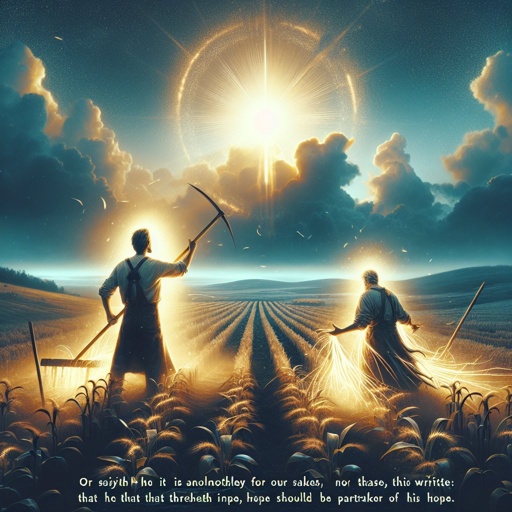
1 Corinthians 9:10 - "Or saith he it altogether for our sakes? For our sakes, no doubt, this is written: that he that ploweth should plow in hope; and that he that thresheth in hope should be partaker of his hope."
"Or saith he it altogether for our sakes? For our sakes, no doubt, this is written: that he that ploweth should plow in hope; and that he that thresheth in hope should be partaker of his hope." - 1 Corinthians 9:10

1 Corinthians 10:9 - "Neither let us tempt Christ, as some of them also tempted, and were destroyed of serpents."
2 Corinthians 12:9-10

2 Corinthians 10:9 - "That I may not seem as if I would terrify you by letters."

1 Corinthians 9:25-27

1 Corinthians 9:25-27

1 Corinthians 9:25-27

1 Corinthians 9:25-27

1 Corinthians 10:13

1 Corinthians 10:13

1 Corinthians 10:13

1 Corinthians 10:26 - "For the earth is the Lord's, and the fulness thereof."

1 Corinthians 10:10 - "Neither murmur ye, as some of them also murmured, and were destroyed of the destroyer."
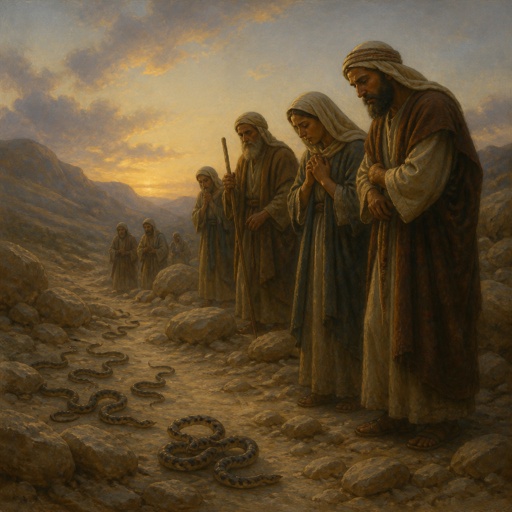
"Neither let us tempt Christ, as some of them also tempted, and were destroyed of serpents." - 1 Corinthians 10:9

Eternal Victor's Crown: 1 Corinthians 9:25

1 Corinthians 9:4 - "Have we not power to eat and to drink?"

1 Corinthians 13:9 - "For we know in part, and we prophesy in part."

1 Corinthians 10:3 - "And did all eat the same spiritual meat;"

1 Corinthians 11:9 - "Neither was the man created for the woman; but the woman for the man."

1 Corinthians 9:3 - "Mine answer to them that do examine me is this,"

2 Corinthians 9:1 - "For as touching the ministering to the saints, it is superfluous for me to write to you:"

1 Corinthians 5:9 - "I wrote unto you in an epistle not to company with fornicators:"

Psalm 10:9-10

1 Corinthians 10:14 - "Wherefore, my dearly beloved, flee from idolatry."

1 Corinthians 16:9 - "For a great door and effectual is opened unto me, and there are many adversaries."

1 Corinthians 10:2 - "And were all baptized unto Moses in the cloud and in the sea;"

1 Corinthians 10:25 - "Whatsoever is sold in the shambles, that eat, asking no question for conscience sake:"

1 Corinthians 9:9 - "For it is written in the law of Moses, Thou shalt not muzzle the mouth of the ox that treadeth out the corn. Doth God take care for oxen?"

1 Corinthians 9:6 - "Or I only and Barnabas, have not we power to forbear working?"