What does 1 Kings 10:11 mean?
“And the navy also of Hiram, that brought gold from Ophir, brought in from Ophir great plenty of almug trees, and precious stones.” — 1 Kings 10:11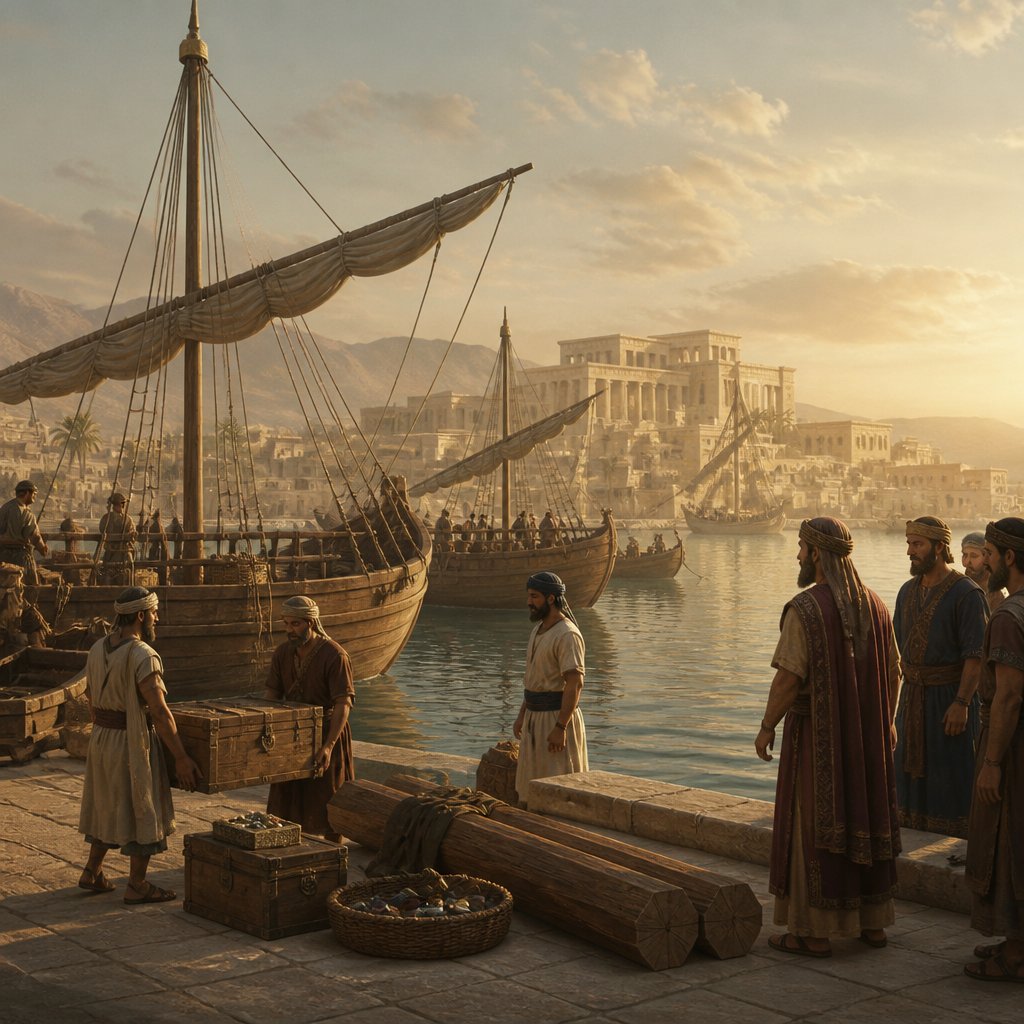
The verse 1 Kings 10:11 in the King James Version of the Bible reads, "And the navy also of Hiram, that brought gold from Ophir, brought in from Ophir great plenty of almug trees, and precious stones."
This verse is part of the story of the visit of the Queen of Sheba to King Solomon. The Queen of Sheba had heard of Solomon's wisdom and wealth, and she traveled to Jerusalem to test him with hard questions. She was overwhelmed by his wisdom, the splendor of his palace, and the organization of his kingdom. In response, she gave him a large quantity of gold, precious stones, and almug trees.
The context of this verse is rooted in the historical account of King Solomon’s reign, which is described in the books of 1 Kings and 2 Chronicles. Solomon is known for his wisdom, wealth, and the grandeur of his kingdom. In 1 Kings 10, the Queen of Sheba comes to visit Solomon, having heard of his great wisdom and success. She tests him with difficult questions, to which he impressively responds. The Queen of Sheba is also amazed by the wealth and prosperity of Solomon's kingdom, and she presents him with a lavish gift of gold, precious stones, and almug trees.
The themes in this verse include wealth, prosperity, and the recognition of Solomon's wisdom. The verse highlights the abundance of riches that were brought to Solomon as tribute from the Queen of Sheba and Hiram, the king of Tyre. It also emphasizes the exotic and valuable nature of the almug trees and precious stones that were brought from the distant land of Ophir. Furthermore, the verse underscores the international connections and trade relationships that Solomon had established, as evidenced by the arrival of the navy of Hiram, which brought the valuable resources to Solomon's kingdom.
The symbolism in this verse can be seen in the significance of the gifts brought to Solomon. Gold and precious stones have long been associated with wealth, power, and royalty. They symbolize the abundance and prosperity of Solomon's kingdom, as well as the honor and recognition of his wisdom and leadership. The almug trees, also known as algum trees, are described as being rare and valuable, and their inclusion in the Queen of Sheba's gift further emphasizes the opulence of Solomon's kingdom.
Moreover, the arrival of the navy of Hiram and the mention of Ophir hold deeper symbolism. They represent the far-reaching influence and connections that Solomon had established, as well as the legacy of his father, King David, in securing trade relationships with neighboring kingdoms and regions. The mention of Ophir, in particular, carries symbolic weight as it was regarded as a distant and exotic land known for its wealth and valuable resources.
In conclusion, 1 Kings 10:11 captures a pivotal moment in the reign of King Solomon, portraying the wealth, opulence, and international connections of his kingdom. The verse carries themes of prosperity, recognition, and the symbolism of valuable gifts. It also serves to underscore the broader historical and political context in which Solomon's reign took place, highlighting the trade relationships and connections that contributed to the magnificence of his kingdom. As such, this verse serves as a testament to the grandeur of Solomon's reign and his enduring legacy in biblical history.
Get our apps


Artwork for 1 Kings 10:11

1 Kings 10:11 - "And the navy also of Hiram, that brought gold from Ophir, brought in from Ophir great plenty of almug trees, and precious stones."
"And the navy also of Hiram, that brought gold from Ophir, brought in from Ophir great plenty of almug trees, and precious stones." - 1 Kings 10:11

1 Kings 8:10-11 – "When the priests withdrew from the Holy Place, the cloud filled the temple of the Lord."
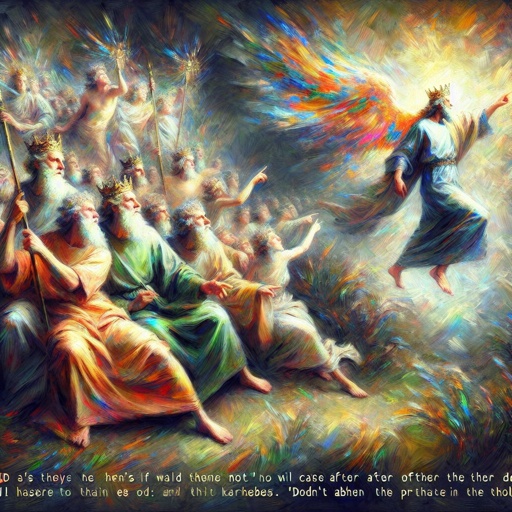
1 Kings 11:10 - "And had commanded him concerning this thing, that he should not go after other gods: but he kept not that which the LORD commanded."

1 Kings 10:1

1 Kings 11:11

1 Kings 11:11

1 Kings 11:11

1 Kings 11:11

"And it came to pass, when the priests were come out of the holy place, that the cloud filled the house of the LORD, So that the priests could not stand to minister because of the cloud: for the glory of the LORD had filled the house of the LORD." - 1 Kings 8:10-11

1 Kings 11:11

1 Kings 10:1

1 kings 10:1

1 kings 11:11-13

1 Kings 11:11-13

1 Kings 11:11-13

1 Kings 11:1-5

1 Kings 10:23 - "So king Solomon exceeded all the kings of the earth for riches and for wisdom."

2 Kings 11:10 - "And to the captains over hundreds did the priest give king David's spears and shields, that were in the temple of the LORD."

1 Kings 12:11

1 Kings 11:13

1 Kings 12:11

1 Kings 11:5

1 Kings 11:13

1 Kings 12:11
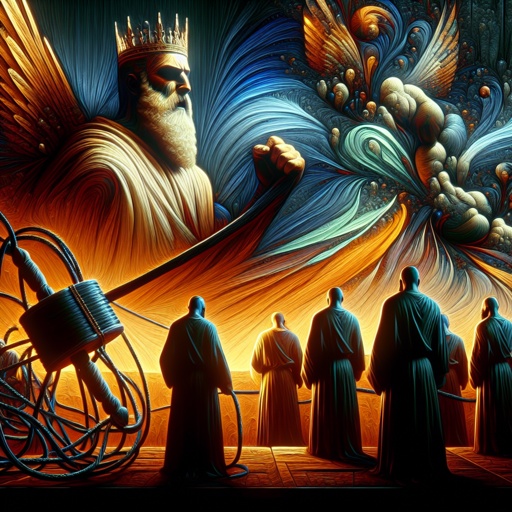
1 Kings 12:11

1 Kings 12:11

1 Kings 8:10

1 Kings 12:10

1 Kings 12:10