What does 1 Kings 11:33 mean?
“Because that they have forsaken me, and have worshipped Ashtoreth the goddess of the Zidonians, Chemosh the god of the Moabites, and Milcom the god of the children of Ammon, and have not walked in my ways, to do that which is right in mine eyes, and to keep my statutes and my judgments, as did David his father.” — 1 Kings 11:33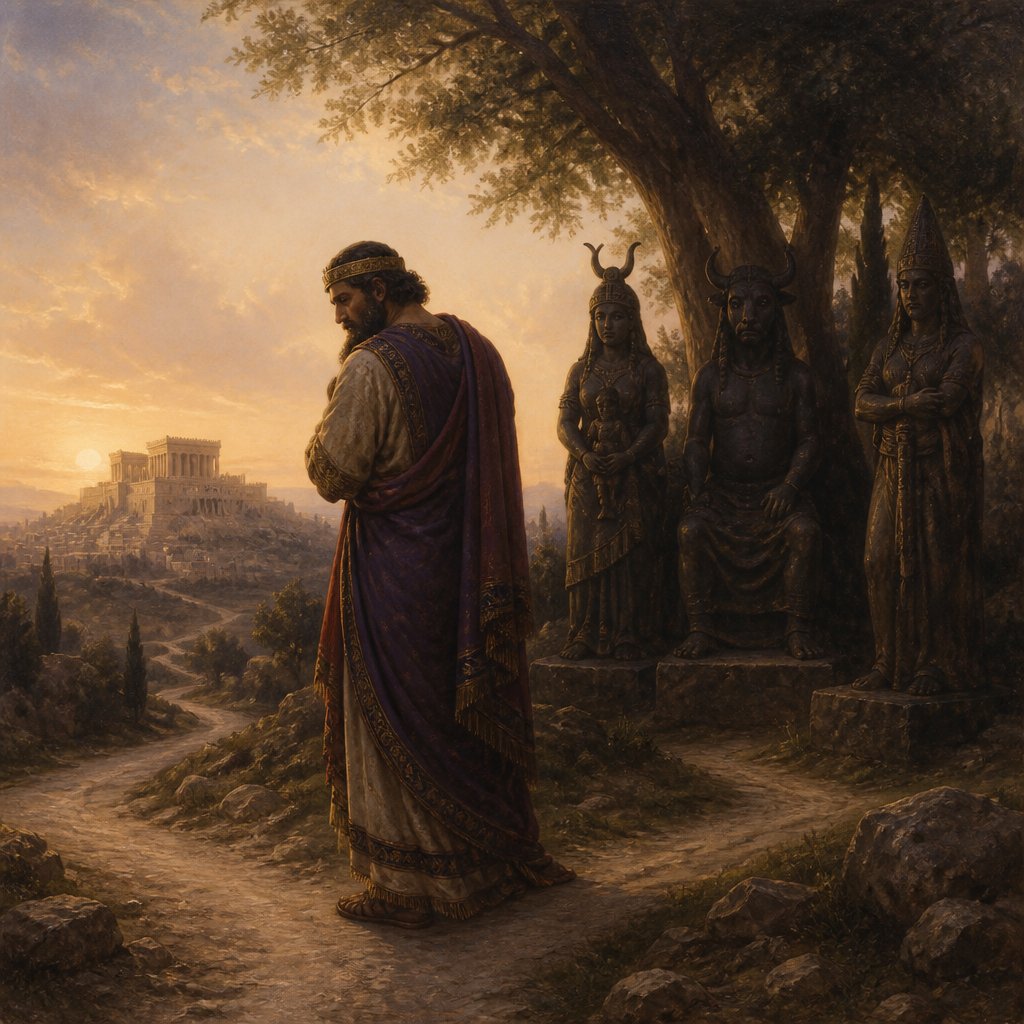
1 Kings 11:33 (KJV) states, "Because that they have forsaken me, and have worshipped Ashtoreth the goddess of the Zidonians, Chemosh the god of the Moabites, and Milcom the god of the children of Ammon, and have not walked in my ways, to do that which is right in mine eyes, and to keep my statutes and my judgments, as did David his father."
This verse comes from the story of King Solomon in the Old Testament. Solomon, the son of David, ruled over Israel during a time of great prosperity and peace. However, despite his wisdom and success, he ultimately turned away from following God wholeheartedly. This verse serves as a rebuke from God to Solomon for his disobedience and idolatry.
The themes present in this verse are obedience, worship, and consequences. It speaks to the themes of faithfulness and the consequences of turning away from God. The context of this verse is crucial to understanding its full meaning. King Solomon had been commanded by God to follow in the ways of his father David and to not turn to other gods. However, he disobeyed this command and allowed the influence of his foreign wives to lead him into idolatry. As a result, God warned him that his kingdom would be torn away from him as punishment for his disobedience.
There is rich symbolism in this verse. The fact that Solomon had turned away to worship Ashtoreth, Chemosh, and Milcom represents his abandonment of the one true God in favor of false idols. These gods were widely worshipped in the surrounding pagan cultures, and Solomon's actions reveal a shift in his allegiance away from Yahweh. The symbolism of Ashtoreth, the goddess of fertility and war, Chemosh, the god of the Moabites, and Milcom, the god of the Ammonites, represents the allure of worldly desires and the temptation to follow the practices of the surrounding nations.
The significance of this verse extends beyond the historical narrative of Solomon. It serves as a warning to all believers about the dangers of idolatry and the consequences of forsaking God. The verse highlights the importance of wholehearted obedience to God and the severity of straying from His ways. It also underscores the principle that there are consequences for disobedience and turning away from the truth.
In our modern context, this verse serves as a reminder to remain steadfast in our faith and to avoid the temptations of the world. It challenges us to examine our own hearts and allegiances, ensuring that we are not allowing anything to take the place of God in our lives. Just as Solomon faced consequences for his actions, we are also called to heed God's commands and walk in obedience and faithfulness.
In conclusion, 1 Kings 11:33 from the King James Version of the Bible is a powerful reminder of the importance of obedience and the consequences of turning away from God. It serves as a cautionary tale of the dangers of idolatry and the lure of worldly desires. The verse emphasizes the need for wholehearted devotion to God and the severity of straying from His ways. It stands as a timeless warning to believers of the dangers of forsaking God and serves as a call to remain steadfast in faith and obedience.
Get our apps


Artwork for 1 Kings 11:33

1 Kings 11:33 - "Because that they have forsaken me, and have worshipped Ashtoreth the goddess of the Zidonians, Chemosh the god of the Moabites, and Milcom the god of the children of Ammon, and have not walked in my ways, to do that which is right in mine eyes, and to keep my statutes and my judgments, as did David his father."
"Because that they have forsaken me, and have worshipped Ashtoreth the goddess of the Zidonians, Chemosh the god of the Moabites, and Milcom the god of the children of Ammon, and have not walked in my ways, to do that which is right in mine eyes, and to keep my statutes and my judgments, as did David his father." - 1 Kings 11:33

Romana 11:33-36

1 Chronicles 11:33 - "Azmaveth the Baharumite, Eliahba the Shaalbonite,"

1 Kings 11:11

1 Kings 11:11

1 Kings 11:11

1 Kings 11:11

1 Kings 11:13

1 Kings 11:5

1 Kings 11:13

1 Kings 11:11

1 kings 11:11-13

1 Kings 11:11-13

1 Kings 11:29-32

1 Kings 16:33 - "And Ahab made a grove; and Ahab did more to provoke the LORD God of Israel to anger than all the kings of Israel that were before him."

1 Kings 11:11-13

1 Kings 22:33 - "And it came to pass, when the captains of the chariots perceived that it was not the king of Israel, that they turned back from pursuing him."

1 Kings 11:1-5

1 Kings 6:33 - "So also made he for the door of the temple posts of olive tree, a fourth part of the wall."

1 Kings 11:30-31

1 Kings 11:30-31

1 Kings 11:30-31

1 Corinthians 11:33 - "Wherefore, my brethren, when ye come together to eat, tarry one for another."

"Azmaveth the Baharumite, Eliahba the Shaalbonite," - 1 Chronicles 11:33

1 Kings 7:33 - "And the work of the wheels was like the work of a chariot wheel: their axletrees, and their naves, and their felloes, and their spokes, were all molten."

1 Kings 12:11

1 Kings 12:11

1 Kings 12:11
1 Kings 12:11