What does 1 Kings 12:16 mean?
"So when all Israel saw that the king hearkened not unto them, the people answered the king, saying, What portion have we in David? neither have we inheritance in the son of Jesse: to your tents, O Israel: now see to thine own house, David. So Israel departed unto their tents." - 1 Kings 12:16
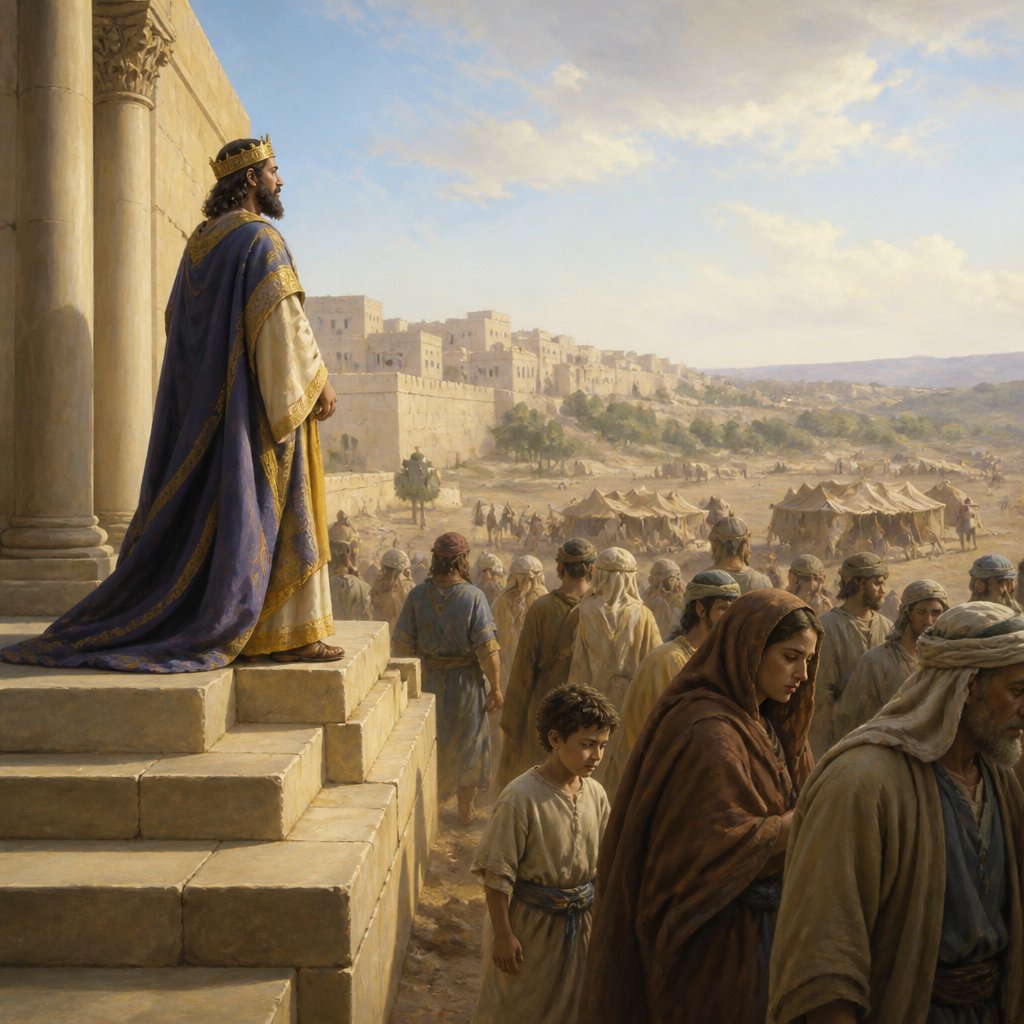
1 Kings 12:16 (KJV) says, "So when all Israel saw that the king hearkened not unto them, the people answered the king, saying, What portion have we in David? neither have we inheritance in the son of Jesse: to your tents, O Israel: now see to thine own house, David. So Israel departed unto their tents."
This verse comes from the Old Testament, specifically from the book of 1 Kings, which details the history of the divided kingdom of Israel after the death of King Solomon. In this particular verse, the Israelites are responding to Rehoboam, Solomon's son, who has just been crowned as the new king of Israel. The context of this verse is crucial to understanding its significance.
The themes in this verse are primarily about leadership, rebellion, and the consequences of pride and arrogance. After Solomon's death, the people of Israel come to Rehoboam to ask for relief from the heavy burdens and labor that Solomon had imposed on them. Rehoboam seeks counsel from the older, more experienced advisors who recommend that he lighten the load on the people and win their favor. However, Rehoboam also consults with his younger, less-experienced friends who advise him to impose even harsher labor on the people in order to assert his authority.
Rehoboam chooses to follow the advice of his younger friends, displaying his arrogance, pride, and a lack of concern for the welfare of his people. When the Israelites realize that Rehoboam will not listen to their pleas for relief, they respond with defiance and rebellion. The verse captures the moment when the people acknowledge that they have no loyalty to Rehoboam, as he is not displaying the wisdom and fairness of his grandfather, David, and his father, Solomon.
The symbolism in this verse is powerful and multi-layered. The mention of David and Jesse serves as a symbolic contrast to Rehoboam's rule. David, known for his righteousness and humility, is held in high regard by the people of Israel. By invoking David's name, the people are expressing their longing for a leader who embodies these qualities. Jesse, David's father, represents a lineage of leadership that is rooted in God's favor and the people's trust. In contrast, Rehoboam symbolizes a departure from this tradition, as he chooses to govern with arrogance and cruelty.
The act of the people returning to their tents symbolizes their rejection of Rehoboam's authority and their commitment to their own well-being and autonomy. It also signifies a return to their tribal identities and a retreat from the centralized authority of the monarchy.
The commentary on this verse emphasizes the importance of effective and just leadership. Rehoboam's failure to heed the needs of his people and his refusal to humble himself leads to the division of the kingdom of Israel. This sets the stage for the subsequent conflict and struggles that will plague the nation. The verse serves as a cautionary tale about the consequences of pride, poor decision-making, and a lack of concern for the welfare of others.
In conclusion, 1 Kings 12:16 (KJV) is a pivotal verse in the biblical narrative, capturing a significant moment of rebellion and division in the history of Israel. It serves as a timeless lesson on the perils of pride and the necessity of wise, compassionate leadership. The themes, context, and symbolism in this verse provide rich insights into the complexities of human governance and the enduring relevance of biblical teachings.
Have questions about 1 Kings 12:16?
Dive deeper into this scripture with Bible Chat — an AI-powered tool for exploring God's Word through conversation. Ask questions, get context, and grow in your understanding of the Bible.
Get Our Apps


1 Kings 12:16 Artwork

1 Kings 12:16 - "¶ So when all Israel saw that the king hearkened not unto them, the people answered the king, saying, What portion have we in David? neither have we inheritance in the son of Jesse: to your tents, O Israel: now see to thine own house, David. So Israel departed unto their tents."
"¶ So when all Israel saw that the king hearkened not unto them, the people answered the king, saying, What portion have we in David? neither have we inheritance in the son of Jesse: to your tents, O Israel: now see to thine own house, David. So Israel departed unto their tents." - 1 Kings 12:16

1 Kings 16:12 - "Thus did Zimri destroy all the house of Baasha, according to the word of the LORD, which he spake against Baasha by Jehu the prophet,"

Proverbs 16:12 - "It is an abomination to kings to commit wickedness: for the throne is established by righteousness."

1 Kings 12:11

1 Kings 12:11

1 Kings 12:10

1 Kings 12:10

2 Kings 12:16 - "The trespass money and sin money was not brought into the house of the LORD: it was the priests'."

1 Kings 12:10

1 Kings 12:11

1 Kings 12:10
1 Kings 12:11

1 Kings 12:14

1 Kings 12:14

1 Kings 12:11

2 Kings 16:12 - "And when the king was come from Damascus, the king saw the altar: and the king approached to the altar, and offered thereon."

1 kings 3:12

Joshua 1:12-16

Joshua 1:12-16

Revelation 1:12-16

"It is an abomination to kings to commit wickedness: for the throne is established by righteousness." - Proverbs 16:12

1 Kings 20:16 - "And they went out at noon. But Ben-hadad was drinking himself drunk in the pavilions, he and the kings, the thirty and two kings that helped him."

Revelation 1:12-16

1 Kings 16:14 - "Now the rest of the acts of Elah, and all that he did, are they not written in the book of the chronicles of the kings of Israel?"

1 Kings 1:16 - "And Bath-sheba bowed, and did obeisance unto the king. And the king said, What wouldest thou?"

1 Kings 16:1 - "Then the word of the LORD came to Jehu the son of Hanani against Baasha, saying,"

1 Kings 4:16 - "Baanah the son of Hushai was in Asher and in Aloth:"

1 Kings 16:5 - "Now the rest of the acts of Baasha, and what he did, and his might, are they not written in the book of the chronicles of the kings of Israel?"

1 Kings 16:20 - "Now the rest of the acts of Zimri, and his treason that he wrought, are they not written in the book of the chronicles of the kings of Israel?"