What does 1 Kings 14:17 mean?
"¶ And Jeroboam's wife arose, and departed, and came to Tirzah: and when she came to the threshold of the door, the child died;" - 1 Kings 14:17
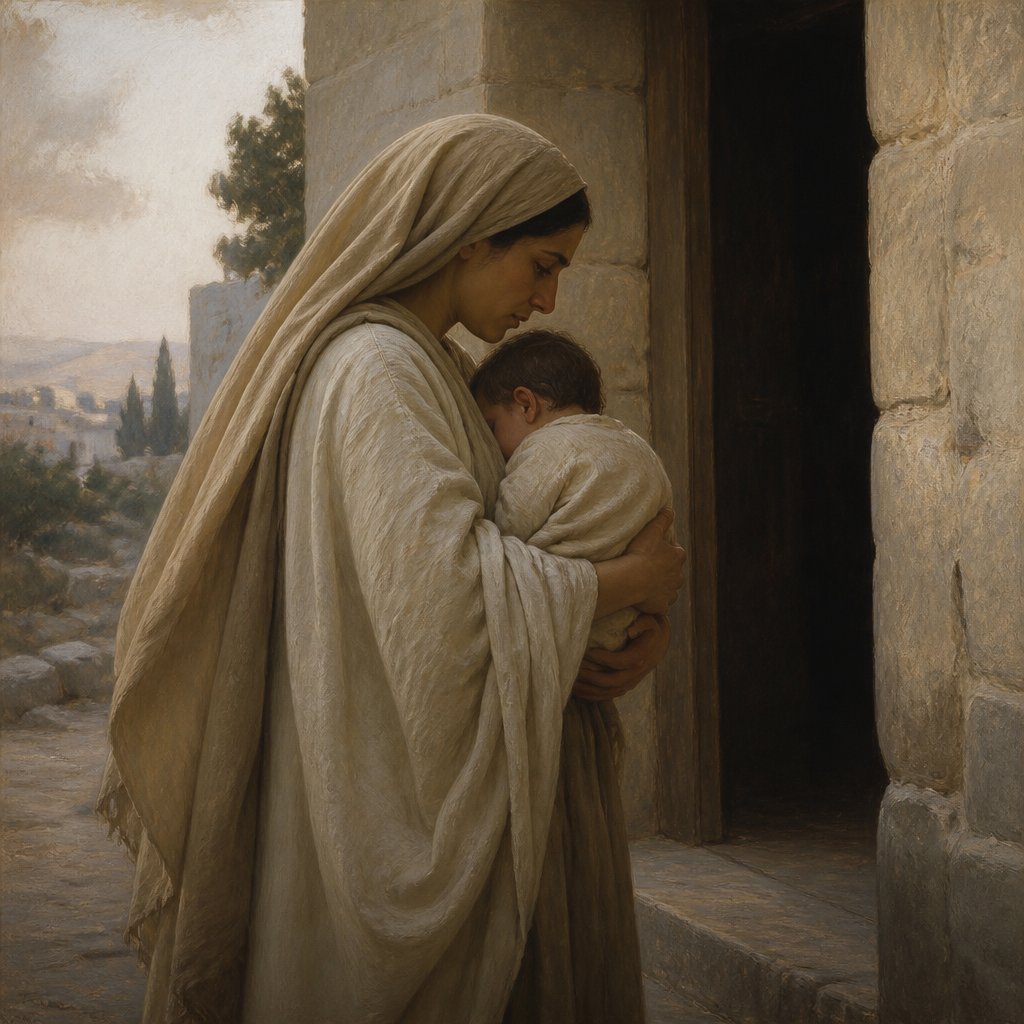
The Bible verse 1 Kings 14:17, in the King James Version (KJV), states: "And Jeroboam's wife arose, and departed, and came to Tirzah: and when she came to the threshold of the door, the child died."
This verse is part of the story of Jeroboam, the first king of the northern kingdom of Israel after the nation split in two following the reign of Solomon. Jeroboam was the son of Nebat, and he led the 10 northern tribes in rebellion against Solomon's son Rehoboam. This verse specifically focuses on Jeroboam's wife, who is not named in the text, and the death of their child.
The context of this verse is important for understanding its meaning and significance. In the preceding verses, we learn that Jeroboam's son Abijah falls ill, and Jeroboam sends his wife in disguise to seek guidance from the prophet Ahijah regarding the child's fate. However, Ahijah prophesies that because of Jeroboam's sins and idolatry, the child will die upon the return of Jeroboam's wife to their home in Tirzah. This verse then serves as the fulfillment of this prophecy, as the child dies as soon as his mother crosses the threshold.
The themes in this verse are twofold. First, it highlights the consequences of disobedience and sin. Jeroboam's idolatry and failure to follow God's commands ultimately result in the death of his child. This serves as a sobering reminder that our actions have consequences, not only for ourselves but for those we love. Second, it speaks to the sovereignty of God and the inevitability of His judgment. Despite Jeroboam's attempts to evade the prophesied fate of his child, he is ultimately powerless to change the outcome, as the fulfillment of Ahijah's prophecy comes to pass.
Symbolism can also be found in this verse. The threshold of the door is significant in its representation of the boundary between life and death. When Jeroboam's wife crosses this threshold, it serves as a symbolic crossing into the realm of death, as her son dies immediately upon her arrival. This can be seen as a metaphor for the consequences of sin – once the threshold is crossed, there is no turning back, and the repercussions of our actions become unavoidable.
Furthermore, the death of Jeroboam's child can also be seen as a symbol of the broader consequences of his disobedience. Not only does the child suffer for his father's sins, but the nation of Israel also faces the repercussions of Jeroboam's idolatry and rebellion against God.
In conclusion, 1 Kings 14:17 in the King James Version offers a powerful and poignant account of the consequences of sin and the sovereignty of God's judgment. It serves as a sobering reminder of the impact of our actions and the inevitability of facing the consequences of disobedience. The verse also contains rich themes and symbolism that offer deeper insights into the narrative and its broader implications. Overall, it serves as a profound reflection on the nature of divine judgment and the consequences of straying from God's commands.
Have questions about 1 Kings 14:17?
Dive deeper into this scripture with Bible Chat — an AI-powered tool for exploring God's Word through conversation. Ask questions, get context, and grow in your understanding of the Bible.
Get Our Apps


1 Kings 14:17 Artwork

1 Kings 14:17 - "¶ And Jeroboam's wife arose, and departed, and came to Tirzah: and when she came to the threshold of the door, the child died;"
"¶ And Jeroboam's wife arose, and departed, and came to Tirzah: and when she came to the threshold of the door, the child died;" - 1 Kings 14:17

1 Kings 17:14 - "For thus saith the LORD God of Israel, The barrel of meal shall not waste, neither shall the cruse of oil fail, until the day that the LORD sendeth rain upon the earth."

1 Kings 14:1-20

1 Kings 14:26
1 Kings 14:26

2 Kings 17:14 - "Notwithstanding they would not hear, but hardened their necks, like to the neck of their fathers, that did not believe in the LORD their God."

Acts 14:17

2 Kings 14:17 - "¶ And Amaziah the son of Joash king of Judah lived after the death of Jehoash son of Jehoahaz king of Israel fifteen years."

1 Kings 4:17 - "Jehoshaphat the son of Paruah, in Issachar:"

Revelation 17:14 - "These shall make war with the Lamb, and the Lamb shall overcome them: for he is Lord of lords, and King of kings: and they that are with him are called, and chosen, and faithful."

1 Kings 12:14

1 Kings 12:14

1 Kings 14:1 - "At that time Abijah the son of Jeroboam fell sick."

Genesis 14:17 - "¶ And the king of Sodom went out to meet him after his return from the slaughter of Chedorlaomer, and of the kings that were with him, at the valley of Shaveh, which is the king's dale."

1 Kings 21:17 - "¶ And the word of the LORD came to Elijah the Tishbite, saying,"

1 Kings 6:17 - "And the house, that is, the temple before it, was forty cubits long."

1 Kings 17:2 - "And the word of the LORD came unto him, saying,"

1 Kings 17:8 - "¶ And the word of the LORD came unto him, saying,"

1 Kings 9:17 - "And Solomon built Gezer, and Beth-horon the nether,"

1 Kings 9:14 - "And Hiram sent to the king sixscore talents of gold."

1 Kings 14:29 - "¶ Now the rest of the acts of Rehoboam, and all that he did, are they not written in the book of the chronicles of the kings of Judah?"

1 Kings 16:14 - "Now the rest of the acts of Elah, and all that he did, are they not written in the book of the chronicles of the kings of Israel?"

Depict the events of Acts 19:14-17

1 Kings 6:14 - "So Solomon built the house, and finished it."

1 Kings 4:14 - "Ahinadab the son of Iddo had Mahanaim:"

1 Samuel 17:14 - "And David was the youngest: and the three eldest followed Saul."

1 Corinthians 14:17 - "For thou verily givest thanks well, but the other is not edified."

1 Kings 21:14 - "Then they sent to Jezebel, saying, Naboth is stoned, and is dead."

1 Kings 14:30 - "And there was war between Rehoboam and Jeroboam all their days."