What does 1 Kings 15:29 mean?
"And it came to pass, when he reigned, that he smote all the house of Jeroboam; he left not to Jeroboam any that breathed, until he had destroyed him, according unto the saying of the LORD, which he spake by his servant Ahijah the Shilonite:" - 1 Kings 15:29
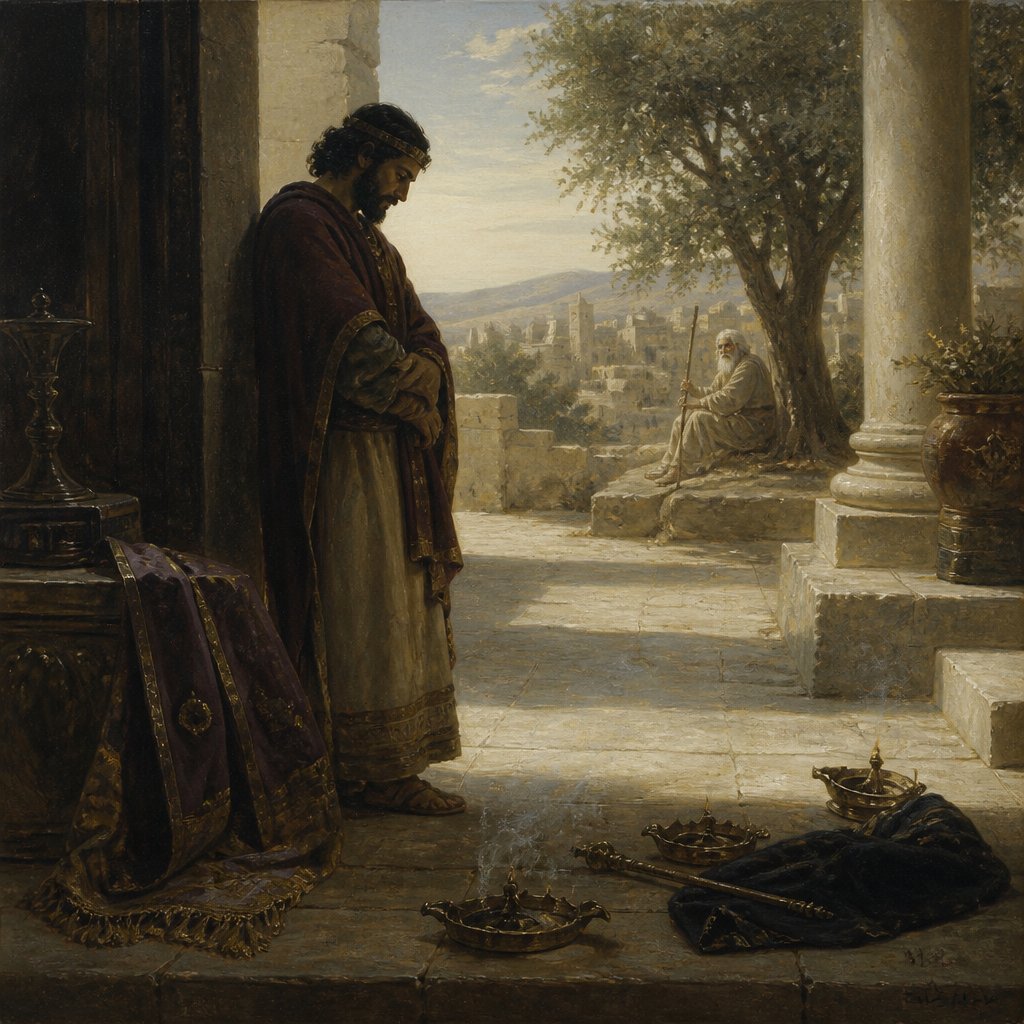
The Bible verse 1 Kings 15:29 from the King James Version reads: "And it came to pass, when he reigned, that he smote all the house of Jeroboam; he left not to Jeroboam any that breathed, until he had destroyed him, according unto the saying of the Lord, which he spake by his servant Ahijah the Shilonite."
This verse comes within the context of the historical narrative of the kings of Israel and Judah. Specifically, it refers to the reign of King Nadab of Israel. Nadab was the son of Jeroboam, who had been the first king of the northern kingdom of Israel after the kingdom split following the reign of Solomon. The verse speaks of Nadab's reign and how he fulfilled the prophecy of the destruction of Jeroboam's house, as prophesied by the servant of the Lord, Ahijah.
One of the predominant themes in this verse is the concept of divine judgment and the fulfillment of prophecy. The verse paints a picture of a king who is carrying out the will of the Lord by bringing about the destruction of Jeroboam's house. It serves as a reminder that, according to the biblical narrative, the actions of the kings and the people are subject to the divine will and judgment of God. This theme emphasizes the sovereignty of God in the affairs of humanity as well as the consequences of disobedience and unfaithfulness.
Another important theme is the concept of legacy and the consequences of one's actions. Jeroboam, the first king of Israel, had been unfaithful to God and led the people into idolatry. As a result, his house was doomed to destruction, as prophesied by Ahijah. The actions of Jeroboam had lasting consequences for his descendants, and the verse serves as a reminder of the far-reaching impact of one's choices and behavior.
The verse also highlights the role of prophets in conveying the word of the Lord. Ahijah the Shilonite served as a mouthpiece for God, delivering the prophecy of the destruction of Jeroboam's house. This emphasizes the importance of heeding the messages of the prophets and the consequences of ignoring or disobeying the word of the Lord as delivered through them.
Symbolism in this verse is primarily represented by the figure of Jeroboam and his house, which serves as a cautionary tale of the consequences of unfaithfulness and disobedience. His house represents the legacy of his unrighteous actions, and its destruction symbolizes the judgment of God on unfaithfulness. The verse also symbolizes the fulfillment of prophecy and the role of the king in executing the divine will.
In conclusion, 1 Kings 15:29 from the King James Version offers a powerful portrayal of divine judgment, the consequences of unfaithfulness, and the fulfillment of prophecy. It serves as a reminder of the sovereignty of God and the importance of heeding the word of the Lord as conveyed through His prophets. The verse underscores the long-term impact of one's actions and the symbolic representation of the destruction of Jeroboam's house as a cautionary tale.
Have questions about 1 Kings 15:29?
Dive deeper into this scripture with Bible Chat — an AI-powered tool for exploring God's Word through conversation. Ask questions, get context, and grow in your understanding of the Bible.
Get Our Apps


1 Kings 15:29 Artwork
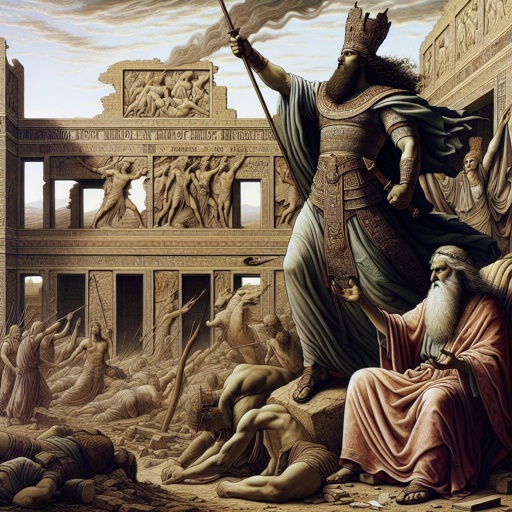
1 Kings 15:29 - "And it came to pass, when he reigned, that he smote all the house of Jeroboam; he left not to Jeroboam any that breathed, until he had destroyed him, according unto the saying of the LORD, which he spake by his servant Ahijah the Shilonite:"
"And it came to pass, when he reigned, that he smote all the house of Jeroboam; he left not to Jeroboam any that breathed, until he had destroyed him, according unto the saying of the LORD, which he spake by his servant Ahijah the Shilonite:" - 1 Kings 15:29

2 Kings 15:29 show the army and attack

1 Kings 11:29-32

1 Kings 14:29 - "¶ Now the rest of the acts of Rehoboam, and all that he did, are they not written in the book of the chronicles of the kings of Judah?"

1 Kings 1:29 - "And the king sware, and said, As the LORD liveth, that hath redeemed my soul out of all distress,"

1 Kings 22:29 - "So the king of Israel and Jehoshaphat the king of Judah went up to Ramoth-gilead."

1 Kings 12:29 - "And he set the one in Beth-el, and the other put he in Dan."

1 kings 3:15

1 kings 3:15

1 Kings 10:29 - "And a chariot came up and went out of Egypt for six hundred shekels of silver, and an horse for an hundred and fifty: and so for all the kings of the Hittites, and for the kings of Syria, did they bring them out by their means."

1 Samuel 15:29 - "And also the Strength of Israel will not lie nor repent: for he is not a man, that he should repent."

1 Kings 15:31 - "¶ Now the rest of the acts of Nadab, and all that he did, are they not written in the book of the chronicles of the kings of Israel?"

1 Kings 10:15 - "Beside that he had of the merchantmen, and of the traffick of the spice merchants, and of all the kings of Arabia, and of the governors of the country."

2 Kings 15:29 - "In the days of Pekah king of Israel came Tiglath-pileser king of Assyria, and took Ijon, and Abel-beth-maachah, and Janoah, and Kedesh, and Hazor, and Gilead, and Galilee, all the land of Naphtali, and carried them captive to Assyria."

1 Kings 15:1 - "Now in the eighteenth year of king Jeroboam the son of Nebat reigned Abijam over Judah."

1 Kings 4:29 - "¶ And God gave Solomon wisdom and understanding exceeding much, and largeness of heart, even as the sand that is on the sea shore."

1 Corinthians 15:29 - "Else what shall they do which are baptized for the dead, if the dead rise not at all? why are they then baptized for the dead?"

1 Timothy 6:15-16 – "God, the blessed and only Ruler, the King of kings and Lord of lords."

1 Kings 15:32 - "And there was war between Asa and Baasha king of Israel all their days."

1 Kings 15:16 - "¶ And there was war between Asa and Baasha king of Israel all their days."

1 Kings 11:1-5

1 Timothy 6:15-16 – "God, the blessed and only Ruler, the King of kings and Lord of lords."

1 Timothy 6:15-16 – "God, the blessed and only Ruler, the King of kings and Lord of lords."
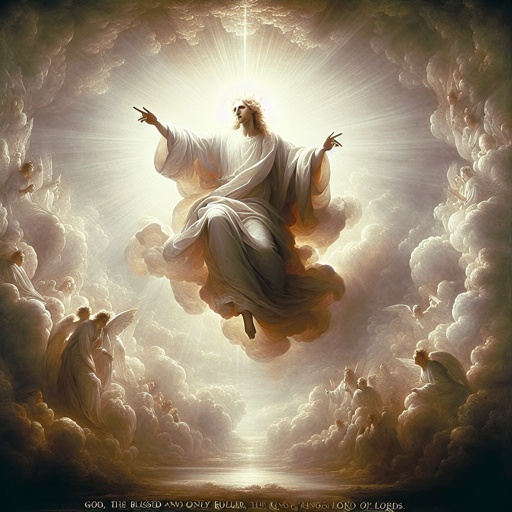
1 Timothy 6:15-16 – "God, the blessed and only Ruler, the King of kings and Lord of lords."

1 Kings 1:15 - "¶ And Bath-sheba went in unto the king into the chamber: and the king was very old; and Abishag the Shunammite ministered unto the king."

1 Kings 15:9 - "¶ And in the twentieth year of Jeroboam king of Israel reigned Asa over Judah."

1 Timothy 6:15-16 – "God, the blessed and only Ruler, the King of kings and Lord of lords."

1 Kings 15:7 - "Now the rest of the acts of Abijam, and all that he did, are they not written in the book of the chronicles of the kings of Judah? And there was war between Abijam and Jeroboam."

1 Chronicles 29:15 - "For we are strangers before thee, and sojourners, as were all our fathers: our days on the earth are as a shadow, and there is none abiding."