What does 1 Kings 15:8 mean?
“And Abijam slept with his fathers; and they buried him in the city of David: and Asa his son reigned in his stead.” — 1 Kings 15:8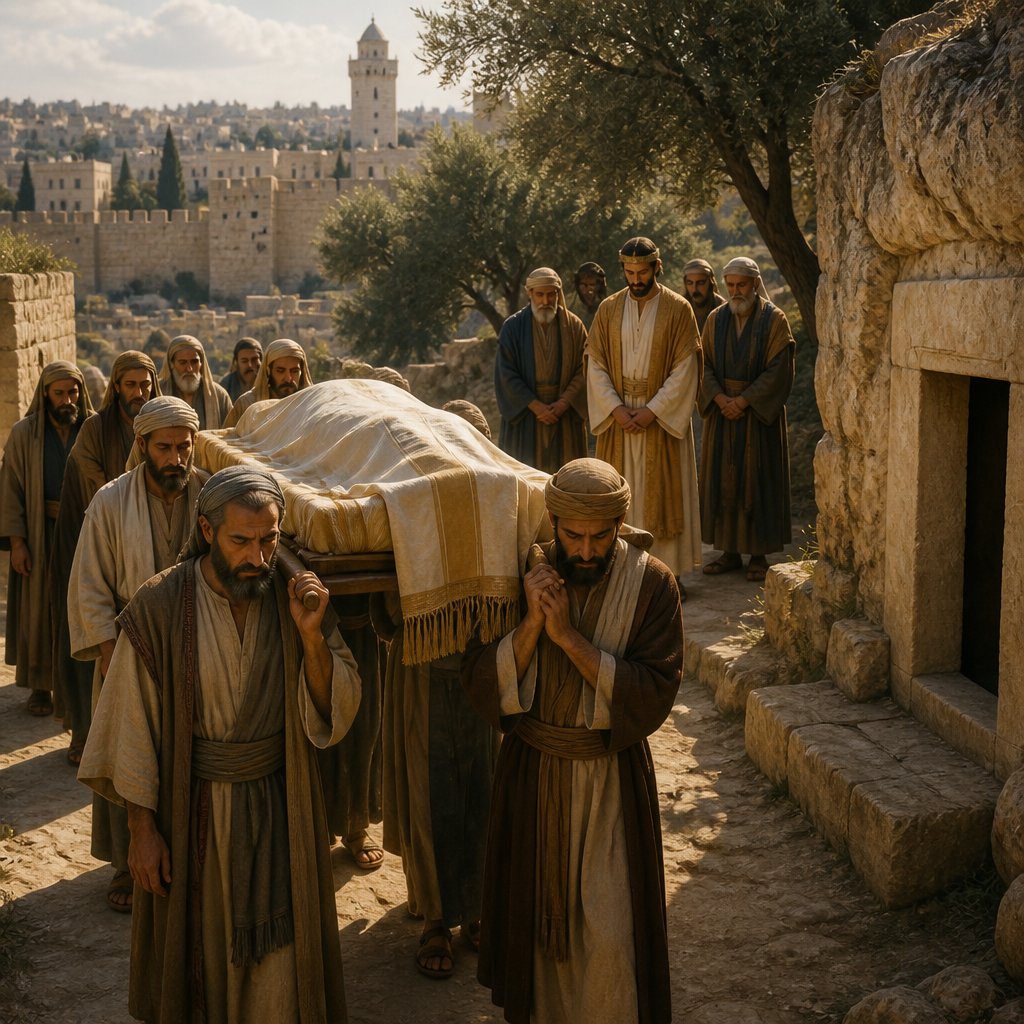
1 Kings 15:8 (KJV) reads, "And Abijam slept with his fathers; and they buried him in the city of David: and Asa his son reigned in his stead."
This verse is part of a larger narrative found in the Old Testament books of 1 Kings and 2 Chronicles, which detail the history of the Israelite monarchy. In this specific verse, we learn about the death of King Abijam and the succession of his son Asa to the throne. However, in order to fully understand the significance of this verse, it is important to consider the broader historical and cultural context in which it was written.
The reign of King Abijam is described in 1 Kings 15:1-8 and 2 Chronicles 13. He was the son and successor of King Rehoboam and the grandson of King Solomon. Abijam was the third king of the southern kingdom of Judah, and his reign is characterized by its unfaithfulness to God. Despite a brief period of military success against the northern kingdom of Israel, Abijam is ultimately remembered as a king who did not fully follow the ways of the Lord.
The phrase "slept with his fathers" in 1 Kings 15:8 is a common biblical euphemism for death, indicating that Abijam passed away and was buried in the city of David. The city of David, also known as Jerusalem, held significant religious and political importance for the Israelites, as it was the site of the Temple and the capital of the united kingdom under David and Solomon. Therefore, Abijam's burial in the city of David serves as a reminder of his royal lineage and the ongoing continuity of the monarchy.
Following Abijam's death, his son Asa ascended to the throne of Judah. Asa's reign, which is described in 1 Kings 15:9-24 and 2 Chronicles 14-16, marks a significant turning point for the southern kingdom. Unlike his father, Asa is portrayed as a king who "did that which was right in the eyes of the Lord" (1 Kings 15:11). He implemented religious reforms, removed idols from the land, and sought to renew the covenant between the people of Judah and their God.
The transition from Abijam to Asa reflects the recurring theme of succession within the Israelite monarchy. Throughout the biblical narrative, the transfer of power from one king to the next often carries spiritual, political, and social implications. In the case of Abijam and Asa, the contrast between their respective reigns highlights the tension between faithfulness and apostasy, obedience and disobedience.
Symbolically, the passing of the crown from Abijam to Asa signifies the potential for renewal and restoration within the kingdom of Judah. Asa's commitment to righteousness and his efforts to lead the people back to God demonstrate the possibility of positive change in the midst of a history marked by sin and division.
Overall, 1 Kings 15:8 captures a pivotal moment in the narrative of the Israelite monarchy. It conveys the transition from a king who failed to uphold the covenant of the Lord to a king who sought to return the nation to a position of fidelity and obedience. This verse serves as a reminder of the complex interplay between power, faith, and legacy in the unfolding story of God's chosen people.
Get our apps


Artwork for 1 Kings 15:8

1 Kings 15:8 - "And Abijam slept with his fathers; and they buried him in the city of David: and Asa his son reigned in his stead."
"And Abijam slept with his fathers; and they buried him in the city of David: and Asa his son reigned in his stead." - 1 Kings 15:8

1 Kings 8:15 - "And he said, Blessed be the LORD God of Israel, which spake with his mouth unto David my father, and hath with his hand fulfilled it, saying,"

Proverbs 8:15 - "By me kings reign, and princes decree justice."

1 Kings 8:6-8

1 kings 3:15

1 kings 3:15

"By me kings reign, and princes decree justice." - Proverbs 8:15

1 Kings 8:10

1 kings 8:7

1 Kings 8:22

1 Kings 8:21

1 Kings 8:10
1 kings 7:8

1 Kings 8:10

1 Kings 8:21

1 Kings 8:10

1 Kings 8:10

1 Kings 8:21

1 kings 8:7

1 Kings 8:7

1 Kings 8:10

1 Kings 8:21

1 Kings 8:10

2 Kings 15:8 - "¶ In the thirty and eighth year of Azariah king of Judah did Zachariah the son of Jeroboam reign over Israel in Samaria six months."

1 Kings 15:31 - "¶ Now the rest of the acts of Nadab, and all that he did, are they not written in the book of the chronicles of the kings of Israel?"

1 Kings 10:15 - "Beside that he had of the merchantmen, and of the traffick of the spice merchants, and of all the kings of Arabia, and of the governors of the country."

Exodus 8:1-15

1 Kings 15:1 - "Now in the eighteenth year of king Jeroboam the son of Nebat reigned Abijam over Judah."

John 15:1-8